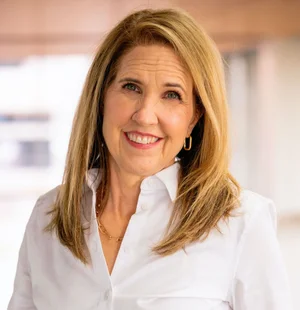
Episode 117 : How to Reduce Anxiety and Become Comfortable With Uncertainty

Why Chasing Safety Can Quietly Suffocate Love
How “Maybe” Can Bring Aliveness Back to Marriage
Every couple wants to feel safe.
Safe in the relationship.
Safe about the future.
Safe knowing the ground won’t suddenly disappear beneath their feet.
We build marriages around that hope. We commit, plan, sacrifice, and structure our lives to reduce uncertainty. We tell ourselves, If this is solid, I’ll finally be okay.
But as Allison Carmen shared in our conversation, the very thing we reach for to feel secure can slowly drain the life out of a relationship.
When Certainty Becomes the Problem
At first, certainty feels comforting. It’s like being wrapped in a weighted blanket, warm, predictable, calming. You know what to expect. You stop bracing for impact.
But over time, certainty can quietly dull curiosity.
When we believe something is “set,” we stop tending to it. We stop leaning in. We stop asking questions that might disrupt the calm. And without realizing it, we trade aliveness for stability.
Allison described this beautifully when she reflected on her own marriage. The place she believed was most secure was the place she questioned the least. Not because she didn’t care, but because certainty created a false sense of arrival.
And growth doesn’t happen where nothing feels at risk.
The Hidden Cost of Emotional Safety
In marriage work, we talk a lot about emotional safety and rightly so. People need to feel safe enough to speak honestly, to be vulnerable, to be real.
But there’s a difference between safety that supports intimacy and safety that avoids discomfort.
When couples become overly invested in keeping things smooth, they start editing themselves:
I won’t bring this up - it might cause tension.
I’ll let it go; it’s not worth rocking the boat.
If we talk about this, what if it changes things?
Slowly, the relationship becomes calm… but quiet. Stable… but shallow. Present… but not fully alive.
As Allison put it, intimacy requires courage and courage means being willing not to know how things will turn out.
Why Uncertainty Is the Doorway to Intimacy
Here’s the paradox:
Life only changes in the unknown.
Growth only happens where outcomes aren’t guaranteed.
Connection deepens when we’re willing to risk misunderstanding, conflict, or disappointment.
That’s where maybe comes in.
The word maybe interrupts the certainty that fuels fear. It softens rigid stories like this will never change or this always ends badly. It opens the door to possibility without demanding blind optimism.
Maybe this conversation won’t destroy us.
Maybe there’s something here I don’t fully understand yet.
Maybe discomfort is part of growth - not a sign of danger.
When couples adopt this mindset, they stop reacting from panic and start responding from presence.
Safety That Comes From Within
One of the most powerful insights Allison shared was this: Real safety doesn’t come from another person - it comes from within.
When you trust that you can survive uncertainty…
When you believe you’ll find your way back to okayness no matter what…
You stop clinging, controlling, or avoiding.
From that inner steadiness, intimacy becomes possible.
You can lean in without demanding guarantees.
You can love without using certainty as armor.
You can trust another person because you trust yourself.
That’s not detachment. That’s emotional maturity.
Wisdom vs. Fear: Learning the Difference
Allison made an important distinction that applies directly to marriage: Wisdom protects. Fear constricts.
Wisdom says, I’ve learned something from the past.
Fear says, This must never happen again.
Wisdom keeps the heart open.
Fear closes it down.
The maybe practice helps couples pause long enough to ask:
Am I reacting from wisdom-or from fear of the unknown?
That pause alone can change how a conflict unfolds.
Presence Is Where Love Lives
Anxiety pulls us into the future.
Regret traps us in the past.
But love - real love- only exists in the present.
When we’re consumed by what if, we miss what is. We stop seeing our partner clearly. We stop enjoying the moment we’re actually in.
As Heidi reflected, so much joy in parenting and marriage is lost not because life is hard—but because fear keeps us from being present while it’s happening.
The maybe mindset doesn’t erase pain.
It widens the container that holds it.
A Simple Practice for This Week
This week, try this the next time uncertainty shows up in your marriage:
Name the fear.
What story are you telling yourself about what this means?Interrupt certainty.
Ask: Am I absolutely sure this fear is true?Introduce maybe.
Write or say a few alternatives:
Maybe this will change.
Maybe there’s something here to learn.
Maybe this isn’t the end of the story.Stay present.
Respond to what’s actually happening—not what you’re afraid might happen.
You don’t have to like uncertainty.
You don’t have to welcome it.
But if you stop treating it as the enemy, it might become the very space where intimacy grows again.
Sometimes love doesn’t need more certainty.
It needs more courage to stay open in the unknown.

-
0:00
Marriage IQ Introduces Allison Carmen on Uncertainty
We want to feel pure and safe, like you're being snuggled up with the little one of those weighted blankets.
0:07
Speaker 2
Life happens in the emptiness and life happens in the unknown, and I think if we all believed we were OK, we would be less attached to all the outcomes.
0:15
Speaker 3
I was so anxious and fearful over things with my kids when they were young that I wasn't present, I think.
0:21
Speaker 2
It's a dangerous thing to seek safety in another, but when we have safety when ourselves, we really could have the most amazing experience and it to miss you with another human being.
0:33
Speaker 1
Welcome to Marriage IQ, the podcast helping you become an intelligent spouse.
0:39
Speaker 3
I'm Heidi Hastings.
0:40
Speaker 1
And I'm Scott Hastings.
0:42
Speaker 3
We are two doctors, 2 researchers, 2 spouses, 2 lovers, and two and radically different human beings coming together for one purpose, to change the stinky parts of your marriage into scintillating ones using intelligence mixed with a little fun.
1:04
Speaker 1
Hello everyone, welcome back to another exciting episode of Marriage IQ.
We are so glad that you joined us today.
Heidi, do you ever have any fears about the future?
1:16
Speaker 3
All the time, all the time.
I'm nervous about our kids going to have good lives and be happy and successful.
I have a lot of fears and doubts sometimes over the future of our podcast, our YouTube channel.
1:32
What do you have fears or doubts over?
1:34
Speaker 1
I don't have any fears.
1:36
Speaker 3
Oh good, you can carry me on your back then.
1:41
Speaker 1
I am just kidding.
I think all of us do.
I'm pretty sure all of us do, even though a lot of us may not show it.
1:49
Speaker 3
And anxiety too.
1:50
Speaker 1
Yeah, Just worrying about the future, what's going to happen?
What's going to happen to our marriage?
Our relationship?
Yeah.
2:00
Speaker 3
I think we're pretty confident in it, but you never know.
2:03
Speaker 1
There's just so much uncertainty out there.
That's the world we live in, that's how we humans interact, and yet we want to feel secure and safe.
Like you're being snuggled up with the little one of those weighted blankets anyway.
2:23
Speaker 3
Living life like that.
Well, today we have with us Allison Carmen, and she is an uncertainty expert.
You ever heard of that?
2:34
Speaker 1
An uncertainty expert.
2:37
Speaker 3
We're really excited to learn from Allison today.
She's an attorney, she's a Ted X speaker, and she's a very passionate advocate about embracing the uncertainties of life to unlock life's possibilities.
She's also a podcaster.
2:52
Her podcast is called 10 Minutes to Less Suffering.
Very catchy title and the author of the Gift of Maybe.
So welcome, Allison.
We are so excited to have you here with us today.
3:08
Speaker 2
That was my mother wonder, she was one of the people laughing loud.
Thank you so much.
It's really a pleasure to be here with the both of you.
3:15
Speaker 3
Thanks.
3:16
Personal Story: From Anxiety to the 'Maybe' Philosophy
Well, Allison writes a lot and does a lot of work around the topics of marriage and finance, careers and family.
And she's been featured on some really big outlets like New York Times, Psychology Today, which we pull from time to time.
3:31
So I think we've got somebody who's very qualified to speak today about how uncertainty impacts marriage.
3:39
Speaker 1
I'm really excited about this conversation because I watched your TE DX talk and I thought she is hitting me pretty square on with some of this stuff and I knew it was going to be a good conversation because this is kind of how I think.
3:56
And I loved how you talked about uncertainty.
Can you explain in your own words how you came to be and how this all impacted you to come up with this idea of being a uncertainty expert?
4:15
Speaker 2
I'm either an uncertainty expert or the most fearful person in the world.
I always say beware of someone who writes the book about something they need it the most.
So I think, you know, I'm going to go back to almost the very beginning.
I grew up in a very anxious household where my parents were always worried about the future, and I was very sensitive.
4:38
And so I was always worried about what was going to be, you know, what was I going to get on that exam?
Did this boy like me?
But it was excessive.
It wasn't just one little thought, like my mind was often thinking about what would be.
And I think my mantra was if I didn't know what was going to happen next in my life, it had to be bad or it wasn't going to work out.
4:58
So for me, uncertainty equaled stress, anxiety and things not going my way.
And I think what I did, and I think a lot of us do this as I wrote the story at one point in my life, that if this things happen in my life, I'll be OK.
5:16
So you're fearing the unknown and you have the story out there.
Once I achieve this, everything will be OK once my child gets into the college.
And the problem is that life has no certainty.
So when these events don't happen, you fall down.
5:31
Or when the events do happen, like maybe your child gets into a great college, then you start to worry they're not going to get a great job.
So I was on the wheel and my big life story when I was young, I'm going to go to law school, I'm going to graduate, get a great job, marry this great guy, have kids, and then I would have my certainty.
5:53
And so for a long time it held me.
And I actually remember walking to work my first day, feeling like I've arrived, and then the next day I'm at the law firm.
I married the guy a couple of months before.
I'm thinking life is great and they're firing half the first years.
6:09
And I was a first year.
And so that was my moment.
I didn't get fired, but it didn't matter.
It's when you have a story about what's going to bring you to the promised land and that story blows up in your face.
There you are again.
But for me, because I was so addicted to certainty, I stopped sleeping.
6:27
I became anxious because I didn't have a story to hold me.
But I was like, life is uncertain.
And because it's uncertain, things are not working out.
And so all of a sudden I started not to feel well.
I did yoga, I went vegan, whatever I can do to hold this nervous system of mine.
6:46
And then one day I heard this Taoist story.
And in the for the Taoist, things are neither good or bad, but I had a different experience with the story.
And the story's about a farmer and he has a horse, and the horse runs away and his neighbor comes by and says to the farmer, you have the worst luck.
7:05
And the farmer says maybe the next day the horse comes back with five mares.
And the neighbor comes by to the farmer and says, you have the best luck.
And the farmer says maybe.
And the next day the farmer's son is on the horse.
He falls off and breaks his leg.
7:21
And the neighbor comes by to the pharmacist.
You have the worst luck.
And the farmer says maybe.
But then the next day the army comes to take the sun to war, and they can't take him because his leg is broken.
And the neighbor comes by to the farmer, and he says, you have the best luck.
And the farmer says maybe.
7:36
And again, in the Taoist tradition, they're just saying life keeps changing.
But for me, maybe because I'm from the West, I thought to myself, wait a second, the horse could come back with five mayors.
And I never used to think that way.
So I went home that day and I'd left the law practice.
7:54
I'm still married.
I had kids, I had my own business.
And I started to think to myself, well, if I don't get that client, maybe I'll get another one.
And if that doesn't?
And I just started to play with this idea.
And it was a very private thing.
It was just alleviating my stress.
But then I realized every time I engaged in baby, my mind quieted down because most of the time I'm worrying about what's going to happen.
8:17
And because I knew that life was filled with possibilities, that the infinite had things I liked as well, my mind started to come calm down.
So I had less stress.
My mind was calm and I was more present.
And then when I was more present, I was more courageous, I was more creative.
8:34
So this idea of maybe became this stress technique to a life's philosophy.
8:40
Finding Hope in Betrayal Through Her Own Book
And there I was.
I wrote this book and I rock.
And I think that I am an uncertainty expert.
And then one day I'm sitting at my counter.
We dropped my kids off for the summer and my husband comes home.
And I think I played certainty in my marriage meeting.
8:59
Like I was great with uncertainty with other relationships and my business, but I think I believe my marriage was certain.
And I think whenever you think something certain, you might not tend to it as well.
I don't know.
Maybe you take it for granted, but you also don't fully grow as a human being.
9:20
I think anything you believe is the way it is.
It's like you don't expand yourself.
So my husband comes home one day, we're married, We're together for 29 years, married for 27.
I think I'm in a good marriage.
He comes home and he says to me, he literally blurted out, I want to have sex with other women at the gym.
9:41
I want to be best friends.
But I got to leave.
And it was literally in one moment, the one place I had I think hidden certainty was gone.
And I remember falling to the ground thinking if I can get to the wall and hit my head, it was going to hurt less.
9:59
And so he's very removed.
He's very detached.
Everything I knew was gone.
Nothing was going to work out.
I was back in that uncertainty bind.
And then after like 3 days, I actually took my book, The Gift of maybe into the bathroom and I was crying and I'm reading my own book.
10:16
And on page 6 I listed my biggest fears.
Was there going to be a terrorist attack in New York City?
Would my parents be OK?
And then I saw I wrote what my husband always loved, me.
10:28
Speaker 3
Oh my goodness.
10:30
Speaker 2
And I don't even remember writing that.
It could have been editor, could have been me.
But in that moment, a light went on.
I was heartbroken, but I realized if it was in the book, that meant I had made it.
And it that moment changed my life.
10:47
I mean, there's so many moments that change your life, but that was the light that I realized seven years later.
I am doing so well today because I believe in maybe and because I believe that uncertainty is my best friend.
11:02
Because if I want my life to change, it has to happen in the unknown.
And so that's really my life story.
And it's not that I don't ever get stuck, but I know my life has maybe.
And so I know that nothing is fixed.
11:18
I know the future is unknown, and I know uncertainty is my best friend.
And those principles get me through everything in my life, whether it's my children, recovering from my husband leaving me, anything.
And it makes me more expandive, it makes me more creative, makes me less afraid.
11:35
And that's really how my life has been.
This beautiful little word maybe has changed my life.
And it's interesting.
It went from a technique to a life philosophy, and I think that's my story.
11:48
Why External Certainty Limits Growth and Connection
That is so empowering.
11:50
Speaker 1
Wow, what a way to break it to you.
That is harsh.
11:53
Speaker 3
That is so harsh, that's so interesting, that your own words were part of what gave you hope again.
11:59
Speaker 2
Yeah, I couldn't believe it sometimes.
I How did I get so lucky?
It was such a lucky moment.
And did I write that book for myself?
I don't know, But I didn't expect that.
That's what's so interesting about the unexpected.
I didn't expect my husband to come home that day and say that he was leaving me, but I didn't expect to have written something in a book that gave me a pathway.
12:25
That's the beauty of the unexpected.
You know, the minute we get uncomfortable, we make this assumption.
I'm uncomfortable, I'm not OK.
And that's the deep thing.
We're afraid we're not OK.
And that's the basis of everything.
And so when you could shift that and realize not knowing is the opening in a way, like there's the empty cup, like everything happens in the emptiness, right?
12:50
Life happens in the emptiness and life happens in the unknown.
And I think if we all believed we were OK, we would be less attached to all the outcomes.
We use the outcomes to make us feel better.
So I think that's the game that we play with ourselves.
13:06
Speaker 3
One of the things that I heard you saying there so much wisdom just in that statement, but one of the things that I heard you saying is we struggle with uncertainty, but actually it's the certainty that may be putting us in a more vulnerable position.
13:25
And your certainty in your marriage caused you or LED you maybe to neglect it a little bit more.
Is that what you were saying, that you weren't growing in that area because you just thought that was a certain thing?
13:41
Speaker 2
Well, I wonder about that.
Like I thought that I was in a happy marriage, but I always think about if I woke up every day and if I didn't think my marriage was certain, would I have been different?
Would I have changed?
13:58
What have I listened better?
I always think that certainty limits us.
We think it's the promised land, but we don't realize that it's the thing that holds us back because the minute we feel comfortable, we lean this way.
So I often wonder that, I mean, like, he left and that was very destructive to me and how he left and the children.
14:20
But I was not perfect in my marriage.
Was it my certainty which prevented me from from leaning in more to discomfort?
If you think about it like every fight, every choice, every decision, if you lean towards the certainty, then maybe you're not leaning towards all that's possible.
14:42
So that element, I do think about it and I do reflect on it.
And it's so interestingly, life caught me in the one place that I was sitting in that comfort because I wasn't sitting in it in other places.
14:57
I find that so interesting.
14:59
Speaker 1
Allison, I love this.
However, I can hear a lot of people saying I want to feel safe, emotionally safe in this relationship.
In fact, we talked about developing emotional safety so that you can talk about deep things.
15:18
This is hard because what I hear you saying is that safety or security, however you want to put it, is fundamentally limiting.
Limiting, maybe not destructive.
15:36
Of course it maybe it could be destructive, but I mean, so many of us, This is why we get married.
A lot of people, we want safety.
We want something in our lives that's secure, safe, foundational.
15:54
And what I hear you saying is that like everything's stripped away and there really is nothing secure.
Do you think it's possible or advisable to have something in your life that you feel just really safe and secure with, even if it's not a spouse?
16:15
Speaker 2
I think that safety lies within and I think that through this experience, I've learned that if I trust myself and I'm willing to be uncomfortable and I know that I could find a way back to okayness no matter what, then I'm going to take the ride.
16:36
So if I'm sitting here and I'm in relationship and I trust that I can be OK no matter what, I'm going to lean in and in the moment, in that presence, say, I think that all we have is the present.
16:52
So in that presence, from my inner safety, I can lean in and have that intimacy with another because I'm not afraid of the future.
And I think in that moment there could be intimacy, there could be trust, that could be safety.
But we fool ourselves to think that what tomorrow will bring.
17:11
So you have to have a lot of courage.
And courage is saying, I'm willing not to know the outcome.
I am willing to take the right, I'm willing to take risks.
And I think that's where intimacy happens.
But if someone is sitting there and they don't trust themselves and you lean into the other for safety, then there's something distorted about that.
17:32
And I have to believe that there's something not pure and true in that moment, right?
Because I think two people that feel safe can meet in that place.
That's my belief about it.
And I get why I thought I had safety in a marriage and then he left.
17:50
So I think it's a dangerous thing to seek safety in another.
But when we have safety, when ourselves, we really could have the most amazing experience in intimacy with another human being.
18:03
Speaker 1
So really you're saying, yeah, it's OK to be safe, to feel safe in your own self, right, not other people?
18:14
Speaker 2
Yes.
And in the moment, in the present moment, you could have that intimacy.
If someone's sitting there with you and they say I got you, and in that moment they do, then that's real.
But to bet on tomorrow, it's actually going to just distort the relationship if you think about it, because then you're going to be in certainty, then you're going to be betting on someone else when there's so many different factors.
18:40
So I think it's a balance and I still, and it's funny, I will trust another because I trust myself.
18:48
Speaker 3
That really goes along with everything we talk about here on Marriage IQ.
18:51
How Difficult Experiences Open Doors to Growth
If you want to change parts of your marriage that are stinky or stale or whatever, it all has to start with me, myself, and I.
If I want to feel more secure in my marriage, it needs to start with my own inner work, to know who I am, to understand my identity and to feel safety within myself.
19:16
To get rid of some of that anxiety and some of those fears so I can take a bigger chance, so I can lean in more to my marriage and therefore creating deeper intimacy.
19:27
Speaker 1
There are so many things about this story that really, really hit me just right on, because this is really what we're trying to teach, too.
I love that you actually had to refer back to yourself in your book because this is a perfect example of like you, you wrote the book and yet at another time of your life, it's not the time of the life that you were writing the book.
19:53
It was another day, another age, and you had to come back to it and read your own words at being the expert a few years ago or however many years ago when you wrote the book.
And I think that's so instructive for all of us.
20:09
No matter how expert we become in whatever field, we are all humans too at the end of the day.
And we're prone to have lots of worries and concerns.
Who doesn't?
And it's just a very humble viewpoint, perspective that I love.
20:32
I love that we're not always going to be the same.
20:36
Speaker 3
When I think of your story of the Taoist story that you shared, when I was divorced many years ago, I thought I had terrible luck.
I'd done all of these things to create a perfect marriage, and it crumbled.
20:54
It dissipated right before my eyes.
All of my dreams were hung on that safety.
I thought being married in the right way, in the right, you know, manner would provide and it didn't.
And I thought, you know, I'm dead.
21:10
I feel like I'm 6 feet under the ground.
And I didn't realize that was going to open doors for me to have a better marriage with Scott three years later.
And you know, that hasn't been perfect.
It's been awesome, hasn't been perfect.
21:25
But everything that we go through that's been difficult or hard actually does, like you said, open doors to bigger possibilities the more we learn through those experience if we choose, Yeah.
21:39
Speaker 2
If we choose that because sometimes the uncertainty becomes so great, we turn our back and then we just seek comfort again.
And if you look, it's a valid choice, but you have to choose what you want your life to look like.
Like for me, as the experience was happening, I realized that, OK, this happened to me.
22:01
Who am I?
What am I responsible for?
How can I get to know myself better?
And how could I go back on the playing field and expand as a human being?
But it would have been very easy to choose something else, to choose something smaller because like the weighted blanket, right?
22:18
Just going back to that.
So again, we have to be courageous.
And that's why maybe it's such a beautiful thing because all it does, it just reminds you that, yeah, bad things happen, but good things could happen too.
And because we don't know that Unlimited Field offers us so much more.
22:36
But again, you obviously went back on the playing field on some level and decided to engage again.
And that's the most important thing.
What we do is what we let what happens to us define us instead of saying, oh, that happened.
But I still have coherence within myself.
22:53
And that coherence comes from many different things.
Self love, your relationship with uncertainty and stuff like that.
So you had the coherence to go back on the field and say, hey, I'm available.
But some of us, we don't do that.
We make it swollen, swollen because certainty at all costs.
23:10
Speaker 1
Like the screw the world, everyone's out to get me.
I'm just going to go on my little cabin in the woods by myself, and I can go there sometimes because I'm just like being functioning as a human.
23:26
But if luckily I get out of it, I climb out of it.
But I mean, it can be really heavy when you have.
I've never gone through the betrayal that you've gone through.
Like I can't even imagine.
But all of us have heaviness.
I don't want to go through this mistake again, and I don't want this to happen again.
23:46
And so I'm going to learn how to protect myself in some ways.
And I think that's probably wise as well.
But I think overall, it's a philosophy I find myself attaching very easily to what you're saying because ultimately I know that's where the growth happens.
24:06
It's such this great paradox.
24:08
Using the 'Maybe' Practice for Clarity
Yeah, but there's also a difference.
Like something happens to you, you gain wisdom, and that wisdom is the protection, right?
That wisdom.
But there's a difference between wisdom and fear.
So this happened to me yesterday.
24:24
So I got screwed out of a deal in business yesterday.
Let's just say I didn't sign a contract.
So my wisdom tells me, oh, I got to sign a contract next time.
But if my fear gets me and said everyone's going to screw me, I can't trust people, then I'm never going to have that business relationship I desire.
24:44
Same thing with marriage.
So we have to know the difference between our wisdom and our fear.
And I think for me, that's something I think about a lot in this moment.
Am I in a fearful state that I'm not moving forward?
Or is my wisdom telling me, hey Austin, that's not for you and that's an art too?
25:01
Where am I coming from?
25:02
Speaker 3
How do you develop that?
That is so true and so well put into words that I've never thought about before.
How do you distinguish between wisdom and fear, and how do you practice using wisdom over fear?
25:14
Speaker 2
Yeah.
But believe it or not, the first thing I do is I alleviate my fear of the unknown because for me, that's my trigger.
So I will do sometimes I will actually do the maybe practice to make sure that I am not afraid of uncertainty in this moment, that I'm not afraid of what will be.
25:34
Speaker 3
Give us a practical example.
What are the words you say?
25:37
Speaker 2
So what I'll do is, let's say I want to enter into a business situation, and my fear is this will never work out because it never worked out before, or my last book wasn't successful.
This book wouldn't be successful.
Why am I going to bother?
25:53
And so I write all my fears down.
And then I asked myself, are you absolutely certain that fear is true?
And the beauty of life is you cannot be certain of anything.
But yet we think our fears are certain.
But then I'll recognize, wait a second.
26:09
I can't know that this guy or this person is not going to be honorable in this business transaction.
I can't know my book won't be successful.
I know I'm not certain.
So what else is there?
And then I'll literally like maybe statements, maybe this will be a good business transaction, maybe this, maybe that.
26:28
And it sounds so simple, but the minute you start to write the maybe statements, you're out of that certainty for your state and you're in this open state because you realize life has maybe.
And so then I'm looking at this business partner, I'm looking at this book and I have objectivity because I am not equating the unknown would do.
26:49
And what I'm also doing is I'm letting go of the fact this happened yesterday.
That means it has to happen tomorrow.
So I'm in the state where I'm like, OK, I am present.
I am not afraid of what could possibly happen.
And then I could look at this person with more objectivity, with more wisdom, and then I could see, wait a second, he has some qualities that the other guy had.
27:11
I don't like how he's negotiating or, you know, this person feels trustworthy.
So I'm going to have a different experience.
And then the things I learned, I feel like when I'm not afraid, I'm accessing my wisdom.
And that's how I come to it.
27:27
But it's so interesting that even to this day, even though I often live in maybe I checked myself like you talked about, Scott, I need to check in.
I need to check in.
Are you being wise?
Are you being afraid?
And that to me, that's the marker.
And your relationship with uncertainty really dictates it.
27:45
It, it's an incredible thing.
27:46
How Uncertainty Controls the Heart's Opening and Closing
So that's how I do it.
And I think that the maybe practice and wisdom and fear, they're all interrelated.
27:53
Speaker 1
This is so amazing.
This is like a real time, like granular level intentionality and insight.
Two of our four cornerstones coming together, like in real time here.
This is really good.
28:08
Yeah.
It's hard because you're bringing up something that we all experience but no one ever talks about.
But we do on marriage IQ.
You should have heard the episode where we talked about as a physician, I get to explore every orifice in the human body, which is, you know, pretty private and personal and the things that the body produces too.
28:33
And they'll get, nobody wants to talk about it, but we have to do it because that's how we learn to stay healthy, right?
And this is what you're doing on an emotional, a very deep emotional level.
28:44
Speaker 3
I think we've talked about how certainty can damage marriage if we're so certain that we're not totally invested in the marriage, if we're not totally intentional, if we're not looking at our own part, but when we're a lot of fear over the uncertainty in life, can that also impact our marriage?
29:06
How do you think we show up in marriage when we're just so fear trenched and anxiety trenched?
29:12
Speaker 2
I feel that it's so interesting that uncertainty and certainty like almost control the opening and the closing of our heart.
If you think about it, if I'm willing to be uncertain, then I'm willing to be more open hearted towards you because I'm willing to take the risk.
29:29
I'm willing to take the risk in intimacy.
I'm willing to take the risk by telling you how I feel, right?
But if I'm in the certainty thing, I'm going to be like, well, I don't, I'm just going to accept this the way it is because I don't want it to end or I don't want it to be bad or I don't want to have this conflict.
29:45
So again, the communication is all coming down to uncertainty, Uncertainty.
And for me, I think I just saw it as is.
So perhaps for me, my certainty, maybe I didn't tend to it.
30:01
I thought I did, but maybe I didn't.
And for someone else, maybe their fear of the unknown doesn't allow them to be honest or say what they really want because they're so afraid.
Again, courage is not knowing the outcome.
So the best marriage is the vulnerability.
30:17
And if we're not willing to be uncertain, we're not willing to be vulnerable.
So again, I bet.
I think what controls the opening and the closing of the heart is certainty and uncertainty.
30:26
Speaker 3
So living in that anxiety and fear strips us from vulnerability and authenticity.
Can it also add to the stress, which is another element of how it can negatively impact marriage?
30:41
Speaker 2
Yes, I think any time we're not fully an expression of who we are, but also if you're in a marriage and you're both afraid of the unknown, you're going to have a lot more stress in your life.
If you think about it.
If you don't have the capacity to come home and let the work problem go.
31:01
If you don't have the capacity to say, OK, I have this horrible problem, but I know it could go anyway, so I'm going to put it down for the evening.
So we're all these things affect how we're communicating with one another.
So stress and anxiety and all of it and how we handle it in our own life during the day that then how we walk into the marriage.
31:23
Because if you're overly stressed all the time, then how are you going to put it down when it's time to be with your family?
Though for me, that was also a beautiful thing that I was able to let go of a lot of my stress and my anxiety because of maybe and be more present because you think about it.
31:38
Presence in a marriage, presence in a family, that's where the juice is.
And for me, if I struggle with the unknown, I'm obsessing about tomorrow, I'm obsessing about my problems.
I'm not as present in the relationship.
31:51
Speaker 1
She agrees with me.
I've said many times on this podcast that meditation has been one of the greatest things that in my life, and that requires us to have presence, to live in the present, just like you said, neutrally, objectively, without anything attached to it.
32:13
Yeah, it is.
32:14
Speaker 2
A that that you're in truth.
Yeah, yeah, yeah.
32:17
Speaker 1
I wish I could live in that all the time.
32:19
Speaker 3
Yeah, we don't.
32:20
Speaker 2
But also too, maybe that's the right that if we were in one place all the time that where's the growth?
Where's that moment where you become more intimate or you become more trusting?
I think that it's the ebb and flow, the emptying, the filling up that allows us to expand.
32:38
And I wish it was the other way.
I wish that it wasn't my worst moments that created my biggest expansion.
Would prefer it to be the opposite way.
32:47
Speaker 3
But it's true.
32:49
Speaker 2
Yeah.
32:50
Embracing Ambiguity in Parenting and Life
No kidding.
One of the great paradoxes of life with couples.
How can couples learn to sit with this I don't know without immediately filling that space with fear?
Like, it's hard, right?
33:06
To think, OK, we got to know what's going on.
We got to know what's happening next.
And to sit there and say I don't know.
33:15
Speaker 2
And that's OK.
I don't know.
And that's OK.
I don't know.
Does it mean I'm not safe?
I don't know.
Doesn't mean I'm not doomed.
And for me, it started with the maybe practice.
Literally that was a practice because it allowed me to hang out in the unknown.
33:32
So I think the experience somehow, how do we get some people have faith?
There are some people you will meet and they're like, life is always working for me and they amaze me.
Sometimes it's faith in God, sometimes it's a very positive attitude.
And the rest of us, we kind of struggle.
33:49
And so for me, I think working on your relationship with uncertainty is probably the best thing you could do for a marriage and a relationship.
And sometimes you'll start with work.
You'll be like, OK, I'm going to deal with work differently.
I'm going to realize there's an unlimited field I'm going to engage in maybe.
34:07
And then that experience you could maybe bring home.
Maybe the easier place is to start in a place of less struggle.
Perhaps one of the more challenging places is to live with another with that level of intimacy and young beauty.
So I guess it's a path for all of us.
34:22
Speaker 1
It sounds to me when I hear saying this that we have to sit with ourselves and become intentional about choosing uncertainty.
Not just reacting to it in the moment, but like having those moments.
34:39
I have to be intentional about choosing uncertainty with you, with my work, with other people I interact with.
34:49
Speaker 3
I think this is an episode I'm going to have to listen to several times because you've got so many Nuggets of wisdom that I need to hear things in a whole bunch of roles in my life, a whole lot of parts of my identity that like in motherhood, I can't control what my kids choose or how their lives have good things or bad things.
35:15
I mean, that's all part of life.
And so maybe what this trial is they're experiencing or this choices that they're making will actually open doors to growth into more possibilities.
35:31
Speaker 2
Yeah, and it just lessens it.
Like, parenting is a tough gig because we're attached.
Like, I had this realization once, you know, the Buddha says all attachment leads to suffering.
And I had a realization that I will always be attached to my children.
But then I also realized that, yeah, part of my suffering is from the attachment.
35:49
I need them to be OK.
But another part of my suffering was from my relationship with uncertainty.
So I think when you have a better relationship with uncertainty, you suffer less as a parent.
It's not that you're not going to suffer at all.
That's the one place I get pushed into a corner a little bit.
36:07
But I know that when I don't know what this means and good things could happen to and life has, maybe I pair it with more ease.
I still suffer if my child is not well or if something's happening in their life.
But the fact that I know the unknown gives gifts and things will change, it just allows you to hold it in a broader place.
36:27
You know, you could drop something in a small glass of water, or you could drop it in the ocean.
And if you drop it in the ocean, it's more vast and there's a more, a wider way to look at it.
So parenting is tricky, but maybe an uncertainty.
That relationship alleviates so much pain.
36:44
Conscious Choices Reduce Suffering and Foster Freedom
Are you saying that we are responsible for a pretty significant amount of our own suffering then?
36:51
Speaker 2
So there are some spiritual teachers that say all of it.
I won't say that because there are things that happen in life that I've seen, you know, that people go through that.
How would one not suffer?
But yes, I do think that we participate in a large part of our suffering.
37:09
Speaker 1
But Allison, you said.
37:11
Speaker 2
Yeah, yeah.
37:12
Speaker 1
That suffering is the thing that leads to our growth, right?
37:18
Speaker 2
Sometimes, yes, sometimes.
37:20
Speaker 1
So suffering, 'cause when I heard this saying you said all attachment leads to suffering, I said that's pretty judgmental, right?
But I have to relook at what the word suffering means.
And suffering in and of itself leads to greater growth in my character, in my development.
37:40
So you.
37:41
Speaker 3
Know attachment.
37:42
Speaker 1
I mean, sign me up for attachment, I guess, because if I want to avoid all bad things that happen suffering to me, how am I going to grow?
So yeah, I'm going to attach myself to you, and that means I'm signing up.
37:59
Speaker 3
Taking a chance.
38:00
Speaker 1
For suffering because it's going to happen.
38:04
Speaker 2
But you're looking at attachment as like a marriage, and you could be married and have a detachment.
Like for me, I think it's unrealistic to have a child and a wife and not have a level of attachment.
I I think that when I hear spiritual teachers talk, they say that, you know, Krishnamurti says the reason I'm happy, I don't mind what happens.
38:26
I don't think I'll ever get to a place in my life where I don't mind what happened.
But you can mine less.
You can mine less.
So where are the places that you can let go?
Where are the places are you willing to let go?
I'm not willing to not be vested in my children on some level.
38:44
So I know there's going to be a level of suffering.
That's my choice.
Can I alleviate all suffering?
Yes, I would.
I would just say I'm OK with whatever happens.
But I know the more OK I am and the less I resist the moment and the more detached I am and the better relationship with uncertainty, the more free I'll be.
39:04
So I think we all make choices in our life.
So if you're choosing, I invested in this marriage and I have a level of attachment, you get to look at the places that you could let go, the places you could suffer less.
And so for me, I'm very honest about it.
39:20
I will not sit there on the mountaintop and say I don't mind what happens.
I do, but I mind less.
And and that's, I think, the key to less suffering.
39:30
Speaker 1
And you're honest about it, too.
39:32
Speaker 2
Yes, I think that people say a lot of things that for me and my life are not realistic.
I do aspire to them.
39:39
Speaker 1
This is the far end of that spectrum.
39:41
Speaker 3
And you're very clear about you are making a choice.
I choose this marriage.
I choose this role as a parent.
39:52
Speaker 1
Intentionality.
39:56
The 'Maybe' Mindset Transforms Rigid Expectations
So we have an episode on expectations and we have a an episode on biases and I'm just sitting here thinking about.
Our expectation bias that we bring into a lot of situations in marriage and it plays out negatively.
40:16
A lot of times I have an expectation and when you do not fulfill that expectation, then I suffer or I am anxious or I am disappointed.
How can the maybe principal interrupt that and shift it?
40:35
Speaker 2
Well, I think it allows people not to know.
It allows you to pause, I think.
Let's say your spouse says something to you.
You didn't expect them to say it.
They make a choice you didn't expect.
With the maybe you allow for the possibility that things could change, I could change, he could change.
40:56
Maybe there's something he meant by it that I'm not understanding.
It allows you to be more curious and less stuck in that expectation.
I think expectations always create suffering, right?
Because what you're saying is I expect tomorrow to be like this, and if it's not like this, you're going to suffer.
41:14
And I think we have ideas of other people when they don't meet it, we could shut down and go automatically into disappointment.
So with the idea of maybe, I think you just meet on the unlimited field.
And so I'm not saying that it'll be a victory, but I am saying that you allow for more communication, you allow for things to change.
41:34
And you also allow that that decision that person made might not be doomed because sometimes you've written a story.
So like you can't engage with that person because you're so sure you know what it means.
So all maybe does is it doesn't make you less safe.
41:53
I think it just allows you to open your heart and explore what just happened and possibly remedy it or possibly not.
But I think it puts you more, like you said before, like an authentic truth.
And I think that's how it helps.
We don't let the discomfort and the uncertainty make us run out before we at least have the experience of what's really happening.
42:14
Speaker 3
So the maybe mindset could actually be a game changer in communication problems too then.
42:21
Speaker 2
Right, because we don't shut down, it allows us to to keep the heart open for enough time that we get to explore the truth and reality in the presence of what's happening.
42:31
Speaker 3
Maybe what he just said was interpreted by me by my bias differently than the way that I'm understanding it, so maybe I should be a little curious here.
42:43
Speaker 1
The C word.
42:43
Speaker 3
Ask Scott.
This is how I received what you said, but I'm curious, is that really what you meant?
Maybe that's not really what you meant.
I have to be open to that possibility.
Can you explain it in different words?
42:58
Speaker 1
So, Allison, I'll just let you know something here on my tombstone when I die, it's going to say he was curious.
I think that's.
43:08
Speaker 2
Beautiful.
That's gorgeous.
43:11
Speaker 1
That's one of my I love that word.
43:16
Speaker 3
But but we forget sometimes to be curious when it comes to communication, when it comes to conversations.
Maybe that's not really what he meant.
Maybe that's one of those stories I'm telling myself.
43:29
Speaker 2
And you could have been right, but expectations are for certainty.
I have this expectation because I need to know what's going to happen.
We think it creates safety.
And again, it limits us.
It's the most limiting thing in our life.
The thing that we think makes us safe really does the opposite.
43:46
It makes our lives smaller.
43:47
Speaker 1
So does this mean I go out tomorrow and don't schedule anyone on my appointment calendar and just say maybe?
Maybe this will have.
I think as you said earlier, I think there's some basic expectations.
I expect to see certain number of patients every day.
44:04
I expect to have gas in my car.
I don't.
44:07
Speaker 2
Know, I think it's a plan.
I think that you're here in the moment and you're saying, OK, today I'm going to do this and tomorrow I have a plan.
If you expect it, then you might be disappointed.
If you make a plan and you live in, maybe you're like, oh, the patient didn't show up.
44:23
OK, I'm sure you have a plan for that.
You know what, do you charge them or not?
But what we do is instead of just single plans changed, OK, maybe I could do something else.
Expectation is this was wrong, this shouldn't have happened, this is bad.
So for me, that word limits me.
44:41
I have a plan and it could go that way.
It could not go that way.
I live with more ease that as life changes, I change with it.
That's how I would reframe it for myself.
You have a right to do it that way.
But the expectation makes me feel like this is right and I'm wedged in and a plan with maybe feels more free.
45:02
Like let's say tomorrow, everybody did cancel, right?
And you could say, Oh my, everyone canceled.
I'm going out of business or OK, life's one in another direction.
Today I had disappointment.
I thought those things what could happen, but life has maybe.
And what is this moment offering?
45:18
I always say maybe there's something left for me to experience in this moment and that's how I don't get stuff.
But so I just use different words because for me expectation, it just shuts me down.
But you'll have your own experience tomorrow.
45:34
Speaker 1
So Allison taught me a new language today, Heidi.
It's still English, but it's plans are not expectations.
45:41
Speaker 3
Yeah, I hadn't thought about that before.
45:43
Speaker 1
Either now I know the difference and.
45:46
Speaker 3
Plans are more flexible.
Maybe.
Maybe.
45:50
Speaker 1
You can still make these goals and plans and dreams and ideas and just put the expectations to the side, but still plan.
45:59
Speaker 3
Expectations are just more rigid and impact our mindset in a negative way.
46:06
Speaker 1
Probably they're based on our past, our history, our our value systems that we have just intrinsically.
46:14
Speaker 2
And for our safety to feel OK.
46:16
Speaker 1
Yeah, 'cause I mean, you know, back when lions used to be chasing us, you didn't want to sit around and pontificate on whether the lion is going to come kill you or not.
You just had to get out of there.
And I think this goes back to the more primal instincts of emotion based on our past, our childhood, our genetics, that we react very abruptly to certain things that happen.
46:41
And those are expectations.
They're built in.
And I have to go back in and try to unwind those expectations and say, hey, these are plans.
46:53
Speaker 3
Maybe and maybe, yeah.
46:55
Speaker 2
And it makes him more curious, right?
Because when things don't go as planned, you, you realize life has maybe you realize the field is unlimited.
And you say, I'm really curious what, what else could possibly happen today?
It's just a more open way to live.
And then instead of sitting there all day being like, damn, those patients didn't show up.
47:13
You're like, what do I want to read?
What I want to research?
You know, what can I do today?
It's just a reframe.
But for me, it's more than that.
It's a different way to live, you know?
And then you come home happy because you didn't have a bad day.
You just had a day that turned out differently than you thought, and you made the most of it.
47:31
Speaker 3
And you had new opportunities as you became curious about what could this day hold that's different than what I started out thinking.
47:41
Cultivating Curiosity to Reclaim Life's Joy
I just decided to I want to be like Allison when I grow up.
47:45
Speaker 2
OK, no you don't.
I'm just going to assure you that.
But we could be friends.
We could be friends.
47:56
Speaker 3
We are friends.
A year ago I had an expectation that Scott was going to thoughtfully think about me for Christmas.
48:06
Speaker 1
Oh, this again?
48:09
Speaker 3
But it it's really maybe this, this is going to you'll see it'll.
48:12
Speaker 1
Turn out well for.
48:15
Speaker 3
Me, maybe last year when I got a leaf blower for Christmas, I did not stop to say maybe this will open doors to other opportunities in the future.
48:25
Speaker 1
Yeah, like a cleaner porch.
48:27
Speaker 3
I was a little upset with it, but this?
48:31
Speaker 2
But you're allowed to be upset.
You're allowed.
48:33
Speaker 3
To and this is not saying we don't take a moment to be upset before we start asking maybe what are the possibilities, but I would have never guessed last year on Christmas Day or even the weeks following as I looked at the big box that wasn't unpacked and used yet.
48:51
Speaker 1
It's a very powerful leaf blower.
48:54
Speaker 3
Probably the best on the market, but it was the only thing I got.
But this year, because Scott realized maybe that wasn't the best route to go, he took me to Europe before Christmas so we could experience European Christmas markets together.
49:11
And what happened that was so distressing at that time actually did We learned from it.
We gained wisdom from it, both of us.
49:21
Speaker 2
And that's stop engaging in the maybe, right, both of you, you didn't leave them over it.
And he decided to contemplate.
And so you did explore that.
You explored the infinite field together.
Even when you're angry, you could be angry, you could be upset, but Dia leaves the table and how uncomfortable you're willing to get.
49:39
That's that's really what it's about.
49:41
Speaker 1
Yeah.
Thank you for allowing and saying that too.
That's I think it's important to repeat that that doesn't mean we get rid of our feelings.
49:47
Speaker 3
Emotions just happened.
49:48
Speaker 1
They happened.
Yeah, we're human.
I can feel disappointed that this didn't happen.
Just acknowledge it.
49:55
Speaker 3
But let's communicate about it, because if we don't communicate, if I had said nothing, that wouldn't have resulted in wisdom either.
So again, back to communication.
50:06
Speaker 1
I feel disappointed.
Yeah, you gave me.
50:09
Speaker 2
You have to be ready.
Yeah, you have to be ready.
You have to feel your feelings.
I am such a big believer in that, you know, there's a lot of shortcutting going on.
And.
And I always say maybe he's there when you're ready.
I had a colleague that his son got into the same college that he had gone to so many years ago.
50:27
I think it's Boston College, actually.
And so the weekend he dropped him off, he had a business call and he needed to go to a room.
And he found himself.
He decided to go to an old classroom that he had been in years ago when he was a student.
So we're talking about 30 years ago.
50:43
And so he's sitting in the classroom and he's looking out the window.
And all the sudden he's having all these memories of what it felt like when he was a student 30 years ago.
And he remembered that he was always stressed.
He was always anxious.
He was worried what it was like was going to look like, was he going to make money?
51:00
Was he going to have a family?
He's sitting there and he realized how much stress and anxiety he had.
And there he was 30 years later, dropping his son off, having a great career.
I'm not saying his life hasn't had ups and downs, being married.
And he had this feeling of why didn't I enjoy it?
51:18
Why didn't I appreciate it more?
Why didn't I have a larger perspective?
It was his fear of the unknown, if you really think about it, or and his inability to be present and to be grateful.
And so his mind took him to another place when he was young.
And as he looked back, he was like, well, why wasn't I easier?
51:36
So how to, in this moment, can we let go of our fear of the unknown in this moment?
How do we hold the larger perspective that we don't let the things we don't like take us down?
That we're able to have the gratitude, the presence, the freedom to at least get the beautiful things that every moment gives us.
51:57
But sometimes we don't like one thing and it takes over.
It takes center stage.
So every day, where's our coherence, Where's our center stage, and how are we going to deal with the things that we don't prefer?
I'll call it that.
So it was a big life change for him.
52:13
Speaker 3
That's another way to look at the drop in a cup versus the drop in the ocean.
Just pulling back and having a greater perspective.
I just thought of several things in my own life that I was so anxious during going through a divorce, thinking my life was ruined.
52:31
I was so anxious and fearful over things with my kids when they were young that I wasn't present.
It robbed me of joy, right?
When we look at things like this, instead of using the maybe mindset, it robs us of joy and we cannot be present.
52:49
Simple Steps to Transform Your Relationship with Uncertainty
Well, Allison, this has been such a pleasure to have have you on here with us.
We've learned so many things and hopefully our listeners will share this episode with people they know who are really anxious and fearful in life, whether it's their kids, their spouse, their friends.
53:06
But as we leave here, a couple of things.
First, can you share with us something that our listeners could do this week to practice this maybe mindset a little bit?
53:17
Speaker 2
Yeah.
Well, the first thing I have to say is it sounds so simple, right, That there's one little word is going to change your life.
But I just say try it.
Like when you think about it, theoretically it could you just forget about it.
But when you're in that place where you feel stuck, where you feel doomed, where you feel closed down, maybe really in that moment, allow some maybe into your life.
53:40
Because often we're just believing something that's not true.
We're projecting our past into the future or believing we're doing when life could be offering us something new.
And I spoke about this before, but it's that exercise.
53:55
You write down your biggest fears and then you ask yourself, am I absolutely certain this fear is true?
Am I absolutely certain that I'm not going to get that job?
Am I absolutely certain I'm never going to fall in love again?
And you're going to start to see that your fears are not certain either.
54:13
And in that moment, you just start writing maybe statements down.
Sometimes I'll write maybe statements down for 20 minutes.
Maybe everything's OK.
Maybe things will get better, or maybe I need to call that person, or maybe I need to be patient, or maybe I'm just uncomfortable.
54:28
Maybe I'm OK just the way I am.
And you'll start to see that you start to become more present and there's more ease and there's more possibility.
And then you're going to have a different experience.
And so it's so simple, but sometimes the most simple thing is the most transforming.
54:47
So that's what I leave everyone with.
Just give it a try.
And that would be my best advice.
I.
54:53
Speaker 1
Love that.
Yeah.
Where can our listeners find you, Allison?
54:57
Speaker 2
I have a website, allisoncarman.com.
I have my podcast, 10 Minutes to Less Suffering.
I write a lot about uncertainty and self help and Women's Health issues on many different platforms.
So I'm around.
55:13
I'm around and I've written three books.
The most popular one is The Gift of Maybe the one that is focused most on uncertainty.
I have these great maybe cards which I'm going to definitely send you guys a deck and just that's where you'll find me.
55:27
Speaker 3
Wonderful.
Are you on social media as well?
55:29
Speaker 2
Yes, I have a very active Instagram account which is at Allison Carmen.
Wonderful.
55:35
Speaker 1
Well, thank you, Allison, so much you.
55:36
Speaker 3
Know we love this today and for our listeners out there, we would love for you to either e-mail us or drop in our Instagram or Facebook accounts some comments how learning this principle has helped you, in what areas of your life it's made a difference, and we'll be sure to share those with Allison too.
55:56
Speaker 1
Yeah, make sure and reach out to us at hello@marriageiq.com.
56:01
Speaker 3
Follow us on YouTube and Instagram and Facebook.
56:06
Speaker 1
All right, well, I think this wraps it up, my love.
Remember everyone, to change from a stale and stinky marriage to a scintillating one first requires a change in yourselves.
We love you and we will see you next time on another exciting episode of Marriage IQ.