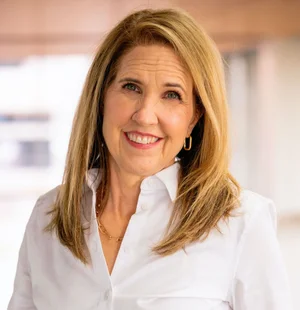
Episode 138: The Midlife Shift Nobody Prepares You For

Feeling Lost in Midlife? Here's Why You're Not Falling Apart—You're Becoming
Midlife Isn't Falling Apart—It's Becoming Who You Were Meant to Be
For many women, midlife can feel confusing.
One day you're managing work, family, and life as usual. Then suddenly your body feels different. Your emotions seem unpredictable. Your children need you less. You catch yourself wondering, Who am I now?
It's easy to assume something has gone wrong.
But what if nothing is wrong at all?
What if midlife isn't about losing yourself—but discovering a new version of yourself?
Think of Midlife as Puberty 2.0
Most of us remember adolescence as an awkward season. Our bodies changed, emotions ran high, relationships shifted, and we questioned who we were becoming.
Midlife often feels surprisingly similar.
Hormonal changes can affect sleep, mood, energy, confidence, and even how we see ourselves in the mirror. At the same time, life is changing too. Children leave home. Careers evolve. Parents begin aging. The roles that once defined us start to shift.
No wonder so many women feel stretched between who they were and who they're becoming.
The good news? This season isn't about decline. It's about transformation.
When Your Identity Starts Changing
One of the biggest challenges of midlife isn't menopause itself—it's identity.
If you've spent decades being "Mom," what happens when the house becomes quiet?
If your career has defined you for years, who are you when retirement approaches or your priorities change?
These questions can feel unsettling, but they're also invitations to grow.
Instead of asking, "What's wrong with me?" try asking, "Who am I becoming?"
That simple shift changes everything.
Less Expectation. More Acceptance.
Our culture constantly tells women to chase youth.
But there comes a point when constantly fighting every wrinkle, every change, and every gray hair becomes exhausting.
Real confidence grows when we stop measuring ourselves against unrealistic expectations and begin accepting ourselves with compassion.
One powerful mindset is simple:
The less I expect, the more I accept.
Acceptance doesn't mean giving up. It means appreciating the wisdom, resilience, and beauty that only life experience can create.
Radiance isn't perfection.
It's peace with who you are.
Your Marriage Is Changing Too
Midlife doesn't just affect women—it affects marriages.
Hormonal changes can influence sleep, libido, patience, and emotional regulation. Empty nesting changes daily routines. Career transitions and caring for aging parents introduce new stress.
These changes often create distance—not because couples love each other less, but because they're navigating unfamiliar territory.
The healthiest couples become intentional.
They ask better questions.
Instead of assuming they know what their spouse needs, they stay curious.
Sometimes your partner simply needs reassurance.
Sometimes they need physical affection.
Sometimes they just need you to sit beside them without trying to fix anything.
Connection grows through conversations, not assumptions.
Every Person Has Core Needs
Every human being shares a handful of emotional needs.
We all long for things like:
Love and connection
Security and certainty
Feeling significant
Growth
Variety
Contribution
The difference is that each person prioritizes these needs differently.
When couples understand each other's top emotional needs, they stop guessing and start connecting more intentionally.
The goal isn't to win arguments.
The goal is to understand each other more deeply.
Every Relationship Has Seasons
Strong marriages don't stay in the honeymoon phase forever.
Like nature, relationships move through seasons.
There are seasons of excitement and new beginnings.
There are seasons filled with conflict, growth, and learning.
There are seasons where couples become deeply connected through trust, teamwork, and shared purpose.
And there are seasons marked by grief and letting go.
None of these seasons mean your marriage is failing.
They simply require different kinds of love.
Growth often happens in the uncomfortable seasons—not despite them, but because of them.
Community Is Medicine
One of the greatest dangers during midlife is isolation.
Many women quietly wonder if they're the only one struggling.
They're not.
Talking openly with trusted friends, joining supportive communities, and sharing honestly removes shame from the experience.
Sometimes healing doesn't come from finding the perfect answer.
Sometimes healing comes from realizing you're not alone.
A Simple Question That Changes Everything
When emotions are running high, it's easy to react.
A simple pause can make all the difference.
Ask yourself:
What would love do?
Sometimes love forgives.
Sometimes love sets a healthy boundary.
Sometimes love starts a difficult conversation.
Sometimes love simply rests.
That question gently redirects us back to the person we truly want to become.
Midlife Can Be Your Most Beautiful Season
Midlife isn't about becoming less.
It's about becoming more authentic.
More confident.
More intentional.
More connected.
Your body may change.
Your roles may change.
Your relationships may evolve.
But none of those changes diminish your value.
In many ways, this is the season where women become their most radiant—not because life is easier, but because they've learned to embrace it.
So if you've been wondering whether something is wrong with you, remember this:
You are not falling apart.
You are becoming.

-
0:00
Navigating Midlife as a Second Adolescence
I look at myself there.
I'm like, wow, you're beautiful, Sue all.
0:03
Speaker 2
I have to do is take off my glasses when I look in the mirror and my wrinkles disappear.
0:08
Speaker 3
Going through menopause can be awesome.
0:11
Speaker 1
Like a little baby, take care of me, feed me, hold me.
What am I getting out of it?
0:16
Speaker 2
By the end of this episode, you will stop asking what's wrong with me and instead ask what am I becoming?
0:23
Speaker 3
Welcome to Marriage IQ, the podcast helping you become an intelligent spouse.
0:29
Speaker 2
I'm Heidi Hastings.
0:31
Speaker 3
And I'm Scott Hastings.
0:34
Speaker 2
Menopause can feel destabilizing physically, emotionally and relationally.
But what if the stage isn't about decline, but it's actually redesign?
0:43
Speaker 3
You mean like puberty 2 point O?
0:45
Speaker 2
Yeah, yeah.
Today we're here talking about women's menopausal hormone changes, midlife identity shifts, how transitions at this stage can impact marriages, and the shift from seeing midlife as a crisis to experience and seeing it as total recalibration.
1:03
Speaker 3
And if you are a man and think this episode is not for you, we challenge you to stay and learn about what your wife is going through and how you can best help her thrive in this new stage of life.
1:16
Speaker 2
To help us dive deep into this topic, we've invited Doctor Sue Mccreaty to join us.
Doctor Sue is a doctor, a wife, a Mama, a midlife woman walking the wild, radiant path of becoming who she truly is.
And she's doing it while she's finding joy in the journey and helping other women to do the same.
1:34
So welcome, Doctor Sue.
1:39
Speaker 1
Yes, yeah.
Thank you.
1:41
Speaker 2
Doctor Sue Why do so many capable, unaccomplished women, when they hit midlife, usually between their 40s to their 60s, suddenly feel like everything's unraveling?
1:55
Speaker 1
I think Scott hit on it, but it's like puberty 2.0, right?
I always compare it.
So people who aren't even yet in their 40s, fifties or 60s, we've all at this point who was ever listening has gone through adolescence and adolescence to me, it's like so much transition hormonally, right?
2:13
And when I asked most people, how did adolescence feel like for me, it felt stretchy.
I felt uncomfortable in my body.
I wasn't really sure about my identity.
My relationships were changing, right?
From platonic friendships to all of a sudden now there's sexual identity, right?
2:33
So there's so many things changing.
I feel midlife is the exact same way.
I was just one of my one-on-one coaching sessions.
The woman's.
This is a really strange place to be.
That's just what it feels like.
2:47
Speaker 3
You can't really see it from the outside like you can as a teenager.
Well, you don't get pimples again and stuff.
2:53
Speaker 2
But you do get a waistline that expands.
2:56
Speaker 1
Wait a minute.
Yeah, yeah.
He totally see it from the outside.
I'm like, what is this?
I look down my arms, they're like, here's the muscle.
It's like a little soft layer all.
3:08
Speaker 3
I guess you'd call it a new bloom, right?
You're a second.
3:13
Speaker 2
Bloom or bloom?
3:16
Speaker 3
So radiant.
That's the bloom I'm talking about.
3:20
Speaker 2
Radiant might be good, but when we look in the mirror.
3:22
Speaker 1
I love that word radiant.
We don't.
3:24
Speaker 2
See who we I think we are quite.
3:28
Speaker 1
Often I think we grow into it.
Heidi, I don't know how it feels for you, but at first I was like, and now I look at myself there, I'm like, wow, you're beautiful, Sue.
I really can shift into it.
It's taken me a while.
I feel like I've grown into this space.
I didn't just arrive here.
3:44
And that's what I help women do a lot is just less expectation.
The less I expect that's.
3:50
Speaker 2
Good, I heard one lady say.
A couple of days ago I found all I have to do is take off my glasses when I look in the mirror and my wrinkles disappear.
3:59
Speaker 3
Yeah.
So, OK.
So cutting down on expectations and increasing acceptance, right, That's what you're saying.
I like that.
4:08
Speaker 2
That is a big deal.
4:09
Redefining Self After Children Leave Home
So you also talked about identity, and certainly when we're teenagers, Oh my gosh, the identity shifts are so intense.
Can you tell me a little bit about what you see?
4:23
Speaker 1
One of the biggest ones for women during this age, if they have children is when the children leave.
The whole who am I if I'm not a mom, tracking these children and taking them here and there and what use am I of now, right?
4:39
Especially if you've devoted your entire self or most of your entire self to raising kids.
So that's a big one that I feel.
I just heard it from another woman recently.
She's like, I feel kind of lonely.
I feel lonely.
My kids don't really need me anymore.
4:55
And so I think that's a big identity shift.
Who am I?
You'll always be a mom, once a mom, forever a mom, right?
But the roles change.
Obviously, we want them to become more independent.
And as their independence increases, the boundaries shift.
And so you're left with who am I now in addition to being a mother, right?
5:14
That's probably one of the biggest ones that I see.
5:17
Speaker 2
Telling your kids what to do at that stage when they're out of the house probably doesn't go very well.
They are increasing in independence, so does that shift to now I get to tell him what to do, now I get to control him?
5:29
Speaker 1
That's when women like to say I'm coaching my husband or actually I remind women that they feel like you're trying to control them.
Coaching feels like controlling.
5:38
Speaker 2
Probably not.
5:39
Speaker 3
I'm just thinking, I don't look at children like my wife does, and I think this is probably normal.
Like for those guys.
I don't think I'm speaking out of line here.
When the shift, when they're out of the house, I'm like, oh.
5:55
Speaker 2
Already starting.
5:56
Speaker 3
And I mean so.
But it's not that I don't love my children.
I think I speak for a lot of men here.
6:01
Speaker 1
I think you do too.
6:02
Speaker 3
It's time to fly, little birdie.
6:05
Speaker 1
Listen, my husband reminds me.
My husband reminds me.
They're OK because I do call them birdies.
I'm like, is this little birdie OK?
Is this little birdie OK?
Is this little birdie OK?
My husband's like me.
Look at me, focus on me.
We're here together.
6:20
And I know it's just like a natural instinct.
6:23
Speaker 2
A lot of my friends, I would say, experienced deep grief when their children left home.
And for our last two, I was in grad school.
So that did help me make that transition a little bit easier than some of my friends.
But yeah, it can be really hard.
6:41
Speaker 1
I'm only giggling, Heidi, because as soon as you said that, I thought of me and my husband sobbing on our bed.
We went through the sad moment when the middle left for college, right?
And the funny part is she's literally down the street.
But it's a transition.
It's like she's not living in the house anymore, right?
6:56
And it's temporarily regrouped.
And we found our new groove with our youngest home alone.
But yeah, I just think it's funny.
It's a grief, it's a loss.
It's a shift.
It's a change.
So that's probably one of the biggest identity shifts.
There's also other identity shifts, right?
I work with a lot of professionals.
7:13
If I'm not a chiropractor, like who am I?
If I'm not a medical Doctor, Who am I right?
So as people start to retire from their first career and maybe not have a second career or maybe start their passion project, it's a lot to let go of.
It's a lot to say goodbye to.
7:30
Speaker 2
I'm guessing that men in that same stage have identity crises, identity shifts.
7:35
Speaker 3
Yeah, I think that might be a little bit bigger for men generally speaking, but maybe not.
I mean, I'm still working my primary career and doing this passion project and it takes up all of my free time.
7:49
Speaker 2
For me, after finishing six years of grad school, when the kids were gone, I went through an identity crisis just making that shift because that is so much a big part of my identity.
8:02
Speaker 3
Well, I remember that you were just studying all the time and there are no kids in the house.
And I was depressed for a little bit and then I snapped out of it.
8:12
Speaker 2
We came up with some good plans and fun things.
8:14
Speaker 3
Yeah, we became intentional about our lives.
8:18
Understanding Needs for Stronger Marital Bonds
Yeah, I was going to say you were depressed because this was a time for you 2 to be together, and meanwhile Heidi's hitting the books.
I've heard that sentiment over here as well, and I think it's true.
I think it's like coming up with a strategy of like, how do you still feel connected?
Because that's one thing I have been clear about is that some people when they retire, they get their dopamine hit from like hitting a golf ball.
8:40
I get mine from helping people.
I will forever be helping people because that's what makes me thrive.
That's what gets me going.
That's what lights me up, right?
So that's something to that.
My husband's not yet retired, but he does think about that.
Wait a minute, I'm going to retire.
8:55
And then you're still over here helping people.
Like that's all great and I want you to continue doing that.
And also, I worked my entire career to create this together.
So I think that's so true.
It's like becoming very intentional and having boundaries around things.
9:11
Speaker 2
It sounds like some important conversations to have several years before you actually retire, right?
Yeah, let's shift from there just a minute to how all of these hormonal shifts and midlife transitions, all the things with this time of life can impact marriage.
9:30
Obviously if your mood is swinging and you're not sleeping at night and you're having night sweats and hot flashes, it doesn't make for a happy person a lot of times.
9:43
Speaker 3
Don't forget the vaginal dryness, my love.
9:45
Speaker 2
Maybe a better question is how can husbands support their spouses during this really difficult time that as women we don't ask for because they might just think that their wives are going crazy and as women we might think that ourselves?
10:00
Speaker 1
Well, I think of it as human supporting human, regardless of whatever season or transition or whatever we're dealing with, right?
We all share 6 human needs, which I learned from Tony Robbins.
The need for certainty that we're going to feel more comfort and in control, like more pleasure than pain in life.
10:20
But if everything is certain and everything's controlled, well, then we get bored.
So we also have a need for variety, which is the spice of life.
We have a need for significance to be seen and heard and feel needed.
We have a need for love and connection.
10:36
We also have a need for growth and contribution.
Those last two are the needs of the spirit.
So we all share these needs, but we prioritize them differently.
And how you prioritize your needs is really going to determine the trajectory of your life.
Someone who prioritizes growth versus someone who prioritizes certainty is going to have very different lives, right?
10:59
So a lot of what I teach women is a six human needs.
And if you had to guess, what do you think your top 2 needs would be?
Because we all fill our needs in different ways.
11:10
Speaker 3
I love it.
We're looking at herself.
We're going, OK, what's important to me?
And with you asking them, it forces them into that moment with themselves, like what is important to me.
And sometimes it's I don't even know.
And So what you're doing, Sue, is you're confronting their needs or values, whatever it is, so they can verbalize it to you and say, oh, yeah, that's what it is.
11:33
Which matches a lot of women.
11:35
Speaker 1
So we share these needs, we prioritize them differently and we also fill them differently.
We have different vehicles to meet these needs.
Everything we do is based on filling one of these needs.
I only work with women, I don't work with couples, but we work with one side of the relationship.
11:52
It changes the relationship.
I asked them, what do you think are your top 2 needs and what do you think are the top 2 needs of your spouse?
The big ones are always loving connection.
Most of the women, they'll put love and connection.
12:08
Number one, they'll put certainty #2.
12:11
Speaker 3
They want safety, security.
12:12
Speaker 2
Right.
12:13
Speaker 3
They want to be loved and connected.
12:14
Speaker 2
But after a couple of years postmenopausal, I'm finding I'm tired of certainty and I want to have fun.
Now do those.
12:23
Speaker 1
Needs shift, yes.
So you absolutely can shift.
And that's a lot of what I talked to women about.
I say, OK, how is that certainty working for you right now?
Because usually that certainty is keeping them stuck, especially if they put certainty above love and connection.
We live in a very uncertain world and so we're always grappling for this certainty outside of ourselves.
12:43
I say the ultimate replacement for certainty is faith.
That is ultimate certainty.
And if you have faith, that can be the bedrock.
So all these other needs are on top of it and you're on the bedrock of faith.
I ask what do you think your husband's or your spouses or your partner's top 2 needs are?
13:01
Speaker 3
I would venture to bet that they don't know.
Now that sounds crazy, especially if you've been married for 30 years.
They assume they know, and they sit down together and have a couple's counsel and ask these important questions.
13:17
They find.
Oh, wait, maybe this isn't what I thought.
Well, I mean those who are really in tune with each other and are intentional with each other, but likely.
But we're learning that a lot of couples don't do this intentional thing very much, which is why we're trying to teach people how to do it.
13:39
But it would be fantastic to formalize it with each other.
13:43
Speaker 2
So Sue, again, you said most women think that their husband's needs are love and connection 1st and then the second thing you said was significance.
13:54
Speaker 3
Who wouldn't want it feels significant, right?
But I think that there might be some, yeah, just some assuming going on.
And I don't know what you run into Sue with that.
14:05
Speaker 1
I agree, I think there are assumptions and that's why you get to have a connected conversation and ask as well.
I learned a lot when I had this conversation with my husband.
His is love and connection and then he was like certainty or contribution.
And The thing is, you really need to look at your life.
14:21
What is it that you're doing day in and day out that validates that those are your top 2 needs, right?
You want to actually really not project what you want it to be because there is no right or wrong.
There's no best or worse.
It's just neutral.
14:37
It's like OK, my top need or loving connection and when I first came into this whole thing, my top 2 needs were loving connection and significance.
Now those are conflicting needs.
They move away from each other.
Loving connection.
We connect through vulnerability, we connect through sameness, right?
14:55
Significance is like, see me, hear me, I'm different, right?
So it's something to play with.
There's no writer on me.
But when I came into this whole needs thing, I was like, oh, that's why I feel pretty not happy everyday because I've got 2 conflicting needs up here.
So I was like, what if I move up growth?
15:12
I love growth, I love personal development.
So I moved down significance and I moved up growth, and that's where I was for probably the past six years.
And then I thought, this growth is exhausting me right now.
I feel like I'm stir wheel.
I feel like I'm always chasing for the next thing.
15:29
What if I move up contribution that feels like an exhale?
That feels like as long as I show up and I'm loving, I'm connected.
I'm contributing to the person that's in front of me.
I win.
I'm like, I want that life.
15:42
Moving Towards Unconditional Love in Marriage
Do most women in this stage have a lot of confidence?
15:45
Speaker 1
I think there's confidence is another thing that women are really seeking and by the way, I think they projected on me.
They think I have a lot of confidence.
Like you look like a confident what look at you.
And I think all of us internally through the shifting time.
That's something that I want to embody right?
16:01
And also it can get rattled.
They can get shaped when our identity is shaped, when our body changes and we don't feel like how we normally feel.
I want to hit on these top 2 needs.
The whole goal if I want to be in relationship with you because there's 3 levels of love, which I've also learned from Tony Rabbit.
16:19
I think these are just amazing frameworks.
Level 1 is selfish love.
It's baby love.
It's me, me, me, me, me, me, me.
Like a little baby.
Take care of me, feed me, hold me.
You go into the relationship for me.
What am I getting out of it?
Me, right, that's level 1 love.
16:36
Level 2 love is where a lot of relationships live and that is conditional love is barter love.
It's like, well I'll do this.
What are you going to do for me?
I'm going to take out the trash.
You go change the diapers.
There's just a lot of transactional love happening.
16:53
It's very conditional.
I give these all different names and what Tony gives, but it makes sense to me.
Unconditional or conscious love is my needs are your needs.
What are your needs?
I need to know what your needs are and I need to meet them.
I get to meet them at a high level if I want to be in a relationship with you.
17:12
And by the way, if I meet all of your 6 needs at a very high level, what are the chances that you're ever going to leave this marriage?
17:19
Speaker 2
Not very much.
17:21
Speaker 1
Not hi, right.
And so that's really my goal and a relationship.
And so if we meeting each other's top 2 needs inside the marriage, we're attracting towards each other, we're building the relationship in the couple.
If we're not, we need at least one of our top 2 needs to match up.
17:40
They need to be similar, right?
They need to be the same.
But if the other needs, I'm not getting this inside the marriage, that's where we start dripping.
Yeah.
And I can even say it happened for me in terms of growth.
I got a high need for growth, you know, So I went outside the marriage to seek for growth and growing here in this personal development program and that personal development program and this personal.
18:00
And how do you think that worked out?
Do you think we got to do some rearranging right and some heartfelt conversations?
18:08
Speaker 2
You're growing and your husband doesn't have the need for that as much, and so you're kind of disconnected.
Is that what you're saying?
18:15
Speaker 1
I think it can lead to serious disconnection.
E1 and you deeply love each other.
It's like what Scott was speaking into where all of a sudden you're like you're growing and studying 6 hours a day and Scott's like.
18:26
Speaker 2
18 hours a day.
18:29
Speaker 1
Right here, yeah.
And I think it requires A reshift if you want to continue growing inside the marriage.
That's really what I learned.
And it's incredible when you're committed to growth and honest communication and meeting each other's needs.
18:45
And that has helped me more than anything.
And how to talk about this topic is thinking about the other person's needs.
18:53
Speaker 2
So how do you switch then from that second level to the third level?
18:58
Navigating Marriage Through Life's Changing Seasons
OK, so this is another framework.
Have you read the book Love's Journey by Michael Garian?
The framework that I love from it is that there's seasons, right?
There's spring, there's summer, there's fall, there's winter.
19:15
And so spring is what we all love about love.
It's like rainbows and unicorns.
We fall in love, but within that spring season, a betrayal happens.
Some secret is told, something that you thought, and then we go into power struggles.
19:33
And power struggle actually is not a problem if you learn how to do it well.
It's how we established boundaries, where I end and where you begin, right?
OK, Summer is when the heat comes on.
This is when you're going through conflicts and you're figuring out how do I be my whole self and not get lost in this relationship?
19:55
And when big trials happen, how do we move through this as a couple?
How do we move this power struggle?
And we're going into ourselves and doing the inner works that I help women with.
And usually at this summer stage, we're stepping on people's feet.
And then we're like, oh, I just crossed the boundary.
20:11
Oh, and then you learn.
You readjust.
What I help women do is move through summer to get to fall.
OK, so a lot of relationships are stuck in either spring or summer.
Moving into fall is like the tango.
It is like the radiant partnership.
It's where I'm guessing you and Scott are.
20:28
It's where me and my husband are.
It's where our relationship radiates out and shines.
And what you're showing people is that you're human, but you're maintaining not only deep love, but you're also passionate.
It takes intention.
It takes concentrated effort to say I need more touch.
20:49
I've heard that as well.
So we learn how to do that tango and one lead sometimes and 1 follows and then it shifts and it's a very like just beautiful radiant partnership.
Winter is what my mom and dad and my dad just passed, but what they're going through, which is you actually begin to separate again because you're about to live physical form and the other person's going to live without you here, right?
21:16
So there's a period of internal withdrawal and separations.
Then you become one with spirit again.
But these Four Seasons, which is really fun.
I have a quiz for that, Like which season is your love story?
And so people can identify and figure out, because many people think that power struggle means their marriage is failing or their partnership is failing or the relationship is failing.
21:37
And that's not necessarily what it means.
21:39
Speaker 3
You just need to communicate a little bit more effectively.
21:42
Speaker 2
And look at what isn't working and figure out how to change it.
Just because something isn't working doesn't mean that everything is doomed.
It means you take a look at things.
If you need help from a therapist or a coach, get that and keep having those conversations, keep adjusting things and try again.
22:04
Speaker 3
I'm sitting here thinking, what if our marriage went through all Four Seasons?
Like cyclically?
22:10
Speaker 2
Every year I.
22:11
Speaker 3
Don't know, like not every year, but I mean, could I go back to spring?
I sure love spring.
22:16
Speaker 1
I love spring too, so that was another thing.
Thank you for touching on that.
It's not like you just do this one thing and then you go.
It's like you can get to fall and then something will send you back to spring.
Maybe a fun getaway trip where you rekindle the romance and it's just it's.
22:34
Speaker 3
New I love the fall the best.
That's number one numero Uno.
But I do love spring.
22:40
Speaker 1
I love that and I would also say other things that can throw you back like an event or something around that can throw them back to towers struggle.
22:49
Speaker 2
With my parents passed away recently as well and I would say we were in the tango and it definitely threw us back into that summer.
I guess I don't know where the heat is on.
23:03
Speaker 3
Yeah, it was really rough.
We never dealt with death before.
23:06
Speaker 2
So we did an episode on grief and how that impacts your marriage.
But I think that is very certainly in this demographic that we're talking about 40s to 60s, something that most people in this age range eventually deal with.
23:24
Speaker 1
I agree it was new territory for our partnership as well.
And it takes a lot of time, effort.
And I'm the doctor, so I'm the leader in our family in this arena.
And it was exhausting.
It was time consuming.
23:39
It was all the things.
And in that time where again, like I just feel, Scott, is it like, I just want you, babe, I just want to be with you.
When is US time and yeah, you're feeling not only the pull of the kids, but also the pull of the parents and navigating that whole situation.
23:59
So it was definitely a very and continues to be.
My mom's still here.
It's a thing that we all get to deal with.
I would definitely say that it's through these trials that trust is solidify even more.
That's been my experience.
24:14
It's like, what does your partner do?
When I got hit with such a huge wave of grief and I just wasn't expecting affecting that because I've been on the March death March for so long, had multiple miscarriages, I felt like I knew what that would feel like.
24:31
And still I just got hit with a tsunami.
And I was laying out flat on the bed, just processing all the feels.
And there was my partner sitting right there just hand on me.
And I still get emotional just thinking about it.
Just Steady Eddie, meeting my need for love and connection, needing my need for certainty, because that's what we need most when we're going through major uncertain times of certainty.
24:56
And I was like how that further concretes the trust in a relationship when you're going through those trials together.
25:04
Understanding Hormones and Midlife Support
So this question is for both you and Scott, both medical doctors, what actually is happening hormonally in women during perimenopause and menopause?
25:14
Speaker 3
I approach it like this.
There's this kind of ambivalence hormonally in your body to go along with all the other ambivalence emotionally and psychologically.
That's estrogen petering out a little bit and you notice, oh, I have night sweats, I have hot flashes and it's a little bit harder to sleep.
25:34
Speaker 2
Sleep is my big one.
25:37
Speaker 3
And you may find that you don't feel as youthful as you did, and that's just that natural course of estrogen reducing.
The other thing is osteoporosis.
As you begin to lose estrogen, your bones become less dense, and then you can increase that risk for fractures.
25:58
Another thing too, that they may experience is a lack of sex drive or libido.
And that can be bothersome to a lot of women.
And so we put them on a little bit of hormones, and that can really help some of these symptoms.
26:13
It's not going to reverse the course of aging, but in postmenopausal women, that small amount of testosterone, progesterone, estrogen can be helpful in a lot of ways.
26:26
Speaker 1
Years ago I interviewed A holistic gynecologist and she explained it as A2 engine plane for each engine is is your ovaries.
She's like, what do you do for your lifetime to support your plane and those engines, meaning your diet, your lifestyle will really show you how you go through menopause.
26:46
For women who haven't had a diet and lifestyle that's been supportive, they tend to feel like they're just dropping out of the sky because the estrogen just fall off a Cliff, right?
She said the goal is, and she's big on hormonal replacement therapy, HRT, is that you want to coast the plane.
27:04
What does estrogen affect as it declines everything.
It can affect everything.
Are you hear those women, It's like, oh, I went through menopause.
I didn't feel anything.
I was like, wow, you are genetically set up for that or you obviously prepared very well for that process.
27:24
Speaker 2
I'm curious about you said diet and exercise help with this.
27:29
Speaker 1
Especially if your genetics support that, right?
So there's definitely genetics that don't do well with sugars.
That would be my genetics.
And the more sugar I reduce, the happier my body is.
So some of us just don't have great genetics to normalize blood sugar in our system.
27:47
So yeah, I think optimizing your diet for your genetics based on what your genetics are.
Some people would do really well with high fat and high protein.
Other people do well with really complex carbs.
I would say all of us do better with less processed sugar, certainly, but some of our genetics are better at dealing with that havoc than others.
28:06
It's not only hormones.
You can't just look at HRT and be like, you're my savior.
You're going to fix everything.
And it's not always just tweaking that.
It's also looking for supplements and other nutrition.
So I was joking with my teenage daughters, like mom's on shrooms now, not the hallucinogenic medicinal mushrooms are so good.
28:24
These fungi are really great at supporting sleep, and they're really great for supporting menopause.
Like, how else can I support this system?
It's like whatever it takes to keep this body balanced.
28:38
Finding Healing and Growth Through Connection
So you talk about soulful medicine as a way to not only experience and understand the things that are happening to us biologically and relationally, but then also individually.
28:53
Can you tell us a little bit about that?
28:55
Speaker 1
I one way is to think of soulful medicine just as the things that you love that fill up your soul, that fill up your spirit, right?
I also think of soulful medicine as things that sculpt your soul.
So when I was just speaking about like death or loss or grief, like those are really painful.
29:12
And yet they're really sculpting your soul to create more growth and to create more empathy and to better be able to contribute to people's lives because you've gone through that.
That's all soulful medicine.
I also think of soulful medicine as an entity in itself, as a way of like a collective medicine that we all experience when we come together, especially as women.
29:35
That's what I love.
I love bringing women together in membership and just the container itself.
It's like women love connection.
We're wired for connection.
Like I can't go anywhere without connecting.
My husband is just like, Oh my gosh, can we just get through Costco?
29:53
Like don't do it.
You can see it coming.
It's like don't do it.
29:58
Speaker 2
I had a women's conference I went to this weekend and I thought I told Scott how long I was going to be, but I was on maybe six hours.
30:06
Speaker 3
Six hours.
30:07
Speaker 2
He thought, I think maybe I'd be gone.
What too?
30:10
Speaker 1
It was great.
30:11
Speaker 3
I don't know why possibly on earth would ever thought you'd be gone for two hours.
You and a bunch of women.
30:18
Speaker 2
So yes, you're right, there is huge value in meeting together as women, especially during a time of life that sometimes we tend to isolate because we don't have the connection with kids, we don't have the connection with other things that we once did.
30:33
Speaker 1
And that's a soulful medicine sometimes is just to bear witness.
We don't have to say anything.
It's just about expressing yourself and knowing that you're not alone in this, you know, because shame likes to hide out.
So you say the shameful thing or you say the thing that you think is disgusting or gross or bad on you, right?
30:52
And you just bare your soul.
And also, we have a lot of fun.
We just laugh.
Like I always say, healing can be fun.
Just laugh at this fascinating behavior because one of the things I think is really important is it's not you, it's a pattern.
These are patterns, and you get to disrupt the pattern, change the pattern, shift the pattern.
31:10
If you don't like the pattern, you'll get different results, right?
So I think those are things too, is just like normalizing.
This is human experience.
31:18
Speaker 3
When you're talking about sculpting, you kind of want to get back to that a little bit.
I think life sculpts all of us, but not all of us thrive from that.
I think we have to learn how to create meaning from the bad things that happened to us in our lives.
31:37
And I agree with you to the point where if I can create meaning out of this terrible thing that's happened, and I look at this as a sculpture, like, oh, I'm being sculpted, then I can grow.
But if I don't, and I've seen a fair amount of people, including myself at some points where it was just misery and I didn't find meaning and no growth.
32:02
And so my goal is to find meaning out of everything in life.
And because I want to grow, I want to become.
32:10
Speaker 2
And what I hear you saying, Sue, is that community helps us do that.
Community helps us make meaning of things that we're facing that seems so heavy.
32:22
Speaker 1
1000% it is.
Yeah, it is.
Medicine community is Madison.
32:28
Speaker 2
I love that.
32:29
Accepting Your Changing Body and Finding Beauty
So going through menopause can be actually awesome.
32:34
Speaker 2
And those life transitions.
32:36
Speaker 3
Because there's some research out there.
The best sex is in your what?
32:41
Speaker 2
40s.
32:42
Speaker 3
40s and 50s and 60s kids are out of the house.
You don't have to worry about getting pregnant, right?
32:49
Speaker 2
That is the one good part about it.
32:51
Speaker 3
Kind of let loose.
32:51
Speaker 2
As long as you have Lube.
32:53
Speaker 3
Swinging from the chandeliers.
32:54
Speaker 1
And I would say especially if you're accepting yourself, especially if you're accepting where you are as your body is physiologically shifting, I think that's been a big part of really looking at myself, looking at my changing body and really seeing like, wow, Sue, you are beautiful.
33:12
So.
33:12
Speaker 2
Sue you are.
33:14
Speaker 1
I believe everyone I meet is so beautiful and reading it truly.
However, here's one of the things that have also really helped me during menopause.
Because what is beauty?
What is radiance?
And how about the contrast between Kate Hudson is the daughter, Goldie Hawn is the mother, Kate Hudson's ripped.
33:35
She'd be walking in that beginning suit and just letting it fly, right?
And who am I attracted to?
Goldie Hawn.
She is radiant.
She is beaming.
And you know what I remind myself of?
33:50
She has life experience.
And yeah, she's just smiling.
She's happy.
She's not, like, perfect, right?
She is just owning it.
Like all the bumps, all the bruises, all of it.
And I just, that's a big visual that I keep in my head to remind myself because you know what?
34:11
I'm human and I want ripped.
I want perfect.
And I know that's silly, but it's human.
And that society, that's what we're surrounded by, right?
And then I'm like, Sue, don't forget Goldie Hawn.
She's radiant, she's beautiful.
34:25
Speaker 2
Goldie Hawn can become our icon in this stage of life.
34:30
Guiding Your Life with Love and Intention
This has been so wonderful.
Can you leave us with whatever parting words maybe we haven't touched on that women in this stage and their partners need to hear?
34:42
Speaker 1
I would say one of the cornerstones that I like to go back to because women often blurred out the fame, right?
And then they say, Doctor Sue, what should I do?
And then now they know because they've been trained.
So they back up.
They're like, don't say it.
This is what I say.
34:58
What would love do?
OK, what would love do?
Because inherently we are loved.
That is our natural state.
That's when we feel radiant.
That's when we feel joyful.
That's when we feel at peace is when we're in a loving state.
And that's why resentment and frustration and anger and all these things, they're beautiful emotions too.
35:18
But we don't like to hang out there too long.
I'm so getting back to like, what would love do?
Even if you put your hand on your heart, what would love do you remember you instantly remember sometimes love would smile, Sometimes love would have the challenging conversation.
35:35
Sometimes love would go take a nap, take a break, take a breather, right?
So it really helps.
And the women have shared that with me.
Like they just remember what would love.
And by the way, that's what we do in our house too.
Like when the girls have a challenging social situation and they're like, what should I do?
35:53
Mom?
Like mom would love to because they know they already know as soon as I ask that.
35:59
Speaker 2
It's supposed to remember 4 little words guiding your life.
36:04
Speaker 3
I love it.
36:05
Speaker 2
Sometimes it's forgiving, sometimes it's saying I'm sorry.
36:08
Speaker 1
Sometimes it's holding a sacred boundary.
This is not OK with me.
It's not OK.
Sometimes love would love the boundary.
36:16
Speaker 2
Love for the important people in your life.
Love for our neighbors.
36:20
Speaker 1
Yes.
36:21
Speaker 2
Journey walkers, where can people find you?
You've just been so delightful and there may be some of our listeners who are like, I've got to learn more about what she's doing.
36:30
Speaker 1
Come visit me.
My website is Doctor Sue mccready.com and yeah, there's fun quizzes to take, including that love story quiz.
It's super fun and free and you can figure out what stage is your love story in what chapter.
36:44
Speaker 3
Doctor Sue McCready.
36:46
Speaker 2
With an IE on McCready right MCCREAD i.e.
36:51
Speaker 1
Yeah.
36:52
Speaker 2
OK.
Thank you so much for taking the time to be with us today and sharing several frameworks that have been so helpful in looking at this crazy stage of life that actually might not be so crazy after all.
37:07
It's wonderful.
Got me excited to be in it.
37:10
Speaker 3
Thank you for joining us today on Marriage IQ.
Remember that to change from a stinky to a scintillating marriage first requires a change in ourselves.
And we'll see you on another exciting episode of.
37:22
Speaker 2
Marriage IQ.