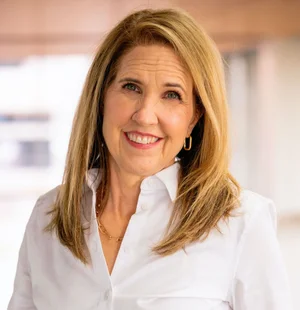
Episode 139: Why You Don't Understand Your Spouse (Yet)

The Secret to Understanding Your Spouse Better
I Love My Spouse... But I Don't Understand Them
Most marriages don't fall apart because love disappears. More often, they struggle because understanding does.
Have you ever looked at your spouse and thought, Why do they do that? Maybe you wonder why they need so much alone time, why they seem overly emotional, why they're always chasing the next project, or why they never seem bothered by things that drive you crazy.
It's easy to assume those differences mean your spouse is selfish, lazy, controlling, or emotionally distant. But what if they're simply wired differently?
Understanding personality differences can completely change the way you see your marriage.
Different Doesn't Mean Wrong
For years, personality expert Marita Littauer Tedder has helped couples understand one simple truth: different is not the same as wrong.
Many of the frustrations we experience in marriage come from expecting our spouse to think, react, and communicate the same way we do. When they don't, we often label them instead of trying to understand them.
The reality is that every person has unique strengths, weaknesses, emotional needs, and ways of interacting with the world.
Once you begin to recognize those differences, conflict often gives way to compassion.
Opposites Often Attract
Have you ever noticed how many couples seem completely opposite?
One spouse loves social gatherings. The other would rather stay home.
One thrives on structure and planning. The other is spontaneous and carefree.
One is constantly working toward new goals. The other prefers a slower, more peaceful pace.
Instead of seeing these differences as flaws, they can actually become strengths. Opposite personalities often complement each other, bringing balance to a relationship.
The problem isn't that we're different.
The problem is expecting our spouse to behave like us.
Stop Trying to Change Your Spouse
One of the biggest mistakes couples make is believing happiness comes when their spouse changes.
But lasting relationships aren't built on changing someone else.
They're built on understanding them.
When you understand how your spouse naturally thinks and responds, your expectations become more realistic. You stop taking everything personally because you realize many frustrations aren't intentional—they're simply part of how your spouse is wired.
That shift alone can dramatically reduce conflict.
The Golden Rule Isn't Always Enough
We've all heard the Golden Rule:
"Treat others the way you want to be treated."
While that's wonderful advice in many situations, it has a limitation in marriage.
Your spouse may not feel loved the same way you do.
You may appreciate encouragement, while they value quiet support.
You may crave quality conversation, while they simply need peaceful space after a long day.
Loving your spouse well means learning what makes them feel understood—not just giving what you would want yourself.
Personality Is a Starting Point—Not an Excuse
Understanding personality should never become an excuse for unhealthy behavior.
Saying, "That's just how I am," doesn't help a marriage grow.
Instead, personality gives you a starting point for growth.
Every personality has incredible strengths. Every personality also has weaknesses that require intentional effort.
Someone who naturally loves people can learn organization.
A quiet perfectionist can become more encouraging.
A driven achiever can learn patience.
A peacekeeper can become more decisive.
Growth happens when we lean into our strengths while intentionally improving our weaknesses.
Meeting Your Spouse's Emotional Needs
One of the most practical insights is that every personality has different emotional needs.
Some people need appreciation.
Others need encouragement.
Some need sensitivity and understanding.
Others simply need respect and a sense that their contributions matter.
The challenge is that we often give our spouse what we would want instead of what they actually need.
Even worse, we may unknowingly withhold exactly what would help them feel loved because it doesn't come naturally to us.
That's why understanding personality can be so powerful. It teaches us to love our spouse in a way they can truly receive.
Understanding Creates Connection
You don't have to become someone you're not.
And your spouse doesn't have to become someone they're not.
Healthy marriages aren't built by erasing differences—they're built by learning how to work with them.
When you stop asking, "Why can't they be more like me?" and start asking, "What does my spouse need from me?" everything begins to change.
Understanding creates empathy.
Empathy builds trust.
And trust strengthens intimacy.
The more you understand your spouse, the easier it becomes to love them well.
Because sometimes the breakthrough your marriage needs isn't better communication—it's a better understanding of the person you've been communicating with all along.

-
0:00
Why Marriages Struggle: Lack of Understanding
Most marriages don't struggle because of a lack of love, they struggle because of a lack of understanding.
0:06
Speaker 2
We can't change other people, the only people we can change is our self.
A man leaves his cute, adorable cheerleader type wife and runs off with the unattractive secretary.
And the people who are watching this on the outside are going.
What on earth does he see of her?
0:24
Speaker 1
Welcome to Marriage IQ, the podcast helping you become an intelligent spouse.
0:29
Speaker 3
I'm Heidi Hastings.
0:31
Speaker 1
And I'm Scott Hastings.
Have you ever thought, why does my spouse act like that?
Like you love them but you genuinely don't understand that?
Has that ever happened to you?
My love?
I think that just about anyone thinks I would be a weird person to live with.
0:50
Speaker 3
Oh stop, you're amazing.
0:53
Speaker 1
Most marriages don't struggle because of a lack of love.
They struggle because of a lack of understanding.
We end up mislabelling personality differences as selfishness, laziness, or emotional distance, when in reality, we're just wired completely differently after 20 or 30 years of marriage.
1:15
Those differences can either become a source of deep frustration or one of your greatest strengths.
1:21
Speaker 3
Today we're joined by Marita Littauer Tedder, a personality expert with over 50 years of experience helping people understand themselves and others like their spouses more deeply.
So if you've ever felt misunderstood or like you just can't quite figure your spouse out, this episode is going to give you the language and the clarity and a completely new lens for your marriage.
1:46
So welcome to Marriage IQ, Marita.
Marita has taken a personality framework developed by her parents and has expanded upon that and is offering powerful insights into how you can identify personality differences, often just by looking at someone.
2:08
Marita, I'm so fascinated about your parents and their framework and how you got into.
2:16
Speaker 2
That my mother began speaking on this topic.
She ultimately wrote a book on it called Personality Plus, and this book has sold multiple millions of copies and it was translated into more than 25 different languages.
So her book is a real classic.
2:33
Now for me as a kid growing up with this, I never had a question as to what is my personality because I kind of grew up with this.
However, when you enter the work world, which for me was fast food when I was a teenager.
2:49
And when you think about it, that's the first time in life that you really have to deal with people that you may not like, that you don't get along because prior to that, if you friends make you mad or they kick sand in your face or whatever, you just quit hanging up with those people.
3:06
But when you're working is when you are, you have to get along with those people who you wouldn't naturally be attracted to.
And So what I began to do, that's in my book, wired that way.
I began to realize, as you mentioned, Doctor Heidi, at the beginning, I could identify the personality type of that person that I was working with.
3:28
And then once I understood what their personality was, I could adjust my approach to that person, which alleviated a lot of relationship issues.
3:40
From Hippocrates to Modern Personality Insights
So can we start then by having you just share about the different personality types?
3:47
Speaker 2
Yeah.
And let me mention my parents didn't create this, nor did I.
They enhanced it.
They popularized it.
The ideas originally had come from more than 2000 years ago when the great Greek thinker Hippocrates realize that there are people out there who are different from you.
4:05
And when I speak on this subject, I always start by raising my hand and asking the audience how many of you have noticed there are people out there who are different from you and they all raise their hands.
And then I asked how many of you live with, work with or used to live with that person who's different from you?
4:24
And they all like, Oh yeah, yeah.
And then I say, how many of you have ever tried to change that person?
They all raise their hand.
And then I asked how often has it worked?
Then they all by now are with me and they shout back differ because we can't change those other people.
4:40
The only people we can change is our self.
And so Pocrates back these many years ago observed that people were different.
And with the limited medical and scientific knowledge that was available at the time, he concluded that what made people different was that they had different fluids in their body.
5:02
And so when I share this with you, the four basic personality types, you're going to hear some words that are kind of funny sounding.
And in fact, some people might think, gosh, that sounds Greek to me.
Well, it is Greek.
It's the original terms that hypocrites created.
5:18
And anyone who has a knowledge of that will recognize that these terms relate to Fluence.
However, because for most people that is Greek, I've added to it, which is one of the things I added that is not in my mother's book Personality Plus.
5:34
But I've added to the Greek word a modern day adjective, and I've also added a color.
And so I tell people it doesn't matter whether you use the Greek word the modern they were or the color, but what matters is the relationships.
5:49
Sanguine, Melancholy, Choleric, Phlegmatic Explained
So with that four basic personality types, I like to start with the popular sanguine, which I represent with the color yellow.
And I'd like to start with the popular sanguine because the popular sanguine is the one that is the most easy to identify.
6:08
We are the ones who are loud, fun loving, outgoing, and we tend to like bright colors.
So that makes that person the most obvious to identify.
Along with that are some weaknesses that we tend to be late, we tend to be disorganized, and we tend to be forgetful.
6:28
Of course, there's much more to it than that, but that's just to give you a quick overview.
So the popular sanguine represented by the color yellow.
Then we have I like to show the opposites.
And for those of you who are listening, not watching, picture if you can just an 8 1/2 point 11 piece of paper with four quadrants, 2 quadrants on the top and two on the bottom.
6:51
And if you're picturing this, put that popular sanguine on the top left square and then the bottom right square is going to be the perfect melancholyum.
This placement is important to help understand because I want you to realize that the perfect melancholy personality is the opposite of the popular sang.
7:14
So where the popular sanguine is loud and outgoing and fun loving, the perfect melancholy personality represented by the color blue is quiet and they're introspective and thoughtful.
While the popular Sanguine is an extrovert and they tend to be kind of little hot, which is why they're on the top.
7:36
The perfect melancholy is an introvert and they are also sent the fuckful, conscientious, organized, perfectionist kind of person.
But along with that, they tend to be Moody and they tend to have a low tolerance for other people.
7:52
And so that's just give you an idea of those two.
Then the third most obvious to identify is the red, which is the powerful choleric personality and that's the natural boss of life.
They are the strong driven, goal oriented kind of person.
8:10
However, with that, they tend to have a lack of patience.
They tend to bossy and they tend to get angry quickly.
Then the last one is the peaceful flightmatic, represented by the color green and the peaceful flightmatic.
8:25
They're the watcher of life.
They're the ones that if you ask them do you want coffee or tea, they'll say, I don't care.
It doesn't matter.
Whichever is easiest.
And they truly mean that.
They truly mean whatever is easiest.
But while they're really an easy to get along with person, they have a lack of enthusiasm and they tend to use sarcasm a lot.
8:47
And so they can be very draining for others in that way.
So that's a real quick overview of the floor, basic personality types.
8:56
Speaker 1
So Marita, why do we tend to marry someone who is opposite?
9:01
Why Opposites Attract and How to Meet Needs
I personally believe that it's the way God designed us.
If I'm strong here and weak here and strong here, so forth, and my spouse is the opposite, then as we come together, we bring a full complement of skills and abilities to the table.
9:20
And so if we were the same personality, we'd have kind of gaps.
We'd have holes in our relationship and the tasks of life.
Occasionally I do find someone who is married to someone who's almost the same personality, and I encourage them to hire someone to take care of where their weaknesses are because they don't have that in their.
9:42
Speaker 3
Union, that's interesting.
9:44
Speaker 2
Personally, I teach this with more of an emphasis of understanding others rather than understanding yourself.
Now, of course, as you read it can't help but identify your own personality and the book has the personality profile at the end of the book as well.
10:03
If you're in a tough relationship with someone and you all specialize in marriage.
And so I'm sure you've had this where you one spouse is really willing to do anything to make the marriage work and the other spouse is totally unwilling to do anything or change.
And may say, as my husband has said to me, it took me 60 years to get like this and I'm not likely to change today.
10:24
So, you know, one spouse usually is more willing and one is less willing.
I have found if even only one spouse understands these concepts and the other one really has no interest at all.
But assuming they're a decent human being, they're going to start to notice some changes and they're going to start to respond to that in a positive way.
10:48
So one of the things that's really different on our program to some of the others that I think is the key.
And I want to make sure as we talk about marriage today that we get to that.
And that is how to meet the emotional needs of others.
11:03
Because most of us were brought up on what was called the golden Rule.
Do unto others as you would have them do unto you.
And that's great if you're talking about children playing in the sandbox, but when you take it into relationships, which we all just inherently do, once you realize that people are different, as we've talked about, then what I want is not going to be the same thing my husband needs.
11:30
And so once I understand who he is, I understand his strengths and weaknesses so I can adjust my expectations of him accordingly, and then I begin to meet his emotional needs, that's where you can see real changes in relationship.
11:46
Speaker 1
But Marita, I have a question.
Doesn't that sound like you are codependent or you're enmeshed or some kind of pathological relationship psychology?
11:58
Speaker 2
Like, I don't think so.
I think it's trying to make your relationship work and staying married.
I really don't know how people stay married without an understanding of the personalities.
12:10
Speaker 1
Well, it I say that because ultimately I agree with you.
I think that though it's important for those who might think, wow, I'm just giving in to my spouse.
12:19
Speaker 2
Ideally, especially if they start to see you changing and your response to them changing, they're going to be interested in this.
Then hopefully, again, assuming they're a decent human being and there are those that are not, there are just jerks in the world.
12:35
There are those people, no matter what you do and get along with them, they don't want to be gotten along with.
But assuming you're dealing with a decent human being, they're going to see that difference and want to respond to that.
And then ideally, both partners are interested in engaging and making their marriage the best it can be.
12:56
Speaker 3
And maybe part of that is knowing who you are, if you can not only recognize who you're partner is, what their personality traits are, if you can also recognize your own so you can hold tight to who you are in the process of trying to respond to your spouse's emotional needs in a way that's helpful without giving yourself away.
13:19
What?
13:20
Speaker 1
I think too, this goes along with a lot of things that we talked about is that the difference lies in the intention.
You can react to your spouse and give in, or you can be intentional about what you do with your spouse or act toward your spouse.
13:36
Using this example of personality differences, I noticed that you are more reserved and you don't like the spotlight.
And so I can react to that and feel like I'm sacrificing for you and resent that.
13:56
Or I can be intentional about that and say, OK, let's be intentional about her personality and work with that.
And I feel confident enough in myself and in my personality, my identity, that I don't feel like I'm being steamrolled by working and helping you with your personality.
14:21
Practical Examples of Personality in Relationships
Does that make sense?
14:21
Speaker 3
Yeah, again, it comes down so much to being strong in our own identity, which it sounds like your mom's book kind of helps set some of the stage for that as far as personality traits go.
And then yours helps us.
14:37
Yes, I can see very clearly, at least this is my perception that you're yellow and red and I'm probably the opposites of that and.
14:45
Speaker 2
So that's the makeup of my marriage with my husband.
And they're on the top because those are kind of the hot personalities and the bottom 2 are the cool colors and they're on the bottom because they're the more low key personality.
15:00
So just the placement of those squares kind of helps people to have that visual to go with it.
And honestly, hiding that combination, which is the combination of my marriage, I'm the top two, my husband is the bottom 2, I say is the hardest marriage to make work.
15:17
Speaker 1
I'll tell you though, I'm not a natural yellow.
I'm not.
15:21
Speaker 3
You've just worked at it.
15:22
Speaker 1
But I think.
15:23
Speaker 2
I'm not saying to 1.
15:25
Speaker 1
I have to talk to patients every day.
And, you know, just over the years I've learned how to socialize better.
But it's not a natural yellow.
15:35
Speaker 3
So let's then dive into how understanding these four personality types can actually help us in our marriages, besides responding to their emotional needs.
15:48
Speaker 2
My husband is my second husband, I'm his third wife and he is that peaceful, phlegmatic and perfect melancholy combination.
Low key and he'll say I'm not a talker, which is true.
He's not.
My former husband was not peaceful phlegmatic.
16:05
He was the perfect melancholy and the powerful color combination, the right hand side of the squares as I call it.
I have been for years telling women that if you're married to a peaceful phlegmatic, he actually needs half hour in the Lazy Boy when he gets home from work.
16:24
And I mean, it may not literally be the lazy boy, of course, but he needs time to recharge his batteries and his batteries are recharged by solitude.
And if he walks in that door coming up from work and his wife hits him with I need you to go help Johnny with his homework, I need you to do this.
16:43
I need you.
That is not going to be a good thing in that marriage.
He's going to feel like he's picked on and she's nagging him, but he needs 30 minutes in the recliner.
And then I married my husband now and he needs 30 minutes in the recliner.
One day I was going to go speak on this topic and he knew it and we were.
17:02
So we were talking about personalities and he said to me, you are the first wife who has understood me.
That's relationship goal.
That's what this is about, and I have learned that it's his job in our relationship.
He mows the lawn and does all that kind of stuff and I don't have to nag him to do it.
17:20
He gets it done.
He chooses, which I don't understand, but he chooses to do it later in the day when the heat is higher.
And he could have gotten up early and done it when the heat is cool, but he likes to sleep and so Oh well, he can do it late in the day when it's hot and he gets it done.
17:42
He doesn't necessarily do it at the time I think he should do it.
But if I have a little party with my girlfriends coming over, he always goes out and mows the lawn.
I never have to ask him.
I never have to bring it up.
And he's a good guy.
He just, his timetable in life is a little different from mine.
18:00
And I understand that about him.
And so I can give him that space to be himself without nagging him and trying to get him to get up early and get things done.
18:10
Speaker 1
So yeah, that's a great example, a real world example of working with those different personality types and is making a plan.
Because I know we talked too about just being intentional with each other.
We definitely talk about identity, which personality is a big part of that, and just learning about ourselves and also knowing too, that I'm not the same person that I was 30 years ago when I married you.
18:37
I am very different now.
18:38
Personality: A Starting Point, Not an Excuse
Well, and that's the goal.
This is not to be an excuse.
Understanding your personality is only the starting place, and you don't want to use it as an excuse to say, oh, I'm phlegmatic.
And so I don't like to go out a lot.
I don't want to go to a lot of parties or for me to say, well, I'm saying when?
18:56
So, you know, I'm just late.
Get over it.
You don't want to use your personality as an excuse for bad behavior.
Well, yes, you are wired a certain way as humans.
We're intelligent human beings and we can overcome that.
We can learn things that are not natural to us.
19:14
But when we are tired or sick or angry, that learned behavior tends to go away and we tend to revert back to really how we're hard wired.
You want to grow and mature with each personality type.
19:30
There's a whole list of straits and a whole list of weaknesses of each personality type.
Our goal is to live in our straits.
Getting personality type is a great person when they're living in their streets.
19:43
Speaker 3
So give me an example then.
You and I spoke before today and you've interacted with me a little bit.
From looking at me, what would you say my personality type or types might be and what strengths go along with those?
19:58
Speaker 2
Based on your total demeanor, your voice, your body language, from watching you where you are very well mannered.
Your tone is modulated, and so I would see that perfect melancholy in you.
The perfect melancholy is someone who's very caring and conscientious of others.
20:21
They feel for the underdog and they're compassionate in that way.
And so that makes that person a really great counselor because they're good listeners.
Whereas someone like myself in the raw, and I like to call it refined or raw in the raw popular sanguine, just because I'm quiet doesn't mean I'm actually listening.
20:44
And that may mean I'm just thinking about what I'm going to talk with to say next.
Everything is so.
20:50
Speaker 1
Bluntly.
Well, it's it's just.
20:52
Speaker 2
Cut out.
So there.
I mean there are very definite straights and weaknesses of each one.
And it's not that everybody has check, check, check, check everyone, because we are unique individuals.
But when you can take these generalities, they are generally true and learn them and work with them.
21:09
You can understand others but also grow yourself.
So a perfect melancholy living in their weaknesses would be someone who's withdrawn, who's Moody, who's expecting perfectionism from others and therefore demeaning to others because they're not perfect.
21:30
So who wants to hang out with that person?
No one.
But if you take that person who's caring and compassionate and thoughtful and on time and throw that in and doesn't forget things, whose detailed conscious, that's a great person to be with.
21:47
And you can do that with each personality type.
The person living in the raw is not someone you want to be with.
And in fact, I've got let me just grab here what I'm grabbing for those that can sing.
We call this our personality portfolio.
And in the portfolio are handouts living in straight and so doesn't.
22:07
You can see that it's a pretty simple little handout.
I'll read you the perfect Melancholy's hiding since you asked about yourself.
The raw, perfect melancholy is hesitant, fearful, uptight, fragile, hermit, Moody, hypochondriac, emotionally unavailable, self-righteous, critical and obsessive.
22:27
That's the perfect melancholy.
Living in their weakness, living in their strengths, their empathetic, succinct, analytical, organized, compassionate, a good lessoner, and reliable and trustworthy.
Can you see the difference in that?
22:42
Speaker 3
So knowing what my strengths are and what my weaknesses are, I can try to magnify my strength, I can try to minimize or overcome my weaknesses.
But then how does that help Scott?
22:56
Speaker 2
It helps him because his expectations of you are realistic.
So because the perfect melancholy needs to recharge their batteries by solitude, and Scott probably has more energy and he probably wants to go, go, go.
23:14
And you're going to be like, do we have to go somewhere every night?
Because going somewhere every night wears you out.
And if he understands that is just who you are, that you're not being difficult.
My husband says to me regularly, do we have to have something every night?
23:32
Speaker 1
I think I might be somewhat of an enigma, don't know if I.
23:36
Speaker 3
4 squares.
23:38
Speaker 1
Nearly fit in any of them.
But I mean, I mean, yeah, this is a really good.
This is a good discussion.
You are.
23:43
Speaker 2
More the driver.
23:45
Speaker 1
It depends on the thing.
23:46
Speaker 3
I'm not fully in the what's the one, the melancholy one either.
Sometimes I'm the one that's wanting to go do.
I'm actually working this year on increasing what would fit in your model as the yellow one.
24:01
Just trying to do new things in life.
And that's one thing I really like about your model is that you're allowing for growth, you're allowing for better balance by seeing what areas you don't have strengths in and maybe trying to increase some of that's.
24:19
Speaker 2
A very important factor, like I said, this is a starting place and in it I reference it's like those you are here maps if you go to visit a city.
24:28
Speaker 1
Yeah, I want to touch on this earlier, not I'm going to jump in now and talk about it because some people look at the word label.
It's a very sharp 2 edged sword, right?
When we label someone something some people may say that compels them to live a life based on what they're defined by.
24:47
But what that's not what you're saying at all.
You're using it as education to to learn about how to change and how to grow.
And that I think too, that's like in the medical field, the diagnosis is not a sentence.
It is a starting point.
25:04
And I think that's really important for people to know that this does not define you.
This is a starting point to help you grow and become your best version of you.
25:17
Speaker 3
And also have that understanding of who your spouse is so you can be more compassionate now.
25:24
Speaker 2
That's a big deal.
The realistic.
25:26
Speaker 3
Yeah, the expectations.
25:27
Speaker 2
If you expect your spouse to act in a way that is someone he isn't or she isn't, you're going to be continually frustrated with that person.
25:35
Speaker 3
Good point.
25:36
Unmet Emotional Needs and Relationship Impact
So Marita, you've talked about understanding what your partner's emotional needs are, what your spouse's emotional needs are.
Are there different needs depending on the personality type if you?
25:50
Speaker 2
Start with the emotional things.
It doesn't really mean anything until you have the framework of the four personalities to understand.
So I'm speaking on and I spent the 1st 10-15 minutes or so, the visible plumes, then I spend the next 20 minutes or so on the various strengths and weaknesses.
26:09
And then at the end then I go back to these emotional needs because this is where real change happens.
Now that you understand what your spouse's personality type is and you adjust your expectations of them based on their straits and weaknesses, the real difference comes in when you start to give them what they need, which is what I call their emotional needs.
26:33
And I have a little worksheet for that or a handout in the personality portfolio.
And I might just mention that this is available on our website.
And it's great for people who are not book readers.
So we have information available in a real quick review format.
26:49
And so the emotional needs of the popular Sanguine are attention and approval, and we need people to notice us.
That's part of why we tend to dress in bright colors and loud things, why we tend to be out there kind of people.
27:05
Now, if you think about this for a moment, the popular sanguine is almost always married to a perfect melancholy.
And a popular sanguine needs a primal.
We need to be loud, touched, kissed, padded, told we're wonderful.
We're usually married to someone who's a perfect melancholy.
27:23
And if you think about the perfect melancholy married to the sanguine, when is that perfect melancholy ever going to tell that sanguine that they're wonderful?
They're not, because they're going to tell that person they're wonderful when they're perfect and they're not ever going to get perfect.
27:40
And so they actually subconsciously withhold from the popular sanguine what they need because in their mind they say, well, if I tell her she's good now, she'll think this level is good enough and it's not.
And this is subconscious.
27:56
So I'm going to withhold from her that approval and attention that she wants until she's perfect like I think she should be.
Now the perfect melancholy emotional needs are sensitivity and support.
28:12
So let's just look at it in the reverse.
The popular sanguine who needs attention and approval, they're not naturally sensitive.
So husband, let's say, which is the case in my life.
So husband has a bad day and popular sanguine wife doesn't understand this.
28:28
And she says, how was your day?
And he says it was fine, which is usually what he says.
And she goes, oh God, I'm glad to hear it, and goes on her merry way.
But what he really needs is for her to slow down, quiet down and sit down and just blithely asking how was your day is not going to get it out of him.
28:50
She needs to, Blake said, sit down, quiet down and offer sensitivity to what's going on in his life.
But if she doesn't understand that's what he needs, she's never going to give him that on her own.
29:06
Then the powerful coloric emotional needs are achievement and appreciation.
29:12
Speaker 3
And which color is that?
29:14
Speaker 2
That's the red.
The powerful color needs achievement.
This is the kind of person they do not do well when they're sick color.
If they get a long term illness, they're going to get very depressed because they can't have that achievement that they are used and they also need appreciation for work.
29:35
OK, They want you to praise them from their work, not because they're cute like the popular sanguine, but they want that attention for all the work they do.
Fact, one of the best things you can say to that powerful choleric personality is I don't know how you do all you do.
29:52
This place would fall apart if it was not for you.
Now they're usually married to the green, the peaceful phlegmatic.
Now the peaceful phlegmatic, they're in according to the powerful color.
I'm not saying they are, I'm just saying this is what the powerful color perceives of their peaceful flegmatics about.
30:11
They perceive that person is in a production deficit.
They sleep too long, they send them the lazy boy too long.
They don't go, they don't do.
And so the powerful power perceives that peaceful flegmatic is in a production deficit.
30:26
Now picture a House of peaceful flegmatic feel.
They need peace and quiet and a feeling of self worth, their marriage, that powerful color.
They wish the powerful color would slow down and sit down with them.
30:42
So all that busyness that the powerful color does makes the peaceful phlegmatic feel inadequate.
And so without understanding this, is that peaceful phlegmatic ever going to give that powerful color the sense that the appreciation that they need for all they do?
31:01
No, because they wish they would quit doing all that work because it makes them feel insecure, makes them feel that they're in a production deficit.
So without understanding that they're not going to ever give them what they need now, the peaceful phlegmatic, they need a feeling of self worth and respect.
31:22
I one day was speaking on this and a woman kind of stormed up to me with her hands on her hips.
And she said, so you're telling me that I need to give my peaceful phlegmatic husband respect and the feeling of self worth?
And I said yes.
And she said how am I supposed to respect him when he doesn't do anything?
31:42
And I'm like, there's the problem right there.
The powerful power it to them, the only thing worthy of respect is production.
And the peaceful phlegmatic, according to the Palace of Cholera, is going to be in a production deficit.
31:58
So when you look at this from a marriage standpoint, without understanding this, not only do we not meet our spouses emotional needs, but we actually subconsciously withhold from them exactly what they need.
32:15
And I'm sure you've seen this and everybody's seen it at some point where a man leaves his cute, adorable cheerleader type wife and runs off with the unattractive secretary.
And the people who are watching this on the outside are going, what on earth does he see of her?
32:33
But the reality is that the sanguine, cute, bubbly wife long ago quit trying to understand her perfect, melancholy husband because he's boring and he's depressed and he's negative.
32:48
And so she gave up and she's gone off having fun with her friends.
Now, they may still be married, but he doesn't have anyone at home who gets him.
But the other woman is there.
And she's like, oh, I'm so sorry, So sorry that happened to you.
And before long, no one intended to have an affair, probably.
33:07
But over time, suddenly she gets him.
And so that's where the emotional needs are really important.
33:14
Further Resources and Episode Conclusion
That's really fascinating, and I feel like we're only touching the tip of what you're talking about, and I know that you have so many resources that our listeners may want to explore.
33:28
Speaker 2
I love talking about this when it specifically connects to marriage because I just see it as so important.
My website isthepersonalities.com, simply the word TH ING, the personalitiesplural.com, and there you can find the books, the personality profile, both the paper copy and the electronic copy.
33:51
And on that website also are a lot of free resources.
The podcast that I've been doing on this topic, and of course, Amazon.com.
If people just want to buy one book, honestly it's easier for me if they just go to Amazon.com.
If they want to get a quantity discount on either the personality profile or the books, then they need to come directly to me.
34:12
Speaker 3
And Marita so graciously is allowing us to post on our website, marriageiq.com, under freebies some of the handouts that she's been talking about in this podcast episode.
And we're so grateful for that, Marita.
34:27
Speaker 1
Yeah.
And we really appreciate you coming on today joining us.
This has been a very eye opening discussion about personality, about identity, which is one of the four cornerstones that are very, very important to us.
And we hope that you have enjoyed as well and that you've learned something new today.
34:45
Reach out to us at hello@marriageiq.com if you have any questions or comments on this.
And please don't forget to subscribe whatever platform you are on, Apple or Spotify, YouTube.
Well, that really helps us and we really appreciate that.
35:04
We look forward next time to seeing you on another exciting episode of Marriage IQ.