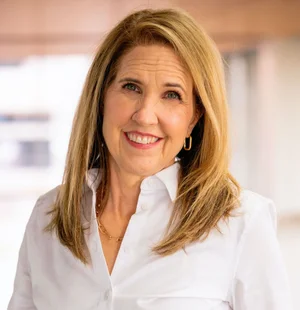
Episode 143: 4 Communication Tools to Stop Misunderstanding Your Spouse

The Communication Mistake That's Creating Distance in Your Marriage
Why Good Couples Still Misunderstand Each Other (And How to Change It)
Have you ever tried to help your spouse, only to make things worse?
Maybe they came to you feeling frustrated after a difficult day. You immediately offered advice, suggested solutions, or explained what they could do differently. Instead of feeling supported, they became quiet, defensive, or upset.
You were trying to help—but somehow, you missed each other.
If that sounds familiar, you're not alone. One of the biggest communication problems in marriage isn't a lack of love. It's responding to the wrong emotional need.
Before You Understand Your Spouse, Understand Yourself
Communication expert Sandy Gerber believes that healthy relationships begin with one important question:
What conversation are you having with yourself?
The way we think about ourselves shapes the way we communicate with everyone else. If our inner dialogue is filled with fear, insecurity, or pressure, those emotions often show up in our marriage without us realizing it.
Sandy discovered this after experiencing two failed marriages. While her professional life looked successful on the outside, she realized her personal relationships kept repeating the same unhealthy patterns. That realization sent her on a journey to better understand herself before trying to understand others.
We All Have Different Emotional Needs
One of Sandy's most practical ideas is that people are emotionally motivated by different needs. She groups them into four categories using the acronym SAVE:
Safety – You value stability, security, predictability, and structure.
Achievement – You thrive on goals, recognition, growth, and accomplishment.
Value – You seek purpose, significance, and a meaningful return on your time and effort.
Experience – You crave adventure, learning, creativity, and new experiences.
Most people naturally lean toward one or two of these motivations. They aren't personality labels—they're clues to what helps us feel emotionally fulfilled.
When couples understand each other's primary emotional needs, many conflicts suddenly make more sense.
Sometimes Your Spouse Doesn't Need a Solution
During the conversation, the hosts shared a real-life example. Technical problems before recording left one spouse feeling overwhelmed and embarrassed. The other immediately started offering advice about how to prevent the problem next time.
The advice wasn't wrong.
It just wasn't what was needed in that moment.
Instead, reassurance would have been far more helpful:
"We're a team. We'll figure this out together. It's going to be okay."
That small shift—from fixing the problem to meeting the emotional need—can completely change how a conversation feels.
Relationships Don't Usually Break Overnight
One of the most powerful ideas from the discussion is that relationships rarely collapse all at once.
They drift.
That drift happens through countless small communication choices. Ignoring emotional needs, making assumptions, or becoming less intentional slowly creates distance.
The good news?
The same small daily choices can rebuild connection.
Greeting your spouse when they come home, asking thoughtful questions instead of the usual "How was your day?", or simply reminding each other, "We're a team," can strengthen your relationship far more than grand romantic gestures.
A Simple Tool for Difficult Conversations
When conflict does arise, Sandy recommends a simple three-step framework she calls Feel, Need, Forward.
Instead of saying:
"You never listen to me."
Try this:
Feel: "I felt hurt when I was interrupted."
Need: "I need to feel like my thoughts matter."
Forward: "Next time, could we make sure I finish before responding?"
This approach keeps the focus on understanding instead of blaming, making it much easier for both people to stay connected during difficult conversations.
Learn to Pause Before You React
Strong emotions often take over before we even realize it.
Sandy teaches a simple "EQ Switch" to regain emotional control:
Notice where you feel the emotion in your body.
Name the emotion you're experiencing.
Take one slow breath—in through your nose for three seconds and out through your mouth for four seconds.
That brief pause creates enough space to respond thoughtfully instead of reacting impulsively.
Progress, Not Perfection
Even communication experts admit they don't always get it right.
Every marriage includes misunderstandings, stressful moments, and emotional reactions. The goal isn't to avoid every conflict. It's to recognize what happened, repair the connection, and keep learning together.
When you begin understanding what truly motivates your spouse—and share your own emotional needs more openly—you create conversations that bring you closer instead of pushing you apart.
Sometimes the most loving thing you can say isn't advice or a solution.
Sometimes it's simply:
"I've got you. We're in this together."

-
0:00
Why We Misunderstand Our Spouse's Emotional Needs
Sometimes we really are trying to help our spouse, but we still miss what they need from us in the moment.
They tell us what happened or what they feel, and we offer advice, we explain, we suggest solutions.
But instead of feeling supported, they become frustrated, shut down or pull away and we're left wondering, what did I say wrong?
0:20
I was only trying to help.
Overtime, those small moments can begin to create distance, even in a marriage where both people still love each other.
That is why this episode matters.
Today we're talking with communications expert Sandy Gerber, best selling author of Emotional Magnetism and the forthcoming book Connected Conversations.
0:43
We originally recorded this conversation back in May.
Since then, Sandy's new book has reached number one in Publicizers summer pre-order campaign.
It builds on the same idea at the heart of today's episode, that the conversation you are having with yourself shapes the conversation that you're having with everyone else.
1:02
In this conversation, Sandy shares practical tools to help us recognize what is driving our reactions and understand what our spouse emotionally needs and make those small communication choices that help relationships from drifting.
1:18
Here's our conversation with Sandy Gerber.
1:21
Speaker 2
Welcome to Marriage IQ, the podcast helping you become an intelligent spouse.
1:27
Speaker 1
I'm Heidi Hastings.
1:28
Speaker 2
And I'm Scott Hastings, welcome back to another exciting episode of Marriage IQ.
Heidi, we're all intelligent people, right?
We're well-intentioned, I think.
1:40
Speaker 1
All of our listeners are.
1:42
Speaker 2
Yeah.
So why is it that we're trying so hard to be emotionally there for each other and yet sometimes we keep missing it, even though I'd like to think I'm emotionally intelligent?
1:55
Speaker 1
I'd like to think I'm emotionally intelligent and yet sometimes we are, like on different planets.
2:01
Speaker 2
Well, today we've invited an expert to be with us to talk about emotional magnets that love packs and communication pocket tools that you can use like today.
2:13
Speaker 1
Wow, that sounds like some really good gems.
People are going to want to hear about this.
2:18
Speaker 2
Sandy Gerber is a communication coach, emotional intelligence trainer, and a best selling author of the book Emotional Magnetism, which has won 24 International Book Awards.
2:34
Sandy is also ranked in the Top 30 Communication Professionals by Global Gurus and the 2025 Women of Influence Creative Innovator.
Wow, we got a heavy hit.
2:48
Speaker 3
With this.
2:49
Speaker 1
We are excited to have you today.
2:51
Speaker 2
Welcome to Marriage IQ.
2:56
Speaker 3
Thank you so much, Scott and ID.
I'm thrilled to be here.
We're going to have a great conversation together.
3:00
Sandy Gerber Explains the SAVE Emotional Magnets
I want to ask you, I've been curious about this, what are emotional magnets?
3:06
Speaker 3
Well, emotional magnets are is a term that I used for some research I dug up from the 60s and it was really about what's emotionally motivating us in our conversations.
You know, Scott, I had major failures in my life, 2 failed marriages, a lot of failures in my personal life.
3:23
Professionally, I look successful.
So I went hunting for some research and some information to help me shift the way I was communicating with people because I was the repeating path and emotional are the way that we actually are communicating with people and what people emotionally need to be happy.
3:41
Speaker 2
Wait, so it wasn't always someone else's fault?
It's always someone else's fault, right?
I.
3:45
Speaker 1
That in and of itself shows that you are emotionally intelligent.
3:49
Speaker 2
Like right off the bat she's like, OK, this is what I figured out and it's me.
3:55
Speaker 3
That's right.
I was like, I wanted what my parents had, right?
They had this 52 year marriage.
I wanted to be walking down the beach hand in hand, old living our life together, and I thought that was easy because I was raised in it.
But not until you do it do you realize what you're actually bringing to the relationship and what that person needs from you.
4:15
Speaker 2
OK.
4:16
Speaker 1
And those can be mismatched.
4:18
Speaker 3
Yes, very.
Wow.
At least I say to people, you know, to be emotionally intelligent, you first need to figure out what's the conversation you're having with yourself before you can go have a great conversation with others.
What do you actually emotionally need?
Yeah.
4:32
Speaker 2
What I'm hearing you say, Sandy, is that that we got to figure out our side the way we do it.
We have to bounce things off ourselves, right?
How are we going to know automatically who and what we want?
4:43
Speaker 3
We have so many thoughts.
Everything we create starts in our thoughts, right?
So when we think about our relationships and how we're connecting with people in our personal and professional lives, we first need to say what we're saying to ourselves.
What are we actually saying to ourselves about ourselves and what we need?
5:00
And I didn't know, I really didn't know that journey until I started uncovering the magnets and really finding people are motivated by different things.
Now, I'm not talking about personality tests or love languages or any of that.
I'm talking about what's actually emotionally fueling conversation, right, for yourself and others.
5:18
And once you start unpacking that, it gives you the permission to be yourself, to really be yourself, and more importantly, to share that with the people that you work and love and lead, and it changes your life.
5:29
Speaker 1
So what were some of the things that you recognized about yourself after 2 failed marriages at this point that you're diving in and looking at the messages that you're telling yourself?
5:41
Speaker 3
Yeah, I was feeling incongruent.
I was feeling like a fraud.
I really was like outside.
I looked successful.
I had the clients, the awards, the team, a sexy office.
I was rocking it from 9:00 to 5:00, but my personal life was a mess.
I was failing at the most important conversations in my life.
5:58
And so here I was telling people how to communicate to get customers and to have better relationships, and I couldn't do it myself.
So that voice inside that was really sensing this fraudulent kind of perception of myself that started getting louder and louder.
6:14
And then I thought, OK, I need to uncover what this is all about.
And that's what sent me on a journey.
I spent a decade reading everything I could and absolutely everything I could in research and in nonfiction to uncover and unpack and learn about myself.
And when I did that, I started realizing the thoughts I was actually saying to myself and how negative they were.
6:35
Wow.
6:36
Speaker 1
I can understand that I call what you are talking about imposter syndrome.
6:41
Speaker 3
Yeah, it's pretty powerful.
We haven't really been taught how to talk, right.
Most of us haven't had formal communication training.
And so we're just we're picking up how we communicate to ourselves and others from our relationships, from our failures.
We mostly learn how to communicate by failing at it.
6:57
Speaker 1
Oh, I like that.
I like that.
6:59
Speaker 2
I think that's totally true, right?
You just have to get used to failing a lot.
7:03
Speaker 1
And learn from failures instead of nose planting and not getting up and just saying, oh, it's just the way I am, Yeah.
7:10
Speaker 3
I found like, even in my professional life when I was a leader, I was one of those people that I've been always curious about words and how you can motivate people to act and listen by using your words, which is what led me into marketing, of course.
And then on to communication, like always crafting messages to try and figure out how can you actually connect with people.
7:29
And it's not until you start unpacking what you're saying to yourself and what you're saying to others that you actually realized how connection is simple.
It just needs to be a focused effort.
7:39
Speaker 2
Wow.
OK.
So because you can hear a lot from people who say getting to yes or getting them to say what you want them to say, but what I'm hearing you say is that's not sustainable for a long term intimate relationship, right?
7:57
Speaker 3
It's really looking at, it's a shift that we need to do and what my book and what my work is all about is and my passion, truly why I get out of bed is to start understanding what do you actually emotionally need to be happy in your life?
What do you need?
And once you emotionally figure that out, we haven't been taught that there's four emotional needs.
8:16
I turned them into an acronym because I was a marketer and also because it spells save OK, It saved my life.
8:21
Speaker 2
What are those 4 magnets?
8:23
Speaker 3
Let me tell you, Scott S stands for safety.
So what you need is predictability, security, structure, your family's your top priority.
You're looking for a way to make an impact with your skills and safety.
So that's safety.
And then achievement is a, so that's people who are motivated by challenge, performance, competition, opinion, pride.
8:44
They need recognition to be happy.
8:47
Speaker 1
OK.
8:48
Speaker 3
Yeah.
And then V is for value.
So these are people who are motivated by significance, growth, return on their energy, time investment.
They're the ones that are thinking about what's their legacy, what are they going to leave behind, right, That's value.
And then E is experience.
9:04
And these are people who are motivated by emotionally needing new creativity, curiosity, learning, growing.
They're the people that are always looking for a spontaneous adventure for their loved ones.
So when you think about those 4 magnets, you kind of think, well, what do I emotionally need?
9:21
And if I look at the choices in my career and in my personal relationships, you're pretty easy to figure out where you're sitting with your magnets.
9:28
Speaker 2
So let me ask you, I have a question.
So does everyone have these 4 magnets or do we just have one that's like the primary magnet?
Or how does this work in a population?
9:41
Speaker 3
These magnets are developed as early as six years of age, so they're based on how you're brought up, your family or upbringing, the challenges and obstacles you've overcome, and they can change based on the season that you're in.
Like when I lost my parents, my magnet changed to value.
I was really focused on how to keep my family secure, all these kinds of things.
9:58
So what you want to do is look at one or two.
Think of it like this way, like it's a four lane highway and each of us is driving in one of these lanes and sometimes we'll swerve between the lanes, but we tend to stick to 1.
So we have one or two of these magnets.
10:14
In my family of four kids, we each have a different magnet.
We're all different.
And when you start understanding the magnets, you have way more empathy for the people in your life.
You're like, oh, that's why they make the choices that they do.
It's based on what you've had as an experience in your life, right?
10:32
What you emotionally have found has worked for you and what you need.
So I'll give you an example.
I'm run by achievement and experience.
Those are my 2 magnets and that means that I'm constantly trying to achieve things, challenge things, set goals, smash goals, but also the journey along that path needs to be an amazing experience.
10:52
I need to learn and grow and feel like I'm making an impact.
Where my sister, I have a twin sister who is motivated by safety.
She's wants a very set structure.
She likes boundaries where I'm out-of-the-box type of person.
So when you understand these needs, you can see it in your career choice very simply.
11:11
In your career choice, if you're doing what you're passionate about, you can see it in the relationship choices you've made in the past.
You can see why you get irritated by certain people and why you accept other people.
So this becomes really a filter for you to empathize and understand everyone's choices around you.
11:29
Speaker 2
So you have no desire to be safe then, right?
11:32
Speaker 3
I do have a desire to be safe, but not as much as I have a desire to achieve and to have experience.
11:37
Speaker 2
So like emotionally intimately safe, that's important, but it doesn't rise to the level of you wanting to achieve and have experience.
11:49
Speaker 3
That's right, this is great time to share.
So I hadn't used these 4 magnets.
I found them and I repurposed them from this work in the 60s called the Emotional Appeal Theory.
And they've done this research with thousands of people in the 60s on what emotionally voted people.
And I applied it into my business and I started crafting my messages to these different magnets.
12:09
And I saw that succeed.
It went from my bedroom to a top 100.
And so I was like, oh, it worked professionally.
Let's try it personally.
So I actually tried it on my first date with my now hot husband of 12 years.
And I asked him on our first date right across the table.
12:24
Instead of the regular banter, I was like, hey, I'm curious, what do you emotionally need in your life to be happy?
It changed our life.
I shared the four magnets, he quickly identified his and we've been honoring them ever since.
And it was that moment where I realized, wow, we took our conversation to a whole nother level.
12:42
You know, being able to understand quickly, self identify and then empathize what the person needs.
I can give you the stories to kind of illustrate that, if that helps, Scott.
12:52
How Emotional Magnets Prevent Relationship Drift
So here's a good example.
Everybody has different magnets.
My husband and I were working late.
He came home.
He said, let's order dinner.
I pull up the app and I'm standing through and I'm thinking, OK, his emotional magnet is safety.
I need to order something that's in his comfort zone.
13:07
He never orders anything he doesn't like.
He always orders the same thing.
So I'm looking for something like, oh, OK, Chipotle.
He loves Chipotle.
So I say to him, hey, love, how about Chipotle for dinner?
And he looks at me and says, no, we can't do that.
And I'm thinking, you left their burritos.
What's the problem?
13:23
Right?
And he says, well, Sandy, they're only three blocks away.
And I'm thinking, So what?
And then I realized his other emotional magnet is value.
He cannot justify a home delivery that's only three blocks away from the house.
These are some of the kind of disagreements that we have in our relationships all the time.
13:40
But I looked at him and I said, Oh, yes, value, of course.
OK, Out of curiosity, how far does it have to be for it to be delivered?
And he said five blocks.
So we ended up ordering from six blocks away.
He's happy.
He has his value justified, right?
The deliveries been justified, the cost value.
13:58
And I'm happy because it's a new restaurant experience.
So these are the types of conversations we have in our relationships and really some disagreements that we have in our relationships that we don't understand, but when we understand their magnets, it just filters everything into place.
14:13
It makes sense.
14:14
Speaker 1
So you've been working with this how many years now?
14:17
Speaker 3
I guess it's almost 20 now, yeah.
14:20
Speaker 1
So you've, you've got a lot of really great ways to have these conversations.
14:24
Speaker 3
Well, it's that it's also first, as I said, in any relationship, the most important thing about our relationship and why it's so healthy we feel like we're still dating is because of this, because we recognize we really don't have any other labels for each other.
You know, I find I said this in my Ted talk to labeling.
14:41
We all do it, but we tend to label people by their behavior and not by their emotional motivation.
So we say like you're a workaholic, you're controlling, you're cheap.
But if we actually stop doing that and start labeling them by their magnet, we understand why they're doing what they're doing and we end up having more connection.
15:00
And really?
15:01
Speaker 2
I like that.
That sounds emotionally intelligent.
15:05
Speaker 3
Oh, I got the valve.
That's.
15:07
Speaker 2
Awesome.
15:07
Speaker 1
So are there times that the magnets, do you create conflict or do you feel like because you're just aware of what the magnets are, you can approach it a little softer when they might be bumping up against each other?
15:24
Speaker 3
I think the magnets enable you to have a conversation you typically wouldn't have.
First of all, I think it gives you that space to say, hey, I think I understand you a little bit better.
Are you upset because of this, that and that?
But what I find with relationships is that they're not just all of a sudden stopping or getting worse.
15:42
They drift.
Our relationships drift.
And it's the communication choices that we make daily that stop that drift, Right?
They close.
Yeah.
So making conscious choices about how you're communicating with each other, whether it's magnets or whether it's your body language or whether it's what I call my love pact, any of those things will start closing the gap on that drift.
16:05
And that's what keeps the connection so strong.
16:07
Speaker 2
I think we had an episode on pausing, right?
We don't intentionally choose to pause or as Sandy says, drift in our relationship.
And I I think that sounds kind of similar.
16:20
Speaker 1
Yeah, if we're not all in, if we're not being intentional about what we're doing, that drift or that pause can happen.
And if that goes too long without being addressed, for some people that feels really hard to overcome.
16:34
Speaker 2
I think this is a great way to really start because it's kind of simple.
There's 44 things to.
16:39
Speaker 1
Choose from not too many.
16:40
Speaker 2
Like, hey, honey, well, all these four, which one you think is the top one for you and then me.
And then let's talk about some scenarios when everyday scenarios where these might show up so we can plan ahead and so it won't be so brutal in the moment, so.
17:02
Speaker 1
Here's a little scenario for you.
I'm nervous.
Not that either of us were right or wrong.
So today, before filming this episode and another one, we had a lot of computer problems and maybe the safety in me was coming through.
17:20
I don't know what to do.
This hasn't happened before.
It's something unusual for our podcast and I'm getting frustrated.
I don't know what showed up.
Externally, you'll have to tell me, but internally there was just a lot of conflict going on.
17:38
And then Scott comes and tries to tell me next time maybe you should do this, next time maybe you should do this, which maybe is achievement in him.
17:47
Speaker 2
I'm very sorry.
17:48
Speaker 1
So take us through that scenario.
If one of my magnets is safety, one of Scott's is achievement, how would you navigate that so there's not a lot of frustration?
18:00
Speaker 3
Yeah, it's so important that we learn tools to pull out of our pockets immediately when we need them, right?
18:08
Speaker 1
Yeah, exactly.
18:09
Speaker 3
That we can just pull out right away and use the magnets is one that always with you.
So in that situation, yes, you're motivated by safety.
Then Scott knows that he's going to start using language to help you feel more secure in that moment.
18:25
That's what you need emotionally.
Like, you didn't need a solution.
You didn't need to talk about the next episodes because you were all focused on what's happening right now, and I don't feel safe.
And so your emotional need at that moment was safety.
You needed it.
18:40
So one of the things you could have done there is say, OK, what do we need to feel better about starting the show?
That's a question because we always move to solution right away.
What are our possible options?
We can cancel, we can start, we can postpone your, you kind of move to solution, but what did you actually need at that moment?
18:57
Speaker 1
I think I needed him to say, hey, no matter how this turns out, it's going to be OK.
Neither of us knows what's going on.
And but we got this.
We're a team.
19:08
Speaker 3
The thing is to really reinforce we're A-Team and I've got to, and like, so I'll just a tiny little example here.
One night I was working, it was dinner time.
We always do dinner together.
I'm not a really good cook, but I'm a good sous chef and clean up.
And so I was doing that and all of a sudden I heard the laundry going and I thought, wait, the laundry's going the dryer.
19:29
And I thought, wait a minute.
Oh my goodness.
I put the laundry in at 7:00 AM this morning and it's now 7:00 PM and the dryer's going and I thought, what is happening?
And I go in and I sure enough, Chris has gone in there, my husband, and he's changed the laundry.
He's come back out to the kitchen, hasn't said a thing.
19:46
I said to him, well, thank you for changing the laundry.
I'm sorry, I was consumed with work and I just totally forgot.
He said, yeah, no problem.
We're A-Team.
That's the thing.
It's like somewhere along in these relationships, we forget, that's what I call draft.
We forget that we're in this together and we've got each other's back 100%.
20:06
So in that situation, you needed that.
You needed to know, I've got to, we're going to get through this.
It's going to be fine.
Not, oh, next episode, maybe we'll do this.
That will come later because that's great information to minimize any issues of safety in the future.
But you needed a little bit more in that moment.
20:23
Around being safe.
So it's just we start really looking at how we're communicating to each other when we realized this is what I need right now.
Because you were not sad about the technology, you're upset about the disruption.
That's the thing that we needed to talk to, right?
20:39
Speaker 2
And I would love my love to to help you out in those moments.
20:47
Simple Daily Choices to Strengthen Your Love Pact
Sandy, a moment ago you mentioned love packs.
Can you tell me what that is?
20:51
Speaker 3
Yeah, happy to.
So this is what I'm writing in my next book.
And I'll started asking me, Sandy, how do you, 12 years in, still have a relationship where you're constantly in each other's orbit?
Like we just, you can see it.
People can see it with us.
We're fascinated with each other and just holding the space and love for each other.
21:08
And so people want that.
Like, how do you have that after 12 years?
And I was just always insistent that I was not OK with, oh, this is just the way things go.
Like, that's not OK, right?
It takes work.
Yes, people say that, but really it should just be such a connection that you are grateful for every day and a connection that you work on because you want to, not because you have to, right.
21:34
So this love packed people started saying, Sandy, how what are you doing?
What are some of the actions?
And it comes down to the communication choices we make every day.
It really does.
So simple things like I have a whole bunch of different levels on it, but there's one tool I have that has like 30 different things you can do in your day to actually build connection more in your relationship.
21:53
One of them in the lump pact is as simple as go and greet the person that comes in the door at the door as soon as they come in, get up from whatever you're doing and go to the door.
Now we used to do that at the beginning of a relationship, but over time we drift and we stopped doing that.
22:08
Things get more important, but just doing that, because what that says to the person as soon as they come through the door is you're coming home to me and I am so happy you're coming home to me.
So you're special.
You're the person in my life I picked.
You're my team member.
So things like that.
22:25
Other things like the first thought of your day and your last thought of the day.
So I teach this, it's an EQ communication tool.
When you're waking up, before you take your head off the pillow, what's the first thought of your day?
Usually we're reaching for a snooze or thinking about our To Do List or the problems we're going through from yesterday.
22:43
But when you set an intentional first thought, like I have everything I need to be successful and I'm competent, I'm loved, I'm whatever you want, that's setting your trajectory for the day.
And the last thought of the day is just as powerful where you're thinking, you know, what have I actually seen today?
23:01
What am I present to today?
What am I not missing?
What did I actually catch?
What am I grateful for?
So this first and last thought of the day actually bookends to your day.
And when you think about your relationship, you think about what am I actually desiring in my relationship and what am I averting in my relationship?
23:21
And when you start playing with those phrases, you start really understanding more about where you stand in your relationship.
So those are just a couple examples.
Another one too that people love is we always say when we see someone, how was your day right?
And people go fine, whatever you know, and instead change that to be more full of curiosity.
23:40
So I'll always ask a different question every day.
So I'll say what made you smile today?
What did so and so do at work today?
What are you most proud of the work that you did today?
Like just different conversation starters like that enable conversation and connection.
23:56
Speaker 1
I love those and I can see that we've made progress in the ones that she has given as examples.
We decided it was important to us to be there when he comes home, my work from home, but he would come in and I would be in the middle of something.
And so we just decided when he gets ready to leave the office, which is like 7 minutes away from our house, he just calls and says, hey, I'm on my way home.
24:21
That gives me a minute to wrap up what I'm doing and be ready usually to just greet him with a big hug and hold each other.
So we kind of have to play with that a little bit, right to to figure out how to make it work for us.
24:35
Speaker 3
Yeah, because you're then saying you're my priority in the day, you are my priority today, and I don't want you to feel otherwise.
And somehow we end up doing that less as the relationship goes.
We end up just taking things for granted, right?
And instead of really remembering that we're A-Team and that we chose each other and then it's an honor to be in each other's lives.
24:57
Speaker 1
I love too that you brought up about saying how was your day today?
Because that does get stale and you don't get much of a response from that.
So just trying to come up with different ways of asking that what was your most challenging patient today or what did you feel was your biggest accomplishment today?
25:15
Things like that.
But I think you added in a few other possibilities, even to ask how something was going with someone at work.
25:23
Speaker 2
And that that might happen after I go on my mindful walk.
25:27
Speaker 1
Nice 'cause sometimes he's pretty.
25:29
Speaker 2
I've determined that I need to de stress and I just need to be alone on a walk.
Mindfully that is.
So I look at everything and it's might be 5 or 10 minutes and then I can feel my body start to relax so I can go back in and have just a better experience with my wife.
25:54
I think it's just going to be better charged energy.
That's great.
25:58
Three Steps to Calm Emotional Triggers Instantly
A lot of times I find coming home from seeing a bunch of patients, my brain is just on fire and I can't do.
26:07
Speaker 1
It and I could interpret that that he's upset with me or something, which isn't true at all.
26:11
Speaker 3
Yeah, it's really important to have that space.
We talked about pausing before too.
I say to people, even if you are in a conversation and someone said something that activated you and triggered you, it may be just like you said Scott, because of your day, or it may be something that's just emotional.
26:27
One tool I teach, which I had to do myself, I had to learn this, I had to study it because I couldn't understand why I was so emotionally triggered by different things.
And so I call it the EQ switch, how to switch yourself into an emotionally intelligent state right away.
So you doing the walk is actually doing that.
26:44
But here's the three steps.
So I call it the EQ switch.
The first step is to locate where that emotion is in your body because obviously emotion shows up in our body before it registers in our mind.
So first notice where is that showing up in my body?
27:00
I'll give you an example.
I was early in my career.
I was asked to present to a board.
I was so nervous.
I had three slides, 10 minutes, and I was studying for a couple weeks, ready to do it.
Called my mom.
I'm like, this is the moment, you know, it was one of those kinds of thing.
27:16
And I started and I was prepared and I was rehearsed and like 10 seconds in, the CFO cuts in, cuts me off and starts asking what if questions are just throwing them one after the other.
And I started feeling really tense, really uncomfortable.
27:32
And so if I located where that was in my body, it was in my hands, it was in my gut, it was in my jaw.
So locating where that emotion is first of all makes you present.
It brings you back into the present moment instead of thinking what ifs and how dare they.
So that's the first step.
27:48
The second is backed in neuroscience, it's called effect labeling, naming the emotion that you're feeling.
I'm sure you're aware of these.
And so when you name that emotion, your amygdala activity reduces by 50%, right?
So you're literally calming your body down by naming your emotions.
28:06
So in that wardroom, I would have said I'm feeling it in my jaw, I'm feeling it in my hands, I'm feeling overwhelmed.
I'm actually feeling fear.
I was feeling fear.
And so that would have calmed me down.
Then the third step is to take a breath.
Now most people say take a breath, just pause.
28:23
You're like, you're not going to break into box breathing.
So it's a specific type of breath.
It's 7 seconds.
It's 3 seconds in through your nose and four seconds out through your mouth.
And you do it quietly.
If you don't do it quietly, you're in another whole argument, but basically quiet.
28:38
And that gives you a gap to really think about the words that you're going to say. 7 seconds isn't a long time, but it's enough that that actually creates a space for you to think to respond instead of react.
So those three steps are really powerful.
28:53
And once you start doing it, it gets faster and faster.
I do it before I get on stage, keynotes, whatever.
And even with adult children that disagree with what I'm saying, I'll use the EQ switch.
29:03
Speaker 2
The EQ switch.
29:04
Speaker 1
I love that title.
That would have helped me earlier today.
29:08
Speaker 3
Yeah, that's right.
You could have used it right then and there, right?
Saying this is what I need.
29:11
Speaker 2
Yeah, love it.
29:12
Speaker 3
Especially with technology party, we end up catastrophizing that even more, right?
Because we're like, we don't know what to do.
And so when you switch into OK, what's happening, I feel it in my gut.
I'm feeling overwhelmed, I'm feeling frightened.
Let me look unprofessional, whatever.
And to handle it better.
29:29
Speaker 1
Yeah, I think I was really embarrassed.
29:31
Speaker 3
Knowing that in that moment and sharing that with Scott, he then would have had a different approach completely.
It would have been like, OK, what she needs is, you know, support that she feels embarrassed.
Let's find a way to make you feel better.
You know, it's a totally different.
29:45
Speaker 1
Conversation.
Yeah, I think both of us kind of fell on her face.
And we're experts, right?
We talk about emotional intelligence a lot.
We talk about these things a lot.
And so I think it's important to understand that there are going to be times that you don't do it right.
29:59
Speaker 2
You're going to fail even even if you're solid in this information.
30:04
Speaker 1
And I think putting a stressful situation where I felt out of control and embarrassed up against a time caused me to just totally leave any kinds of tools that I think that I know how.
30:18
Speaker 3
To use.
So what I would have done is definitely I would have first noticed OK, my face always goes hot when I'm dealing a little fluttered.
So basically my face was hot.
I would have noticed that would brought me more center.
My jaw was tight.
I would have felt OK.
My feeling, I'm feeling fear, feeling overwhelmed.
30:34
I'm feeling embarrassed as well, probably some shame.
And then the third thing, when I took that breath, I would have realized, OK, what do I need to say to his response?
How do I want to respond here?
We tend to react so quickly instead of just taking that moment to center ourselves and get clear so that we can respond instead of react do.
30:52
Speaker 1
You have any others practical tools that you can share?
30:55
Speaker 3
So one that I always get asked for that works really, really well.
30:58
How to Have Difficult Conversations Without Defensiveness
I called the honest sandwich.
People who are in relationships always ask, how do you have a difficult or a necessary conversation with someone without them getting really defensive?
What tool do you have?
Because many of us, when we're thinking about sharing how we feel about something, we're either, you know, we're avoiding it, we're obsessing about it, or we're throwing carbs at it, or we're trying to figure out what to do with it.
31:20
And so many of us haven't been trained to actually express how we feel without making someone go crazy, right?
So we're a little nervous about it.
And we'll use this phrase usually, which I highly advise you stop using, which is we need to talk, right?
31:36
Nobody should ever say we need to talk.
It just makes you feel like you've done something wrong.
So instead we use the honest sandwich.
Again, three steps.
I try to make it so simple.
So the first step is to share what you feel.
And we're not used to doing that.
So I feel blank.
31:53
Let's say I was in a meeting and someone cut me off.
I felt disrespected when you cut me off.
So the first thing is to say feel.
When you do that, the person is less likely to be defensive because it's not about them, it's about you.
The second step is to tell them what you need.
We usually will say, look, I felt this way and we go to solution.
32:11
But instead tell them what you need, right?
So why did that bother you so much?
So I felt disrespected.
You cut me off.
What I need is to feel like a valuable member of this team.
You know, what I need is my opinion to matter, you know?
So telling the person what you need, it helps from those, the conversation forward.
32:28
It's not like this is what you did wrong.
It's more like, here's what I need to do better.
You know, it's a totally different shift.
And again, the person doesn't get defensive because they're hearing what you need.
And then finally, you move the conversation forward.
So you use forward.
So you have feel need forward FNF.
32:45
That's what people think about it.
But basically forward.
So how are we going to move this forward?
So you say to them, I felt disrespected when you cut me off.
I need to feel like my opinion matters going forward.
Can you ask for my opinion before you shut down the meeting?
So you're telling the next time or going forward, can we do it this way?
33:03
And all of a sudden you become a team in that situation where you're moving the conversation forward.
So this works fabulously in personal relationships because we're not typically sharing how we feel right off the bat.
We start with, you did this and I didn't like it.
And so instead, you start with what you feel, what you need, and how to move forward.
33:23
Speaker 2
Wow, it's.
33:23
Speaker 1
Beautiful.
Does that work with kids too?
33:26
Speaker 3
Really well with kids and it's just like the person is hearing from you what you emotionally need.
Again, it goes back to look.
This is all often used by magnets.
I feel frustrated that you don't want to go to that new restaurant.
What I need is new experiences and adventure.
33:43
I need that for my life.
I need that at my heart, soul level going forward in a couple weeks, can we maybe look at going to that new restaurant?
So it's really about how you start having a more open and connected conversation in your relationships.
33:59
Speaker 1
And I think if you teach those three things to your children, that helps them better communicate with you as well and, and be able to express what their needs are and how they're feeling.
34:13
Speaker 3
I had my daughter actually said to me, hey, mom, I had this conversation with my friends and this is how it went out.
And she said, I realized I was doing failed need for it the whole time.
And those are handy little tools.
That's what I'm talking about, making sure I've read tons of nonfiction and that's fantastic, but they don't give you really a tool that you can pull out of your pocket right away and use.
34:34
And so that's really been my mission is to make sure that I create these easy tools that people can use for themselves, how they talk to themselves and how they talk to others.
34:42
Sandy Gerber's Tools for Stronger Relationships
Those are such great tools.
When's your book coming out?
34:45
Speaker 3
I think in 2027, in the fall and just finishing it.
34:49
Speaker 1
OK.
Maybe we'll have to have you back on to share some more.
34:51
Speaker 2
Thank you, this has been a great conversation.
34:53
Speaker 1
Yeah, it has.
I love.
34:55
Speaker 2
It he's given us tools easy to understand and just to help another perspective, another way of looking at things and intelligent people look at as many perspectives as they can on how do we approach each other, how do we thrive really.
35:14
And I love Sandy, your perspective on this today.
35:17
Speaker 1
And communication is one of the most difficult for couples, so I love that all of these are built to help us communicate better in a way where both people can be understood.
35:27
Speaker 3
Yeah, thank you.
I love the conversation.
I also think it's just so important that we understand how we're talking to ourselves and understand ourselves first and then start deepening our conversations with others.
Because I'm even going into this 10 day silent retreat thing that's coming up in the next few weeks, right where I'm actually going to be silent.
35:45
And I know the irony of a communication coach going silent, but it's really about centering and being focused on what is that track?
I call it thought flow, but what is the thought flow that's going on in your mind all the time?
Because it's showing up.
The conversation you have with yourself is the conversation you're having with everyone else in your life.
36:03
So start there, learn some tools and understand who you are and what you emotionally need.
Share it with the people that you lead and love, and your connections will deepen.
36:12
Speaker 1
This has been so great, Sandy.
We appreciate you taking the time to be with us, and I know our marriage IQ listeners will find a lot of value in the things that you're sharing.
If they want to know more about what you're doing and some of the things you teach and even about your book, where can they find you?
36:29
Speaker 3
So thank you for having me on the show.
I'd love the dialogue you have together.
I love your connection and True, thank you very much.
If your listeners want to continue the journey with me, I'd be delighted.
They can contact me at sandygerber.com.
That's my site and there's lots of free resources there.
36:45
Also my book Emotional Magnetism available Amazon and everywhere else in Audible.
And then I also have the Magnetic Communication podcast now it's just 10 minute long every Tuesday and you can get a pocket tool every week and start using it.
So people like that just won the best Mindset of mental Health podcast this year.
37:02
Speaker 2
A magnetic communication podcast.
OK, thank you.
Right.
37:06
Speaker 1
Oh, I just, I love that, that it's 10 minutes a day.
37:09
Speaker 3
I wanted to make sure someone could listen in 10 minutes and walk away with a tool so awesome.
It's not an easy thing to do, you know?
It's not easy to get a 10 minutes.
The last thing I'd share too for your listeners is that I have a quiz.
So if they're struggling right now with their relationships, because they get a lot of people that ask about this, if they are struggling with maybe their partner hasn't gone to bed with them at the same time for months, you know how that starts creating drift.
37:34
They can take this quiz, it's 9 questions, figure out where their drift is right now, and then they'll get those 30 connection choices that I talked about.
So they can go to urban.com/drift Dash quiz and that will tell them which of the four stages they're in and what they can do quickly to start shortening and reverse that drift.
37:54
Because it really takes a choice to make that happen.
37:57
Speaker 1
I want the 30 things, so I'm going to go do that.
38:02
Speaker 2
Thank you everyone for joining us today.
It's been a great pleasure to see all of you back again.
Don't forget to like subscribe wherever you listen or watch us and reach out to us Hello at marriageiq.com.
And until next week, we'll see you on another exciting episode of.
38:18
Speaker 1
Marriage