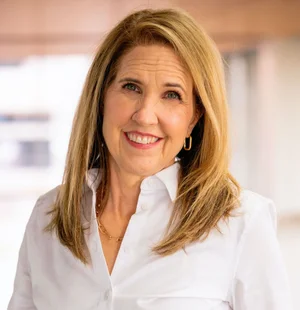
Episode 97 : How Spy Skills Can Save Your Marriage with Jeremy Hurewitz

What Spies Can Teach Us About Marriage
At Marriage IQ, we often lean on research to explain what strengthens a marriage. This episode took a different turn one we’ve never explored before. Instead of data points and studies, we looked through the lens of espionage, hostage negotiation, and intelligence gathering.
It sounds dramatic, but stay with me. Our guest, Jeremy Hurowitz author of Sell Like a Spy and a former journalist turned corporate intelligence professional has spent years learning how elite communicators read people under pressure. These are the same skills used by FBI hostage negotiators and CIA case officers when emotions are high and trust is fragile.
And surprisingly, many of those skills apply beautifully to marriage.
Two ideas stood out above all others: how we listen and how we handle emotionally charged moments.
Why Listening Is the Most Underrated Marriage Skill
Most of us think we’re decent listeners. In reality, we’re usually listening just long enough to respond.
Jeremy explained that this isn’t a character flaw it’s human nature. We process information far faster than people can speak, so our minds rush ahead, preparing our rebuttal, our story, or our defense. In marriage, that habit quietly erodes connection.
Elite listeners whether spies, negotiators, or emotionally healthy spouses do something different. They listen with the intent to understand, not to win or reply.
That kind of listening sends a powerful message: You matter. I see you. I’m here.
Jeremy shared that every communication skill he teaches empathy, rapport-building, mirroring, curiosity flows from active listening. Without it, none of the other tools work.
Simple shifts can make a big difference:
Square your body toward your spouse
Maintain steady (but not intense) eye contact
Ask clarifying questions instead of interrupting
Resist the urge to finish their sentences or correct details
When someone feels truly heard, defensiveness softens. Emotional walls come down. Intimacy grows.
How to Diffuse Conflict When Emotions Run High
One of the most practical insights from the episode came from FBI hostage negotiation techniques specifically how professionals de-escalate emotionally charged encounters.
The first principle is simple but powerful: emotion overrides logic. When someone is upset, they’re not thinking clearly and neither are we. That’s why arguments often spiral and why we later think, I wish I’d said that differently.
Jeremy offered several strategies that translate remarkably well to marriage.
Start by slowing everything down. Speak more softly. Lower your volume. Slow your pace. People naturally mirror the emotional tone they’re given. A calm presence invites calm in return without ever saying “calm down.”
Next, let your spouse fully vent. Don’t interrupt. Don’t correct facts. Don’t defend yourself right away, even if you’re convinced they’re wrong. When they’re finished, thank them for sharing how they feel. That moment alone can defuse a surprising amount of tension.
Then, invite collaboration instead of conflict. Ask, “What do you think would help here?” Even if their first response feels extreme, saying it out loud often helps emotions settle and creates space for a more reasonable conversation.
And if emotions are still too high? Call a timeout. Walk away. Sleep on it. Hostage negotiators stall for time for a reason because time reduces emotional intensity. Marriages benefit from the same wisdom.
The Power of Empathy and Vulnerability
Another thread woven throughout the conversation was radical empathy the kind that requires intention, not just instinct.
Jeremy described empathy as the “WD-40 of communication.” It lubricates difficult conversations and helps people feel safe. Radical empathy goes a step further: it’s choosing to understand even when it doesn’t come naturally.
In marriage, this often means leading with vulnerability instead of defensiveness. Sharing your own struggle not to compete or redirect the conversation, but to humanize yourself can narrow the emotional gap between you and your spouse.
Curiosity plays a role here too. Asking why something matters to your spouse, even if it doesn’t matter to you, builds rapport and respect. Feeling known is one of the deepest human needs and one of the strongest foundations of intimacy.
Bringing It Back to Marriage IQ
What struck us most about this episode wasn’t the novelty of spy techniques it was the reminder that intent matters.
In intelligence work, these skills are used to gather information or influence outcomes. In marriage, the motive is different. We listen, empathize, and slow down because we genuinely want to know our spouse, grow together, and protect the relationship.
Marriage isn’t static. It requires continual investment. There will be moments when we’re tired, distracted, or emotionally reactive. In those moments, having practical tools like measured speech, active listening, and empathy can prevent small conflicts from becoming lasting wounds.
A scintillating marriage isn’t built on perfection. It’s built on humility, curiosity, and the willingness to show up well even when it’s hard.
Sometimes, the most loving thing you can do isn’t to say more.
It’s to listen better.

-
0:03
Hello everyone, welcome back.
In a good marriage, a solid marriage, we want to do deep Intel gathering.
I call elicitation a more subtle way to gather intelligence, and there are a variety of triggers for elicitation, and they're based on human behavior, our evolution, and our own vanity.
Really.
This is such a great reminder because even in that passion, it may be misinterpreted as anger.
You know, one of my favorite ways to build rapport or overcome what I call an intimacy gap is leveraging vulnerability.
Welcome to Marriage IQ, the podcast helping you become an intelligent spouse.
I'm Heidi Hastings.
And I'm Scott Hastings.
We are two doctors, 2 researchers, 2 spouses, 2 lovers, and two incredibly different human beings coming together for one purpose, to change the stinky parts of your marriage into scintillating ones using intelligence mixed with a little fun.
1:07
Hello everybody, and welcome to another exciting episode of Marriage IQ.
Typically, we use a lot of research to help support principles that have been proven to enhance marriage, and today we're going to go add up from a totally new perspective that we've never done before.
1:24
What?
1:24
Perspective.
Is that my love?
Well, here's a question for you.
1:28
OK.
1:29
What do spies and spouses have in common?
1:34
I can think of several things, but I.
1:38
Well, we're really excited to have with us today Jeremy Hurowitz, who is going to tell us a little bit more about that.
1:46
All right.
1:46
He's the author of Sell Like a Spy, Great book, and he's with us today to show us how learning these spy skills can really actually help us become intelligent spouses.
1:58
All right, I am game for that.
2:00
Sounds like it's going to be really interesting.
We are so happy to have you, Jeremy.
2:04
Thank you very much.
2:05
Jeremy's lived a life that reads just like a spy thriller, from chasing stories as a foreign journalist correspondent in Prague and in Shanghai to working inside New York's shadowy world of corporate security, where kidnapped for ransom cases and executive protection are part of the job.
2:25
Jeremy mastered the art of reading people under pressure.
He's revealing how covert trademark can sharpen everyday communication.
And today, he's pulling back that curtain to show how those same secrets can transform your marriage.
2:42
All right, it's exciting.
2:44
Yeah, so happy to have you with us.
2:46
Yeah, it's my pleasure.
It's a great privilege to be able to share these ideas and the context of hopefully fostering better marriages, my own included.
2:53
Great. So tell me, Jeremy, one of the things we talked about here, identity too, kind of find out who who people are.
And so just briefly tell us about you and how you became to to be where you're at.
3:08
Sure.
I'll keep it brief because, you know, there's probably different iterations here, but you know, after college I went overseas with a backpack and a guitar.
I think I want it to be some form of Kurt Cobain meets Ernest Hemingway.
And maybe I was not a very small scale.
You know, I like that.
3:23
I settled in Prague after kicking around the continent for a while.
I was based out of Prague for seven years and then another couple more out of Shanghai, as you noted, as a journalist, and then came back to my native New York, was looking to get out of the media.
And I found that my skill set was welcomed within this world of corporate intelligence, corporate security.
3:43
And I've worked on quite a variety of different projects.
You know, coming from China in the mid to late 2000s, it was a very hot market for that.
So I've been kind of a China guy, but really getting to the point of why we're here together.
I observed CIA case officers, members of the Secret Service, the Special Forces, FBI members, including hostage negotiators, and saw the unique skill sets that they brought about to their job and how they interacted with people.
4:09
And I started using those skills in my career and in my everyday life.
I'd been thinking about the concept of sell like a spy for a while.
I'm one of those people that during the pandemic said, you know what?
I don't want to go back to an office full time anymore.
I want to write.
So that's what I'm doing.
I'm writing books, I'm writing articles.
I still consult in the corporate intelligence world.
4:27
I help people kind of communicate better.
I give keynote speeches and I occasionally give kind of off the cuff relationship advice using some of these skills.
And I think it might be useful to your audience as well.
4:38
Well, here we are, off the cuff with us.
That's.
4:41
Great.
4:43
And we would love, as you're teaching us, these principles of communication, which are going to be so helpful for marriage.
If you want to throw in some of your exciting stories to illustrate, we would love that too.
4:54
Yeah, it's my pleasure.
I think personally in the limited time we have together thinking about marriage and I'm in a marriage, I'm about to celebrate my 10 year anniversary in November, which I'm excited about.
Thank you very much.
And I would love to share concepts involving active listening, how to diffuse challenging and emotional encounter owners, what elicitation means, maybe mirroring.
5:17
So you know, any one of those areas you want me to drill down on, I can do so and also vulnerability.
And then I can also share some anecdotes around them, which I try to do to bring to life the concept.
5:27
When you talk about Intel gathering, I know that's one of the chief points of your book before you do anything else really gathering information.
You know, I think it in a marriage situation, this may maybe depart from when you're dealing with hostages or things like that to some degree, because in a marriage, in a good marriage, a solid marriage, we want to do deep Intel gathering.
5:53
That is true.
However, I think perhaps the motivation behind that data gathering might be a little bit different.
What What are your thoughts on that?
6:03
Elicitation: Getting Answers Without Asking Directly
Yeah, absolutely.
I think intelligence gathering about how someone is feeling, maybe there's a piece of information that you really should know about your spouse that you don't quite remember.
You might want to draw out how they feel about a certain situation and you might not want to ask it directly.
6:20
So, you know, when it comes to intelligence gathering, one of the most popular things that I do as a corporate spy, if you will, and one of the things that people enjoy learning is elicitation.
So I call elicitation a more subtle way to gather intelligence.
And there are a variety of triggers for elicitation, and they're based on human behavior, our evolution and our own vanity, really.
6:41
So things such as if I share an observation with you about the weather, it's so hot today.
Oh my God.
But I don't ask the question.
You'll likely also comment on the weather and how you're feeling about it.
Because what I tell people is that, you know, if you meet somebody that you like or if you just want to gather information, you start asking questions very naturally.
6:59
But many times if you ask too many questions, especially on the nose questions, it can elicit a response that's the opposite of what you're going for, such as mythicism, defensiveness, suspicion about your intentions, all of which sometimes we find with the spouse.
So there's a couple of ways I think it can be very useful in a marriage.
7:16
Even the best of spouses might forget something important about their spouse.
And I want to introduce an A powerful trigger for elicitation that I called the tendency to correct.
So if I was to say to you, hey, isn't your favorite color blue?
You would say, no, my favorite color is not blue, it's green.
7:32
So human beings, we're all the stars of our own little story.
You know, there's no detail too small about ourselves.
We don't feel compelled to correct.
So if there's something subtle about your spouse that you've forgotten, instead of asking them about it, you might just throw it out there and have them correct the record.
7:47
And you're just, oh, I, you know, I was mistaken there.
It's probably you'll lose less peace in that respect.
So there's a lot of subtle ways to avoid asking questions and to elicit that response.
And I'll just give you one other thing too.
If you're doing something and it's a more sensitive question and you don't necessarily want them using on it.
8:06
So I have a whole example.
And I could see it being applied to marriage where maybe you forgot your spouse's favorite food.
So if you say, hey, you know, how about we hit this new Thai spot in the neighborhood next week?
Is Thai your favorite food?
I thought that was the case.
And they might say, no, what are you talking about?
I like Thai a lot.
But, you know, pizza is my favorite food.
And then you have that instead of, you know, asking them and running, the rest of your spouse will say, how could you not remember my favorite food?
I think you've sort of, it's a little bit more of a subtle way to do that.
So there I am taking a spy technique and turning it into marriage usage.
8:39
I I can already tell I'm not going to be a very good spy.
I'm probably going to be terrible.
It's fine.
I just, I can't do it.
I like what you're saying.
I I think it's very valuable.
It's for me, it's really hard.
I've never been good at that.
8:56
Just do the face plant full on and and hope everything works out.
9:04
Well, we could talk about a challenging of emotional encounters that might father and I can tell you how to defuse some of those, maybe.
9:10
Yeah.
9:10
Yeah, I do think that a big issue in marriage is sometimes we're upset.
Probably with spies, you're teaching people how to work with people that they don't like.
I would say in marriage, on occasion, or maybe for some people, a lot, we don't feel like we like our spouse very much at the time.
9:29
And it's difficult to have those important conversations, especially when something really triggering or really upsetting has just happened.
So how do you, from a spy perspective, work through some of those things without high emotions?
9:43
FBI Strategies to Diffuse High-Emotion Conflicts
Yeah, well, you can't necessarily change if someone is emotional about something, but put a pin in the idea of not liking somebody to I didn't necessarily think I would go on a podcast and talk about not liking your spouse, but we can talk about ways because of course, we're together so much that occasionally you might feel like, Oh my God, I hate this person.
10:00
But As for emotional encounters, you know what we like to say.
And by the way, these skills come a little bit less from the CIA and more from the FBI and law enforcement and other members of government agencies that deal with the public and need to cool people down.
And they're very relevant for the office and marriages.
10:17
So what I like to say is that emotion, Trump's cognition.
So when you're really emotional, you don't think right?
And anybody can recall a situation where they had an argument and later felt, man, I wish I I said this and they only thought about it later.
It's because your mind is literally choked with emotion.
10:32
You're not thinking clearly.
So if your spouse comes to you and they're upset with you about something, what you really want to do is avoid the tendency to get the defensive and start fighting with them right away.
So if you're seated on the couch or the kitchen table and your spouse walks in and they're upset, invite them to sit down.
10:48
And if they won't sit down, don't stand up.
If they sit down, it will usually calm things to a degree.
If they won't sit down, don't stand up because I will surely escalate things.
So remain seated and then let that person just fully vent.
You might feel so inclined and trust me, I know it to contradict them to end what they're saying, especially if they're wrong about details.
11:08
But try to avoid that.
Just let them vent and let them talk until they're finished.
Then when they're done, this might be hard to thank them for sharing that.
That also tends to diffuse people rather than getting defensive.
That's those are a couple things.
Then what you want to think about doing is inviting them to be a party to the solution.
11:25
What do you think should be done here?
And sometimes we're really upset.
Your spouse is like, well, I think you should, you know, go throw yourself off a Cliff or something or you should walk out of here.
You know how depending how bad the argument is.
But my point is they might say something that feels extreme.
You should never talk to that friend again, you know, because they don't like him.
11:42
After that said out loud, they might realize that's a little bit harsh.
And when somebody says something harsh like that, it kind of deflates them and takes it down a little bit and they realize they're being a little emotional.
They might take that seat and they might calm down.
You might ask them a clarification question and say, you know, this is what I'm hearing.
12:00
Is this what I'm getting from you?
And then they might say to you, yes, that's what I'm hearing, but also this or that so that you can elicit, you can draw out more information that can be helpful for you.
And one of the final points here, one of my mentors, a former chief hostage negotiator at the FBI, Gary Nessner, who's now famous for his work on Waco, He was the Michael Shannon character in the Netflix series.
12:22
He wrote a really great book called Stalling for Time.
And FBI hostage negotiators Stall for time.
You might notice that sometimes these sieges take a long time.
And that's because emotions run high.
And if you're arguing with your spouse and you try all these things and you're still kind of at loggerheads and you're not making it work, call a time out, say, hey, look, I'm going to go take a walk.
12:43
Let's talk about this in an hour.
Let's sleep on it, Let's talk about it tomorrow.
I promise you that the emotions will have calmed down by that point.
But the real task here to circle back on it is to not put on your gloves and start fighting with your spouse immediately, despite how outrageous everything you think they might be saying is.
13:01
Validate, calm the situation and then try to speak clearly.
13:05
Using a Calm Voice to Identify the Root of Conflict
OK.
So I really like this approach where you have a potentially explosive situation emotionally, and that can be in a marriage that can be in any situation.
These very valuable tools, just listening, empathetic listening, like you're saying.
13:21
I really like that.
13:22
Yeah, I like how you said let them share, don't interrupt them, just invite them to share.
Thank them for their perspective, for what they said, and then to invite them to be part of the situation.
13:34
Yeah, One of the things that the I hostage negotiators do, it's kind of a funny way to describe it, I heard this recently, is to use the kind of FM disc jockey voice, you know, and these are known as skills of social influence.
And when people are upset, you'll find that they yell.
They scream, right?
But if you insist on speaking in a calm, deliberate and measured manner, people tend to conform to the social means that you're insisting upon.
13:58
So FBI hostage negotiators are really good at calming things down, at slowing things down and not taking the bait, at not someone says you're a real jerk.
And they say, well, you know, that's what friends tell me sometimes, but why don't you tell me how you're feeling?
Let it roll off of you.
You know, try not to let it be personal when you know someone's emotional speak calmly and clearly and watch as that person ultimately reverts to that form.
14:20
I think this is really good because you know, I've heard this before, but this is such a great spot to put it in, to learn to speak measured in these high.
It is so good.
And I think for me, look, I'm just looking at who I am, right?
14:37
I am a passionate person.
I'm not necessarily an angry person.
14:43
But he talks.
14:44
But I'm really I and I think, I think it gets interpreted by not just my wife, but probably a lot of patients that I just get so passionate about something.
I raised my voice.
In fact, we just had this conversation.
14:58
And I speak very measured.
15:00
And she speaks so very, and this is such a great reminder because even in that passion, it may be misinterpreted as anger or as lashing back out or being reactive, which look, I'm reactive too sometimes, I'm not denying that.
15:18
But this is a great reminder.
15:20
So Jeremy, you're saying instead of getting defensive, use the skill that I already have of justice being calm and having that more measured voice.
And if I keep speaking like this, instead of telling him, calm down, you're you're stressing me out, just keep talking like this and that he'll eventually match.
15:42
Yes, But you said something important there about identifying that calmness, right, and understanding the situation.
And one of the things I tell people and that law enforcement deals with is they needGot it! Here’s your transcript cleaned up with the speaker labels removed while keeping all the text intact:
27:03
So I agree, I think that's really good.
I'm glad that you're clarifying this further because you're right, there is going to be times in our lives all the time where I'm not thinking about my motives being absolutely pure and I'm just reacting to the situation.27:20
You're right, that's that is totally true.
And so this kind of acts as a stopgap.
These are all great ideas to use all the time, but I think clarifying it now, even in those times where I'm not totally 100% invested at that time in my spouse, that's in the moment that I still can kind of get by with some of these diffusion type of techniques to let some time pass right that sound.27:46
Yeah, absolutely.
And look, we don't always hit the our highest ideals, but if you have a certain philosophies or maxims to return to, that's a good thing.
One of mine in my life is to make sure I'm centering my wife.
You know, there are times I get sucked up into my own selfishness and my own career goals or my social goals.
28:03
And I want to make sure that I sent her her because she's at the center of my life and is the most important thing to me.
So I try to do that even at moments when I'm angry with her or I'm upset.
So one of the things I tell people about active listening is, yeah, I challenge them and say, who's the best listener you've ever experienced in your life?
28:19
And then I pause and I let people think about it.
And then I ask them and they say, you know this person or that person.
And, you know, then I say, do you have a high opinion of that person?
And of course they do because when we feel listened to, we feel seen, respected and understood.
So what you want to do if you're talking to your spouse is think about it.
28:36
How can I make her feel like or him feel like they are the only person in the room that matters, even if they're the only person in the room.
Like you have to give 100% of yourself and you have to find a little.
I mean, at least for me, you don't have to.
But little maxims, little ideas or philosophies that you can return to, whether it's to be a good spouse or to be a great communicator, business development person, colleague.
28:56
I personally gravitate towards having these little maxims that I can return to.
I can check myself and ground myself in a moment of crisis, intensity, what have you.29:06
Overcoming Obstacles to Truly Hear Your Partner
You tiptoed a little bit into active listening.
Is there more that you can teach us about that from what you've learned from the spy world?29:14
Oh yeah, basically how bad all of us are listening.
Most of us listen with an intention to reply rather than an intention to understand.
I have a variety of little, you know, New Yorker type cartoons where people are saying, can you shut up now so I can please tell the story?
I haven't been listening anyway.
You know, that kind of thing.29:29
And we forgive this and others because we all do it.
We all kind of have a way of listening where we get the gist of what someone is saying and then we go into our mind and can't wait to think about the oh so interesting anecdote or opinion that we can't wait to share.
And there are a variety of reasons for that.29:46
And I talk to people about the value of just like a marriage is an aesthetic thing, It's a practice.
Maybe you have to commit yourself to active listening is not something you can just learn a trick.
You have to commit yourself to trying to become an elite active listener.
But it's worth it.
And I tell people that all the skills that I teach, that flow into being a good spy or any other good communicator, flow from active listening.30:09
Radical empathy, intellectual curiosity, mirroring, elicitation, They all come from being an elite listener.
And it's such a powerful thing.
What I tell people also is that active listening has natural impediments to our evolution.
So one of the shocking things is that the comprehension of our listening is roughly 90%, some estimate the body language and tone of voice, and only 10% are actually the words that we're hearing.30:34
And it's very easy to demonstrate this because if I say one sentence calmly and lucidly with my FMDJ voice maybe, and I say another, the same sentence, waving my arms around and shouting, and it's a totally different context, right?
So understanding that is key.
And then one of the even more relevant ones to being a listener is that we comprehend 40% faster than we can speak.30:55
So you see this and you do this here, someone's talking, your body language gets impatient because you can't wait to share your anecdote that you think is so great.
And you might even finish their sentence because you know where they're going before they finish.
And not to ramble too much, but this comes from our evolution when primitive man was surveying the Savannah for things they want to kill and eat, or things that would kill and eat them.
31:17
Language was first developing and we needed to learn very quickly what our compatriot was trying to communicate to us in order to look for dinner or avoid becoming dinner.
So understand that and try to keep your body language patient.
You know that this person's being long winded and you're dying to tell your story.
31:33
Put your story aside, get a clarification question together, make steady but not creepy eye contact, and keep your body squared to the person.
The final thing I'll say I do a lot on body language actually, is that we're very adept aligned with our face and our words.
31:48
It's just the truth in human nature.
Other parts of the body are more honest, and there's a saying that the body reveals what the mind conceals.
Make sure you're swearing and facing the person because next time you're talking with someone at a conference bar, whatever the case may be, take a look at their feet.
The feet are considered the most honest part of the body, and a lot of times you'll talk with somebody and they're smiling at you going great.
32:08
Well, it's so interesting and their feet are pointed towards the door because they're actually like tags of the conversation.
So to be a great listener, square your body, Focus on them.
Steady but not creepy eye contact.
Ask a clarification question and forgive yourself, but be aware of the natural impediments to active listening in order to overcome them.32:26
That's really very fascinating.32:28
Jeremy, you've inspired me right now.
I'm going to take something from this.
I'm going to find a mentor who is an example of an elite listener.
I like to have mentors in my life and a lot of them don't know who they are but watch who they are but.32:47
Learn from them, yeah.32:48
You're touching on something there, too, in that Spies in Disguise workshop I run.
I try to get people to tell me about details of people they admire in various walks of life and how to bring that out in them and almost make it like they're putting on a mask to be that person at the moment.
And I tell people that No matter how you feel about Bill Clinton, the former president is known as the lead active listener.
33:09
And one, you know, exercise that I encourage people to do is put on your Bill Clinton mask.
If you're talking to somebody, think about how he could make somebody feel like they're the only person in the room that matters.
And it actually is a way to build your concentration, get outside yourself and embody a mentor, somebody that could inspire you.
33:29
So I like that you thought about it.
And I just wanted to add that as a build.33:32
Yeah, that's inspiring to me.
I love that.33:36
Another tool I've heard you mention a couple of times, I'd like to hear you just dip into a little bit more is empathy you've.
33:43
Mentioned that radical empathy.33:44
Radical empathy, not just empathy.
Can you explain what radical empathy is and what it looks like?33:50
Sure.
Well, just stepping back empathy.
I love the definition of an amazing mentor.
My name is Steve Romano, former chief hostage negotiator at the FBI.
And he calls empathy the WD40 of communications.
And I'm about to go down and give a speech at a big conference this week.
34:06
And I, I haven't said this in front of people before, but there's an empathy crisis amongst young people in the country.
And it's partly because they've grown up looking at screens.
They don't know how to read cues.
Socialization was hit by remote learning during the pandemic, work remote environments.
So young people are really struggling with empathy.
34:23
And that's a real crisis because empathy powers all of these positive reactions.
It's why mirroring is so powerful.
It's why when you yawn, you know, it feels contagious.
Other people yawn around you.
When you walk by somebody on the street, you smile at somebody and they almost automatically smile back unless you freak them out.
34:40
So empathy powers the positive aspects of our rapport building.
Radical empathy, or sometimes referred to as tactical empathy.
It has a few different definitions depending on who you talk to.
Some of them are FBI hostage negotiators.
Obviously I'm not that group, but having written about it, I have my own view on it, and it is about a way to tactically use empathy in a situation where you might not be empathizing naturally with somebody.
35:05
And it's why spies are able to connect in part with some of the very bad people.
I mentioned the idea of radical empathy is that just about everybody, I like to say 99% of humanity, has a kernel of humanity, something redeeming.
There's a quote that I like that I use in my book, that every good intelligence officer has a real bond with their target on some level and in some regard, Hollywood shows spies coercing people, torturing them, blackmailing them.
35:31
But in reality, they build an incredibly good relationships with some rather bad people by being able to find that area of connectivity.
And many times, you know, motivation is a fascinating thing, why people spy.
But many case officers will tell you that their agents who are risking their lives and risking so much will say, I'm really only doing this because of you.
35:51
Because we will do extraordinary things for people that we care about that seem to understand us, and understanding that and trying to push really hard to leverage empathy is a really important part of relationship development and certainly as applications in marriage as well.36:07
Social scientist Brené Brown talks about empathy being the key to connection.
Her research is all on empathy.
And I think that's very important in marriage to having better intimacy, to having better connection with each other.
36:23
So I love what you just shared.36:25
I think radical empathy too implies A passionate empathy, definitely not a normal sized empathy, which I think in a good marriage that's thriving.
A scintillating marriage, as we like to say, a compassion and empathy just are always kind of on the top of our heads, right?
36:47
And just going throughout the day, every morning, there are some affirmations I go through.
And one of them is that I can be more empathetic, not toward just my wife, but everyone.
And as you're saying, you smile at strangers down the street.
You know, I, I try to do that.
37:03
And it's very fascinating to see just in that split second, I don't know who they are.
I smile and I don't even have to say hello.
I just smile and look them in the eye and something changes right there.37:16
Either there's a connection or they.37:18
Look, yeah, sometimes they look, but the ones who do, most of them do.
It's really cool.37:24
Yeah, I agree.
How great a feeling is it too, if you walk by somebody and it's just a casual smile and and both you smile back at each other, It's just a nice thing and it spreads that kind of sense of empathy.37:33
That's awesome.37:34
Decoding Non-Verbal Signals and Detecting Deception
We're hitting on our 4 cornerstones and that's identity, intentionality, insight and intimacy based on a foundation of integrity or a scintillating marriage.
I think mainly today's insight, kind of looking at ourselves and also learning how to read the room better, learning how to read other people better.37:52
That which we have learned is external.37:55
And how what we do impacts other people.
And what you're teaching us here today is we can do just little simple things.
Learning new ways of listening, being humble and looking in the eye and squaring the shoulders and little things like that can help us see how it can change the way that our spouse reacts when we just kind of slow things down.38:19
Talk more slowly.38:19
Yeah.
So just kind of recapping here, I really am impressed with some of these techniques that can be employed without really any emotional intelligence at all, right, when you're in the thick of things.
And specifically for me, learning how to slow down and become quieter, lower volume.38:40
How about softer?38:41
Softer and quieter because I don't want you to stop talking.38:47
Yeah, lower volume, asking clarifying questions and not interjecting and everything you said.
It's human nature to want to tell our story.
We want to tell our story too.
And I think that is human nature and it's, it's difficult, as you said this, these elite listeners.39:09
That's something that I struggle with.
I think that I probably get by in our relationship, but I struggle with inability to focus.
I'm one of those ADHD guys and also in my profession too.
It's funny because I've learned very well how to listen in the office and ask very specific questions that help me get to the answer more quickly.39:34
It's learning how to apply that in our lives.39:37
Yeah.
What other tools do you have, Jeremy, that might help our listeners?39:41
You know, elements of body language could be interesting to consider, to take the context of if you're sitting with your spouse and you say something to them and all of a sudden they reach back and start rubbing the back of their neck, that's a comfort gesture, right?
Body language doesn't always mean one thing.
It could be a family land that on the back of her neck.
39:57
But if I say something and then my wife goes to rub the back of her neck or bridges her nose like this, those are gestures that show me from a body like perspective that she's not happy with what she just heard.
If we're having dinner and I arrive at the restaurant and she moves out of the way, the vase that's in the middle takes the folded napkin, the water glasses in the center, and kind of clears Elaine for me.
40:18
I know she's happy to see me.
If she puts her handbag on the table in front of me, when maybe it's the opposite, That's a blocking gesture.
Anytime someone puts anything between you and the individual, even folding the arms, it can be interpreted as a blocking gesture.
Again, it's not 100% the same thing, but you can get elements of body language from what I write.40:38
Detecting deception is something similar in that there's no way to accurately always read if someone's lying, but you can determine if someone might be shading the truth.
One of the things is failure to answer a question.
You ask a certain question and then they kind of reply in a different way or ramble off and in some other way.
40:56
These are red flags that lead us to think maybe someone is being deceptive.
They don't want to answer things correctly.
So there's whole sections on both of those areas within my book as well about detecting deception and reading body language.41:09
That's great, Jeremy, this has been so fantastic.
If people are interested in learning more about what you do besides reading your book or there are other places that they can follow you.41:19
Yeah, absolutely.
LinkedIn is a great way to find me or and you can feel free to connect to me there.
Please visit my website selikaspy.net.
You'll find examples of me speaking, articles I've written, ways to connect with me there, and the book The Great Way to Go.
It's on Audible, it's an e-book and and of course available in hardcover as well.41:36
Sell like a spy.41:38
We will put a link to that in our show description.
So if any of you listening want to just make it real easy to do that, then yeah.41:46
Look.41:46
41:49
Well, it's been fantastic.
I've learned a lot.
Thank you so much for meeting with us and discussing how 2 perspectives can provide a new look at things in marriage.
Very fascinating.42:01
Well, thank you both so very much for having me.
I've enjoyed the conversation and let's hope maybe we've helped diffuse a few difficult encounters or rebuild rapport in a marriage that could use it.42:10
Yeah, we love that.42:11
Well, thanks everyone for joining us today.
If you have any questions, you can reach us at hello@marriageiq.com.
You can find us on Instagram and Facebook, YouTube as well.
And we just would hope that you would want to share this with a friend or a loved one, even if they're not married.42:28
This is great info.
Just life info.
And until we see you next time on another exciting episode of Marriage IQ.