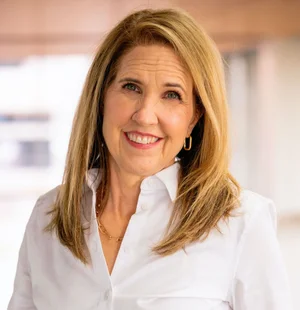
Episode 101 : The Power of Precise Love: Humor, Feminism, and Finding Your Voice in Marriage with Dr. Gina Barreca

Finding Humor, Identity, and Connection in Marriage with Dr. Gina Barreca
Marriage. It’s one of those things that sounds simple when you say it out loud, but anyone who’s been in a long-term relationship knows it’s complicated. And yet, some couples manage to navigate it with a mix of intelligence, humor, and intentionality that makes it feel like an art form. That’s exactly what we explored in a recent episode of Marriage IQ, where we were thrilled to welcome the brilliant and hilarious Dr. Gina Barreca.
Gina isn’t just a bestselling author and professor; she’s a storyteller, a truth-teller, and someone who makes you laugh while helping you see relationships in a whole new way. Born in Brooklyn, the first girl in her family to finish high school, Gina learned early that humor could be a lifeline. Growing up with a mother struggling with severe mental illness, she discovered that making her mom laugh wasn’t just fun it was survival. And that knack for turning hardship into humor has followed her through a remarkable life and career.
Marriage as a Declaration of Identity
One of the things that struck us most in our conversation with Gina was her perspective on marriage. She doesn’t just see it as a partnership or a romantic arrangement; she sees it as a public declaration of identity. The vows you make aren’t just words they’re a statement: This is my spouse. My life, my love, and my commitment are now part of this union.
For Gina, marriage isn’t about losing yourself or your independence. It’s about intentionally choosing a partner who brings out the best in you, who makes you feel fully alive, and who can share in the joys and struggles of life with honesty, humor, and trust. And while we often hear that marriage is about being best friends, Gina offers a fresh perspective: it’s less about friendship and more about choosing someone you genuinely want to come home to someone whose laughter, quirks, and even eyebrow raises you cherish.
Feminism and Love Can Coexist
We also talked about feminism, which Gina frames in a beautifully simple way: it’s about recognizing that women are full human beings. No special haircut, no secret handshake, just the understanding that women deserve equality, agency, and respect. Feminism, in Gina’s eyes, doesn’t negate love or marriage it enhances it. A partnership built on mutual respect, clear communication, and shared responsibility isn’t just practical it’s liberating.
The Power of Precise Communication
One of the most powerful ideas Gina shared was the importance of precision in communication. As a physician, I see this all the time: a patient comes in saying, “I’m in pain.” That’s just the starting point. The more precisely they can describe the type, location, and timing of their pain, the more effective the treatment. The same principle applies in marriage.
When we say, “I’m upset,” what does that really mean? Are we hurt, jealous, lonely, or overwhelmed? Naming exactly how we feel and encouraging our partners to do the same can unlock understanding, empathy, and deeper connection. It’s about creating a safe space where emotions aren’t vague or dismissed but clearly expressed and acknowledged.
Humor as a Relationship Superpower
Of course, it wouldn’t be Gina Barreca without a good laugh. Humor, she reminds us, isn’t just fun it’s a powerful tool for connection and resilience. Shared laughter, subtle looks across a room, or even delight in life’s small mishaps (yes, sometimes it’s okay to feel a little schadenfreude) can strengthen bonds in ways words alone can’t. Humor doesn’t replace serious conversations, but it makes navigating the hard stuff possible.
Love Inside Matters Most
Gina also offers a sobering truth: if you don’t find love inside your marriage, you’ll find it somewhere else. Relationships require conscious effort, shared joy, and intentional connection. It’s not about sharing every trivial detail with your spouse it’s about prioritizing what matters most, bringing your best self home, and making your partnership a foundation for life rather than a default arrangement.
Takeaways for Your Marriage
Here’s what we can all take from our conversation with Gina Barreca:
Marriage is a public declaration of your identity. Own it. Speak it. Live it.
Feminism and love are complementary. Equality and respect create stronger partnerships.
Precise communication matters. Naming feelings clearly leads to understanding and healing.
Humor heals and connects. Laugh together, even in small ways it strengthens intimacy.
Prioritize love inside your relationship. Your spouse should be the place where your best self lives.
If you’re ready to bring a little more humor, clarity, and intention into your relationship, we encourage you to sign up for our Weekly Tips at marriageiq.com. Not only will you get practical one-minute reads delivered to your inbox, but you’ll also be entered into our giveaway for a chance to win a date night on us five lucky couples will be chosen!
Marriage isn’t perfect, but it can be joyful, funny, and deeply rewarding. And sometimes, a little perspective from someone like Gina Barreca is exactly what we need to see it that way.

-
Welcome to Marriage IQ, the podcast helping you become an intelligent spouse.
0:54
Speaker 1
I'm Heidi Hastings.
0:56
Speaker 3
And I'm Scott Hastings.
0:57
Speaker 1
We are two doctors, 2 researchers, 2 spouses, 2 lovers, and two incredibly different human beings coming together for one purpose, to change the stinky parts of your marriage into scintillating ones using intelligence mixed with a little fun.
1:19
Hello everybody, and welcome back to another episode of Marriage IQ.
1:23
Speaker 3
We are so glad to have you back today.
1:26
Speaker 1
Today on Marriage IQ, we're thrilled and a little bit nervous to welcome Doctor Gina Vareka.
She's what happens when a world class intellect meets stand up comedy, and we love comedy, so we're really glad to have her on today.
1:44
Before we dive into our interview with Gina Barreca, we just want to remind everybody to go to marriageiq.com and go under the tab that says Weekly Tips.
There you'll see our blog with every single week a one minute read e-mail that goes out or that we post on our blog helping you have a more scintillating marriage.
2:05
And it always includes a really cool tip for you to try out with your spouse for that week.
If you fill out the information in the little pop up box with your e-mail subscribing to the weekly marriage tips e-mail, you're also entering our giveaway competition that we're holding between now and the 18th of November where you can win date night on us.
2:28
That's right, marriage IQ.
So tell everybody you know, go sign up for the weekly tips and.
2:34
Speaker 3
Get your spouse to sign up too.
That double S your chances.
2:36
Speaker 1
We'll be giving away 5 date night packages, so all right.
Gina's a professor at the University of Connecticut, a best selling author, and one of the funniest truth tellers on women, humor and culture that you've ever met.
2:50
Dr. Gina Barreca's Journey: From Brooklyn to Resilience
And we got to throw in there on relationships.
She has a book called Perfect Husbands and Other Fairy Tales, which I'm excited to hear a little bit about, but also she just barely released a new book, Gina's School, and we are really excited to have her tell us about that as well.
3:09
Speaker 2
Thank you so much for having me here.
I'm just honored and delighted.
And again, I read about your work.
I think it's important, I think interesting, and I'm looking forward to our conversation.
3:20
Speaker 1
Yeah, we're impressed to see that you've been everywhere with your speaking with your books, from the New York Times to Oprah, and love that somehow you make people laugh, while also realizing that maybe we need to rethink some parts of our entire relationship vocabulary.
3:38
Speaker 2
I think that's absolutely true.
I think that some of the work that the two of you encourage people to do, which is to go back and examine the repetitions, patterns emotionally forged in people's childhoods and then see how they repeat in adult life and what parts of those we need to unpack and leave behind.
3:58
And what we need to take with us as we go forward is important and can't be discussed in too many ways.
I mean, we need to keep going back to those crucial fundamentals of intimacy and trust and enjoyment and all of the parts that the two of you work so hard.
4:16
Speaker 1
Thank you so much, Gina.
I appreciate.
4:18
Speaker 3
That so Gina, you know, I read this article that you put out on Psychology Today a few months ago.
In fact, we featured you in one of our previous podcast episodes about expressing yourself precisely and I really love this article.
4:34
But when I heard you speak, though, I know you said you taught it in Connecticut, but you're your accent was very much different than what I was.
So I thought I told Heidi, I said there's no way she's from Connecticut.
She's from somewhere in like, New York.
4:50
And sure enough, you're from Brooklyn.
4:52
Speaker 2
Right, You got it.
And in 38 years of teaching at the University of Connecticut, no one has ever come up to me and said doctor for accent, what politics dedicate he's from.
Yeah.
5:03
Speaker 3
No, I knew from the first moment I heard you.
I said no, no.
5:08
Speaker 2
Yeah, no, it's Brooklyn, NY And actually my next door neighbor growing up and she said Bad Ocean Ave. is somebody who I sound exactly like.
And it's the two of us get together, which happens now and then is Judge Judy.
She was the dentist's daughter.
5:24
She was like the smart girls on the black.
I think she's the smart woman on Everybody's Black now.
And if the two of us get together with our husbands, first of all, they're telling us just keep your voice down.
It's just you want me to keep my voice down, Jerry, is that what you want?
5:40
I don't think that drives us where we are.
And so we're it's like I liked your cousin Joey.
Like it was Joey.
It wasn't Tommy, it was Joey.
So we sound exactly like we're from.
And part of that authenticity is I think allows you, allows all of us to speak the truth more easily when you're not trying to disguise where you came from, who you are, when you're not staking it, when you're just, you know, being the most real version of yourself that you could be.
6:09
When I first came to Connecticut, I tried for a little while to say my aunts and my uncles and I couldn't do it.
It just didn't work.
So I'm back to my aunts and my uncles.
That's.
6:20
Speaker 1
Fine, that's how I grew up too.
It wasn't aunts, it was aunts and I'm from.
6:26
Speaker 3
The West, that's why we love Dallas.
It's a fusion of East and West and different ways of thinking, different perspectives.
And could you just spend maybe a few minutes talking a little bit about just how you came to be?
Gina Barreca, who are you?
6:41
Speaker 2
I can do that fairly quickly.
I'm a 68 year old broad who moved from Brooklyn, NY who was the 1st girl in my family to finish high school.
It was finally fashion and neither of my parents but high school.
They left school in the eighth grade.
6:56
They came from big families and my mother was French Canadian.
She died when I was very young.
In fact, I just wrote a piece about that for Kate Cork Media last week, about how it was really my mother's depression that taught me how to be funny, because my job as a kid, my, my vocation, my mission, my occupation was to make my mother laugh.
7:17
She now would have been diagnosed with bipolar disorder too, and agoraphobia and various other forms of mental disorder, but she wanted to feel more part of life and community than she was allowed to feel.
And as a woman who raised her children not in her mother tongue, she was a Quebec class which was raising us in English, as people did in those days.
7:40
Raised your children not in your language, but in the country's language.
So I speak neither Italian nor French except things that you can't say in front of the children.
So I could really swear up and down the streets of Paris and Rome, which is who was affected when I was a younger woman.
7:55
And so I was one of the first women at Dartmouth College, which was the last Ivy League school to go Coed.
And Dartmouth didn't know what they were getting when they took me.
And I didn't know what I was getting into.
Talk about aunts when I went to Dartmouth and what I would say to people, you want to go for coffee and they would say, oh, say that again.
8:14
And I'd be like, am I supposed to ask you for tea or a beer?
I don't know what I'm saying because I didn't know I had an accent.
And then after Dorman's, I went to fellowship to Cambridge University and went there and then get my PhD at the City University of New York.
And then University of Connecticut was, I thought my first job and it was my first job, but it's been the job that I've had all these years.
8:37
And I married Michael Michael Meyer, who is not the serial killer.
This is.
I would know where the bodies were buried.
And Michael is a colleague at UConn, but he retired a few years ago.
He's a little bit older than I am.
And Michael is also a writer, done textbooks.
8:53
And we have a terrific life up here in the woods, although I never expected to live in the woods.
And I've written 10 books and edited 17, and a bunch of them are academic and a bunch of them are trade.
And I read Psychology Today and you know, most places that ask me, I'm a true date.
9:11
I will write for many places and submitted Forbes and the Harvard Business Review, as well as Cosmopolitan and The Chronicle of Prior Education.
And so I'm enjoying myself, which I consider to be the best use of 1's time.
And I love language.
9:28
Humor is an important part of my life.
Part of that because it was my assignment and my household's child.
But I don't do stand up comedy.
I know and respect a lot of people who do.
My first book was called, They used to call me Snow White, but I drifted Women's strategic use of humor.
9:44
And that was a bestseller.
And that came in a little time ago.
It was 1991 and I I have a two book minimum, not a two drink minimum.
So talk to some audiences that are capable of reading.
And I give a lot of talks to a lot of groups around the country and internationally.
10:02
Sometimes after they have a lawsuit and they'll be a big banner saying doctor rigidity Baraka sexual harassment workshop.
And some guys think I'm there to help them do it better.
But you know, even by the end of it, everybody has a good time.
10:17
And so the nice thing is that I'm also invited back.
So that's long short explanation of who I am.
Well.
10:24
Speaker 3
Thank you that.
10:25
Speaker 1
Fascinating.
That's a.
10:26
Speaker 3
That's a very different life than I live.
10:28
Speaker 1
Yeah.
And I am really impressed that you took something that would be really, really difficult to live in a family with severe mental illness.
I've seen the research on that and how it impacts the trajectory of children, and you took that and were so resilient with that.
10:48
To find humor as a way of coping and helping your mother cope.
That is so impressive.
10:55
Speaker 3
I agree.
And you actually, it sounds like you took this, what could have been a trauma and really made it into a strength, you know, moving forward.
11:04
Speaker 2
I think that for most kids, you figure out it's a survival skill.
We all figure out how to survive in whatever families we're in.
And, and certainly it wasn't a kind of a victimization.
It was the ability to turn whatever happened into a story.
11:21
But it is, as both of you know, that it's the truth that once a child starts to understand the world through the lens of a parent, to think how will my parent respond to this experience rather than how will I respond to an experience?
11:39
The child is no longer a child at the end of childhood.
And so that's why kids who grow up in houses of trauma learn ways to compensate that then they may need to dismantle in their own adult relationships just so they're not replaying the same stuff that they did as a kid.
11:57
Yeah.
11:58
The Power of Marriage: A Feminist Declaration of Identity
Interesting.
11:59
Speaker 1
Perspective.
Very, very true.
We've seen a lot.
12:01
Speaker 3
Of that want to ask So you're married.
You've been married since 1991, right?
Right to Michael Meyer.
So why marriage?
12:09
Speaker 2
That is what perfect as a fairy tale starts out with is why should a woman with a rule of her own, a life of her own, a job of her own, a career of her own?
Because marriage is stepping into the public arena as a declared couple.
12:25
Vows are a speech act.
We go back to the precision of language idea.
It's not a wedding.
It's the vows you make, and I think it's the vows that you make in public where you declare this is my spouse, who I am is part of this union.
12:43
And I think it's an important declaration.
It's a responsibility.
It's taking in a way one of your most private relationships, but making it public and saying, you know, and facing like 360° angle and saying everybody knows this.
13:02
It's the opposite of a secret.
It's a declaration.
And I think marriage is important.
It is important to both of us.
And I think at the best and the worst times of a relationship to declare that.
I think it's crucial to be able to say when you call someone and you want to get put through, I'm his wife, I'm his spouse, I'm his life partner.
13:28
Whatever words or that people use for that kind of authority, you don't want to explain for 15 minutes either just somebody at a hotel room why you need to, you know, to reach that individual.
Even if there's a conference going on or when you're in the emergency room and life stars approach, you don't want to just say we've been going out for 19 years, I mean.
13:52
Speaker 3
I was listening to you on different the things Ted X and other things.
You are pretty publicly feminist, right, a feminist.
And so as a guy who's trying to be open minded, right, about feminism and all that entails there help me out because I might be totally, totally in the dark here, but my understanding was that feminism is that women don't need a man.
14:19
And So what you're telling me that maybe they do or like just help me understand here?
14:24
Speaker 2
OK, sweetheart, you're a feminist, all right?
Walking to women like we're adults.
You believe, I presume, that women are human beings.
You believe that, right?
14:34
Speaker 3
Yeah, recently.
14:36
Speaker 2
Easter Yeah.
You believe that women are human beings.
You believe that women should have the vote?
14:41
Speaker 3
Yes.
14:43
Speaker 2
Believe that women should have the vote.
You believe that women should get paid what men get paid.
14:49
Speaker 3
Sure.
14:49
Speaker 2
Yeah, you're a feminist.
Yeah, you go.
No.
Specificism is the radical beliefs that women are human beings as what feminism is.
You don't need a special haircut.
You don't need like, you know, you don't need the special sound effects.
You just think women are allowed to walk upright, sit at the table, They don't only have to make cooing noises.
15:11
We don't know what to do.
What they yes.
You don't think that women are idiots.
You don't think that women have no soul of their own?
You don't think that women should have to always again, go back to triangularization, that they don't have to triangulate their way to positions of power, to God, through work, to the children, to anything, through somebody else because they are unable to do it themselves.
15:36
And you're a feminist.
It's not a tough club to get.
15:39
Speaker 1
OK, he's absolutely a feminine.
15:41
Speaker 3
I'm so glad I made the cut.
That actually really supports our mission here, that we are both strong, we are both flexible individuals.
And really one of the things why I wanted to do this podcast is because probably the vast majority of marriage podcasts out there are religious based, Christian based, which is fine.
16:01
It's great.
16:02
Speaker 1
But we are.
16:03
Speaker 3
Christian, we don't really want to use that on this this program, but I like to see that this is kind of a universal trait that the glue that men that women come into this life with to be together.
16:19
Whether you're Christian or non Christian or atheist or Hindu, whatever, or feminist or not, you know, conservative, liberal, that there's this common glue that brings us together.
16:35
That despite all of these differences that we may have and beliefs fundamental differences in how we act and react, that at the end of the day we find meaning in making symbolism part of our life, a symbolic gesture between man and woman.
16:57
Speaker 1
And what I was hearing her say is that it's taking it to the next step of making it part of our identity.
This is a step, a ritual, a declaration.
I love that that's the word you used, I think a declaration.
17:14
Speaker 3
That.
17:14
Speaker 1
Do the world.
This is part of my identity now.
17:17
Speaker 2
Yes, I think that's absolutely right.
17:19
Beyond Best Friends: What Truly Matters in Marriage
And I think that, and again, we may disagree on this.
I think that intimate relationships, even if they are same sex, if they're whatever that it is that drive to form a union between two people who deeply love each other.
For me, it's always been men and boys and whatever I had a bad first marriage that didn't work.
17:41
And and what are the things that I also learned is that there are marriages that can't be fixed.
And so I would say that too, and that as others have said before me, but a line that I found very meaningful when I first heard it and continue to make sure that other people here in case their time to hear it is urgent, is that if you don't find love inside your marriage, you're going to find it outside your marriage.
18:08
So that's why making sure that your primary relationship is where you take the best of yourself.
It's like when you talk about the differences, let's say between senses of humor or the differences between whatever appetites.
And that doesn't mean that it has to be, I don't think any marriage can be the only relationship.
18:28
Everybody has to have other people.
And that's in a way why the marriage has to be part of a public life where it has to be a community sort of support and effort.
And the rest of it is because you have to have other people in your life.
I'm not always such A and again, this may be provocative, but do you what you 2 think about it?
18:48
I'm not sure you should marry your best friend.
I mean, you can go out to dinner with your best friend.
You can tennis with your best friend.
You could go shopping with your best friend.
Better marry somebody you want to go home to it I You better marry somebody who smells the way you want them to smell, who actually does laugh at the same thing.
19:09
And sometimes laughing together isn't actually laughter, it's the look you can give each other across a public dinner.
Raise an eyebrow, but at that electric connection.
19:22
Speaker 3
Yeah, your little secret message.
19:24
Speaker 2
Right between two individuals.
And if you were doing that raw eyebrow raising with more people than you're doing it with to your spouse, something wrong with that.
That's the best of yourself and that's what you need to bring home.
19:40
That's what you need to bring to the relationship.
It's not just interest.
Interests take care of themselves.
I want to go look at towels like for 45 minutes with my girlfriend.
If I bring Michael to say I'm going to go look at towels for 45 minutes, he he will.
20:01
There might be some self harming, but why should I do?
That's not an intimacy building exercise.
Torture him by going.
Do you think that the depth of this weave is going?
No, that's not something.
If I say to my friend Heidi, it's like.
20:16
Do you think or is this the color going to bleed the dark blue?
This Brooks brothers outlet only about list she a long and invested conversation.
That is not what Michael's going to do right.
So it doesn't have to be about sharing everything.
20:32
It has to be about sharing what's important in that relationship in that manner.
20:36
Naming Your Feelings: Precise Communication for Deeper Healing
I love that.
20:37
Speaker 1
That was amazing.
That was great.
20:39
Speaker 3
So getting back to how all this relates to identity, how we do form a different identity when we marry.
And part of that identity is learning how to really communicate precisely how we feel, expressing ourselves in a precise way.
20:57
And that's what I loved about this article because as a physician, I'm just going to, I'll tell you a little experience and then have you to work off that.
But I've been a physician for over 20 years.
There's some things I've been picking up as I see and talk to patients every day when they come in to see me, for them, it's an experience where, OK, I'm going to see the doctor.
21:20
I got to take time off.
There's something important going on.
I have this issue that's come up that I need to to find out what's going on.
They come in to see me, who from my perspective, I see a slate of patients that day.
21:36
You may be #10 or 12 or 15.
So I have to learn how to communicate with each of those patients in a very efficient and effective way in order to draw out the problem so that it can be solved in a timely manner because I can't sit with each patient, you know, all afternoon and try to figure out what's going on.
22:02
So I start asking very, very pointed questions.
What happened?
First of all, what's going on when it is start, Let's say it's pain, pain in your back started yesterday like, and I start drilling.
What kind of pain?
Is it sharp?
Is it stabbing?
Is it throbbing?
Is it pulsating?
22:18
Is it burning, deep ache, Things that people don't think about before they come in to see me.
They just know it hurts.
Well, I don't know, like they have to.
I sit there.
I asked them.
I guess it's yeah, it is kind of sharp, but only when I'm leaning over.
22:34
And it only sometimes, but all the time it's deep and achy.
OK, now we can start getting somewhere.
Is it mild or moderate?
Severe.
As I drill down on these things, they're able to.
And I'm seeing this in real time.
They came in not really knowing.
22:50
All I know is I'm in pain.
I hurt.
And as they start becoming more specific, more precise with their language, with their expression of how they're feeling and what kind of pain this is when it started, is it alleviated by anything or not?
23:10
They're able to know more about their pain.
And it's almost like a magical thing happens if I give the medicine or not a treatment plan or not.
The vast majority of the time they get better.
23:25
And this is a phenomenon that if people can learn how to know precisely how they feel in a relationship, there's a lot more healing, I think that can happen.
Do you agree with that?
23:41
What what are your thoughts on this?
23:42
Speaker 2
Absolutely.
But I also think that we are not taught, especially in the intimate areas of our lives.
It's like the intimate areas of our emotional lives or as forbidden as the part like naming the real parts of the body were when I was growing up.
24:00
I mean, you couldn't say where something hurt.
It's down there.
It's like people say I have women's problems.
It's like what you can't get credit.
You can't parallel park.
What do you mean I have women's problems?
I mean, people couldn't talk about things and, and I think that we we are in the examples that you raised as a physician, people are they come in and fear, right?
24:22
So they were already coming in nervous.
When people are nervous, we feel as if we are in the middle of chaos.
We have a sense of loss of control.
And of course, being able to give names to things and to situate ourselves within a landscape that a doctor or a therapist or a teacher is presenting.
24:43
It's like, here's a map.
Where are you on this map?
So do you you know it does it hurt up north or if you surgery on Tuesday?
And I have a terrific surgeon.
I'm doing a trifecta.
So they're cutting.
It's like I didn't pay the vague on a loan to a mafia boss.
24:59
They're like breaking parts of my hand.
They're doing carpal tunnel.
They're taking nerve out of my arm.
I was always told I have a lot of nerve.
They're wrapping something around my elbow.
So it's like the whole thing.
So this lovely guy who's the surgeon and he said, I said, I don't like Sassen, I like to eat.
25:15
I don't want to fast for a long time.
Can I get an early one?
Yes, let's have me diabetes or there's an emergency.
You could have the first appointment and he said because you're a bunch of stuff, but all of them are easy.
And it was like, oh good, so you'll do me after the first cup of coffee and you'll do the complicated people.
25:31
There it is.
The idea.
It's even like with a student, you were the only one of you that they have.
You have many of them.
It's hard to make, and yet it's essential for anybody in a professional situation, in a professional role to make everybody feel as if they're so generous, so generous, right?
25:49
They are the only one.
That kind of attention and that kind of precision.
It is what helps make people feel more in control.
And that's why they feel better.
And that's what we do in relationships.
When somebody says I'm so upset, OK, again, that could mean you it didn't show up.
26:13
I read some of your the transcripts of your previous.
I mean, it's fascinating, good for transcripts.
Somebody is angry because her husband doesn't pick up the kid.
Pick up the kid.
There's like a big deal.
He doesn't pick up the kid.
26:29
Yeah, you really don't want the kid going ferry in like, you know, the kiddie daycare boring lot That is not appropriate.
It's an important idea, but people I'm upset could mean I'm really.
I'm feeling lonely.
I'm jealous of you.
You seem to be being successful right now.
26:46
I feel, I feel old.
I feel like you're younger than I am, even though you're not.
I feel this.
It's it might not be about the relationship.
It's about how they feel.
So again, your relationship.
Sometimes we need to help our partner get to that kind of precision.
27:03
Schadenfreude and Shared Laughter: Navigating Marital Mishaps
OK, you hurt, but where is it that you hurt?
Can you tell me what hurts right now?
Where?
What makes it worse?
Is there something I can do?
27:13
Speaker 3
Yeah, a lot of times too.
Just getting to that point, I'm telling you that's 50% of the problem.
That's a solution.
It's not 100% of the solution, but it's a big bigger chunk than what we consciously give it credit for if we just are able to draw out those specific underlying thing.
27:32
And as you said, there's, there may be some, some overlying fear, jealousy that that unconsciously, I don't want my spouse to know about.
I don't want her to know that I'm jealous because she has so many more friends than I do or what whatever it is, right, Or that she's more talented at her job than I am.
27:54
I like it.
Just there's, there's all these underlying things.
And I, I think that as we were able to speak specifically express ourselves, you use this this example in this article about this German word schidenfreuten, I think.
28:12
Speaker 2
Right schadenfreut.
28:13
Speaker 3
That is a very specific term.
28:16
Speaker 1
Yeah.
Can you tell us more about that?
28:17
Speaker 3
There's a story around it too, right?
28:19
Speaker 2
Right, You've read the article more recently that I've written, but it's that feeling of being glad that somebody messed up.
It's that feeling of like somebody gets there come up.
It's, it's a feeling that again, sometimes other languages, you know, can capture something.
28:38
But because you're not supposed to feel this way, this is a forbidden emotion.
We're not supposed to take joy at the idea that somebody else like somebody we don't like or even something we do like, but that they screwed up, that they, you know, something didn't go their way when everything else always seems to go their way.
29:00
That there's a delight in that.
And it's a very basic human emotion, Yes, but it's supposed to be that's really deeply repressed.
So can you remind me with the story?
29:11
Speaker 1
I'll give you one.
I'll give you one of my own.
29:14
Speaker 2
Please.
29:15
Speaker 1
I hope this is OK, I can edit it out if Scott doesn't like it.
So we planned a trip to the Christmas markets for this coming winter in Europe and Scott is the great travel planner.
29:30
Speaker 3
Oh, I know where this is going.
29:32
Speaker 1
Always the great travel planner and he decided to get us a hotel that was a little more special than normal or a lot more special than normal to make it.
29:44
Speaker 3
No, it was the the highest priced hotel in Stroudsburg, France.
29:48
Speaker 1
And what an amazing, amazing gift.
I didn't know he was doing this, but I happen to get the text when he makes hotel reservations from the website that he gets them on.
And I said, what's this that's showing next week?
30:05
We are going to this hotel in France.
And he said, no, it's in December.
And I said, no, it shows right here.
It's next week.
30:15
Speaker 3
Why are you bringing this up?
30:16
Speaker 1
And he was dying, just dying, because that was a.
30:23
Speaker 3
Huge non refundable.
30:25
Speaker 1
Huge non refundable loss.
30:27
Speaker 2
Thing is refundable.
30:28
Speaker 3
But I got a deal on it because non refundable but I put in two today three months earlier.
30:35
Speaker 1
And I would giddy, I was feeling right in Florida because I am the one 99% of the time who makes mistakes.
And I feel like every time there's a problem, it's me that's done something bad.
30:51
And I have never made a mistake to that cost.
And so I was like, yes.
30:59
Speaker 2
I understand that because my husband is also.
He's very precise.
31:04
Speaker 3
Oh yeah.
31:05
Speaker 2
Is where he's written down and everything.
And again he's he is also the travel planner in our lives and we in a similar way we were, we were flying first class.
So this was like a.
31:17
Speaker 3
Yeah, it's a big layout, yeah.
31:19
Speaker 2
Big layout to Hawaii.
One of Michael's sons I have.
I have two fabulous stepsons who are now at that adorable age where they're both attorneys and they're so cute at this age.
It's so nice.
And they were in my life since they were adolescents, But one of them was working as a waiter in Hawaii before he became a lawyer.
31:39
It's good training.
And so we were flying first class to actually to mount everything, set up Four Seasons Hotel.
I mean, this was again, Splash.
So we leave Connecticut to drive to the Boston airport.
We're doing this.
Michael is all like, we get the parking.
31:56
He gets exactly the parking that he wants.
It's not valet.
We get to park because he likes to park himself.
He doesn't want to hand the car over to the valet fun.
We get there.
It's like he's, you know, all right, everything's perfect.
32:11
And they said, oh, well, you know, you missed your flight.
We're right left like 4 hours early.
What people are so proud of ourselves as and again, Michael went like why?
32:30
I mean just like there's all the blood leaving the top.
And it was like we had looked at and we'd both looked at it, but it was really Michael's wheelhouse.
It was like when we were supposed to arrive in LA and then take the flight to Maui, that's we was at camp.
32:48
Speaker 3
Wow.
32:49
Speaker 2
Again, it was just because I again, I'm not to be trusted.
It's making these erasures because a thing I will do.
32:57
Speaker 3
So did you.
That would be me.
You experienced some Scheidenfreude.
33:01
Speaker 2
There was a little thing, but I wasn't the one.
33:04
Speaker 3
I wasn't the one.
33:06
Speaker 2
I wasn't the one I mean, and that's not how we're getting.
We're in it together.
And then when I'm better at like was Michael really is a great player, but when I'm better at is then OK, he goes off to like have his head explode and I talk to the people.
So what's the next flight we can be on?
33:22
Can we get the upgrade even though can we fly first class on the next one winners.
And so I make the arrangements that then attempt to compensate because I can do that without spiraling into this like, Oh my God, what would you screwed up?
It's like, OK, we can make, we'll make the next best thing.
33:40
Speaker 1
I love how we can take different roles in times of massive stress and one of us is good at communicating or being precise in one area and another one can come in be a little bit more level headed.
Is there comes a lot of shame with making mistakes, with doing things that are very costly, whether it's time costly, whether it's money cost, you know, whatever it is.
34:03
And I love that we can tag team.
34:06
Speaker 2
Yes, the tag team is absolutely right and also the really grown up part and I would say it probably took us the 1st 10 years of our relationship to get this right was the really grown up part is not to bring it up.
34:19
Speaker 1
Yeah.
34:20
Speaker 2
I mean, that's the real because it's it is like having like, like an extra 20 tucked into the back of your wallet if you need it.
It's like, yeah, but I didn't get us late for the first hitch strip to pay away.
I think it might be, you know, Gina, I've been waiting.
You said you were going to be in TJ Maxx looking at towels for 5 minutes.
34:38
I've been in the first lady.
And then it's like, don't bring up Maui, Don't bring up Maui.
So those are the things that again, it's not the patient dying on the table.
Finally, there's nothing irrevoical.
I think that that's when it comes to out.
It's like, OK, we, we got in at 2:00 in the morning as opposed to 2:00 in the afternoon.
34:57
So we didn't get the whole day, but we got there.
And it's So what I need to know what happened with the ticket.
You did get the money back, right?
No, let me do it, OK.
35:08
Speaker 1
Yeah, it was.
The next week.
It's over and done.
35:11
Speaker 3
Like my time's worth money too.
And I, I spent way too much time trying to get it back.
And I look, I at the end of the day, I did agree that it was non refundable.
And yeah, so, you know, life goes on.
I'm over it.
And I ended up getting another hotel that was not as much, not as nice, but you know.
35:30
Speaker 1
Maybe we'll walk in the other one when we're there.
That's why and.
35:34
Speaker 3
And that's what happens in life.
And you know, you win some, you lose some.
35:40
Speaker 2
And that is, and again, the gesture behind it, it's like an O Henry story.
I mean the gesture behind it.
35:46
Speaker 1
That meant a lot.
35:47
Speaker 2
Exactly.
That's a loving and expansive and generous and just extravagant.
35:56
Speaker 1
You're right, that moment of just realizing the sacrifice that he was trying to make for me was an intimate moment, even though it came out of a cost.
Most of us get stuck on that rather than looking at all of the other things.
36:11
Speaker 3
And I found, yeah, I'm no less happy now right now than I was before this all happened.
36:16
Wrapping Up Part One: Don't Miss Our Next Episode
Well, that wraps it up for this part one of our awesome interview with Gina Bereka.
We look forward to seeing everyone on Friday.
In the meantime, don't hesitate to reach out to us at hello@marriageiq.com and look us up at marriageiq.com and subscribe to our weekly tips.
36:36
Get entered into the contest for a free date night on us.
And and we look forward to seeing you on Friday for another exciting episode of Marriage.
36:46
Speaker 1
IQ.