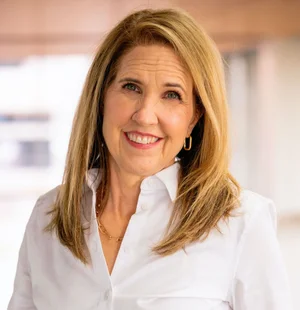
Episode 107 : When the Kids Move Out and the Fun Moves In: How to Thrive as Empty Nesters

When the House Gets Quiet: Thriving (Not Just Surviving) the Empty Nest Years
There’s a moment most parents aren’t prepared for. The house is quiet.Too quiet.
The backpacks are gone. The schedules are gone. The constant noise, movement, and urgency that once defined daily life has suddenly disappeared. And what’s left is just the two of you standing in the kitchen, wondering what this next chapter is actually supposed to look like.
For many couples, the empty nest arrives with a strange mix of pride, grief, freedom, fear, and unanswered questions. You love your kids deeply. You’re excited for them. And yet, there’s an unsettling thought that sneaks in:
Who are we now that they’re gone?
This question was at the heart of a recent Marriage IQ conversation with Rick and Clancy Denton, hosts of The Loud Quiet podcast two people who decided early on that they didn’t want to merely endure the empty nest. They wanted to thrive in it. And that decision made all the difference.
The Fear Nobody Wants to Admit Out Loud
Empty nesting doesn’t usually start with excitement. It starts with fear. For Clancy, that fear showed up unexpectedly during a simple drive home from dinner. One question slipped out, honest and unfiltered:
“What if I don’t like us when she leaves?” It wasn’t an indictment of their marriage. It was a moment of clarity.
So many couples spend decades pouring energy into raising children schedules, sports, homework, social lives until parenting becomes the primary structure holding everything together. When that structure disappears, it can expose emotional distance that’s been quietly growing for years.
The fear isn’t that the marriage was bad. The fear is realizing how long it’s been since the marriage was intentional.And that realization can feel terrifying.
Grief Is Part of the Process (Even When You’re Doing It “Right”)
One of the most important truths about the empty nest is this: grief is normal even in healthy marriages. There is real loss here. Loss of routine. Loss of identity. Loss of purpose that once came so naturally.
Rick described standing in his daughter’s empty room after she left, feeling the weight of that silence. Clancy talked about the emotional ache of losing her “shadow” the child who had been by her side for years. Trying to skip past that grief doesn’t make it go away. It just buries it. Thriving doesn’t mean pretending this season isn’t hard. It means allowing the sadness and choosing not to get stuck there.
Why Intentionality Matters More Than Ever Now
Here’s the uncomfortable truth: If a marriage isn’t intentional in the empty nest, it will drift. Not because anyone failed but because drift is the default. Rick put it perfectly: entropy exists in relationships. Without energy, attention, and choice, connection slowly dissolves. What once held you together (kids, routines, responsibilities) is gone. What remains must be built on purpose.
For Rick and Clancy, intentionality showed up immediately. The very first weekend after dropping their daughter off at college, they filled their calendar not as avoidance, but as strategy. They traveled. They left the house. They created shared experiences that reminded them they were still a team.
Joy didn’t magically appear. They chose actions that created joy. And eventually, joy followed.
Relearning How to Choose Each Other
One of the biggest myths about the empty nest is that strong marriages “just bounce back.”In reality, couples often have to relearn how to be together.
Rick and Clancy talked about returning to places they dated years ago repeating old experiences not out of nostalgia, but reconnection. Doing what once brought closeness helped reawaken parts of themselves that had been dormant under years of parenting.
If creativity feels hard, repetition works.
You dated before kids…
You laughed before kids…
You connected before kids…
Those parts of you aren’t gone. They’re waiting to be re-chosen.
The Hidden Challenge: Losing Your Social World
Another quiet loss of the empty nest is friendship. Many couples don’t realize how much of their social life was built around their children other parents, school activities, shared schedules. When the kids leave, those connections often fade too.
Rick and Clancy were intentional here as well. They joined a life group, sought community, and built friendships not tied to parenting. That effort mattered not just for fun, but for mental health. Relying solely on your spouse for every emotional and social need can quietly strain a marriage. Thriving couples build lives together that include others. Connection multiplies when it’s shared.
You’re Not Too Late No Matter Where You’re Starting
If there’s one message worth holding onto, it’s this:
It’s not too late to rebuild connection.
Even if your marriage took a backseat while raising kids. Even if you’re just now realizing how disconnected you feel. Even if this season arrived faster than you expected.
You don’t have to have done everything “right” to start doing something intentional now. The empty nest doesn’t have to be the beginning of the end. It can be the beginning of something deeper, freer, and more connected than what came before. The house may be quieter but your marriage doesn’t have to be.And if you choose it, this chapter might just be the most meaningful one yet.

-
Welcome back everyone to another exciting episode of Marriage IQ.
We're so glad that you joined us again today to learn how to really have a more scintillating marriage together.
And we're doing this together, right?
It's like 1 big swimming pool.
1:29
We're in it together.
And we found some people here to bring on our show today who actually live in the same city as us.
So I didn't know this until just a few minutes ago.
1:40
I think we had them booked before we figured it out.
1:43
So we're both in in Frisco, TX.
I guess this is a new podcast hub of the the world.
1:51
We actually had another guest that his office is in Frisco.
We thought he was in LA or something, but his office is in Frisco and he lives in McKinney, so.
1:59
Speaker 4
Putting the Frisco TX on the map.
2:02
Speaker 3
I love it.
2:03
Speaker 4
Sounds great.
Do you want to introduce our guest today, honey?
2:05
Speaker 1
Yeah, we we have had some requests to do an episode with us on Empty Nester Hood and that is a big part of our life right now.
We could have done it on our own, but we found some experts that have their own podcast specifically targeted towards how to have a thriving marriage when you're empty nesters.
2:30
So Rick and Clancy Denton, who live not too far away from us, are definitely not slowing down.
They're really leveling up.
And with their two young adult kids out of the house now, they've rediscovered each other and are diving into this next chapter with nostalgia and curiosity, with some humor which we love, and even a healthy dose of adventure.
2:52
Speaker 4
I like them already.
2:52
Speaker 1
Yeah, their podcast is called The Loud Quiet, which I think that's a great title.
They unpack what it really means to thrive in those empty nest years, re navigating routines and launching new dreams and laughing, even probably sometimes through tears at the really unpredictable moments along the way.
3:11
So it's going to be real.
It's going to be raw and refreshingly relatable.
3:18
Speaker 4
That's a lot of ours, honey.
3:20
Speaker 1
Let's see if I can see that again real.
3:23
Speaker 3
Raw and.
3:24
Speaker 1
Refreshing so the Denton's are just two people trying to figure out life together and inviting all the rest of us to do the same.
So welcome Rick and Clancy to marriage IQ.
3:35
How Fear Sparked Their Empty Nest Podcast Journey
Thank.
3:36
Speaker 3
You guys, so much for letting us be on the show.
It's going to be great.
3:39
Speaker 4
So when did you decide to start a podcast?
3:43
Speaker 3
Yeah, you should take that one.
3:44
Speaker 2
I'll take this one.
So our daughter's senior year, she's our youngest one to leave in 2023.
Rick and I had been out one evening, dinner, drinks.
On the way home I looked at him and I said, what if I don't like us when she leaves?
4:06
Speaker 4
Wow, Ouch.
4:07
Speaker 1
How did that feel?
How did that route feel, Rick?
4:11
Speaker 3
I'm scared.
Let's see, can we use the E flag here?
How about it scared the crap out of me is what it really did.
I did everything I could to stay on the road driving home, but it was a very eye opening moment to realize the woman that I'd spent all of this years and all of this life together in my ears, even if it wasn't necessarily her intent.
4:33
In my ears and in my head, I was hearing, I don't know that I want to be around you anymore.
4:39
Speaker 2
And that is not what I meant.
We have had a wonderful marriage.
Yes, there have been up and downs as everyone has.
But I just started thinking, OK, it's going back to just being the two of us.
I was excited.
4:54
But yes, I was also scared because our son had left in 2020.
Great relationship with him.
Awesome.
We still had Tegan at home.
Tegan was like my little buddy Shadow.
We were together a lot.
5:12
You know, when Rick was traveling, it was just us 2 at the house.
She was heavily involved in school activities.
So we were always doing that.
And so I was just thinking, what is this going to look like?
And so Fast forward probably two months, I'm in the shower, get out of the shower.
5:34
And I was like, we should start a podcast because we can't be the only ones that are thinking this way.
And there is nothing out there about empty nest.
You have all the parenting books up until you get them into college and then it's like burp until retirement.
5:50
Speaker 4
They're on their own.
5:52
Speaker 3
Yeah.
And what limited content there is out there seems to be very doom and gloom as well.
And so at that moment when Clancy had scared me on the the ride home and we Fast forward to the two months there, but there was a lot of intentional discussions of, OK, we aren't going to find ourselves going diverging paths.
6:12
How can we stay unified?
And that intentional choice of we're going to make this a phase of life that is not something we survive, but that we actually thrive in.
And that that feeling, that vibe just didn't seem to be as common out there.
6:28
And so combining our enjoyment of each other, our enjoyment of, well, actually just deciding to talk and deciding, hey, let's have a therapy session that we hit record on the podcast.
The Loud Quiet was born.
6:43
Intentionality and Reconnecting in the Empty Nest
So you were intentional I hear.
One of our 4 cornerstones.
6:48
Speaker 3
Oh.
6:51
Speaker 1
To a.
6:51
Speaker 4
Scintillating marriage.
6:52
Speaker 1
That's kind of how we approached it too, I think in a lot of ways.
6:55
Speaker 4
Intentionality is big.
We.
6:58
Speaker 1
Knew things had to change with kids leaving and we're very intentional about.
7:04
Speaker 4
Why is this so rare?
I don't get.
7:07
Speaker 1
It we we want this to be awesome.
We want this to be the most exciting time of life.
The party gets started.
7:13
Speaker 3
Yeah.
And I think a lot of you, you asked a question of why is this so rare?
I think a lot of it is just there's a simple math exercise.
Even though we joked before we hit record that I don't do math, but I know that we were together with kids a lot longer than we were together without kids.
7:33
And so the natural entropy of a relationship would just sort of start to let it break apart without choosing to go back to that first stage where we chose each other.
And so we were having to re choose each other.
7:51
Otherwise inertia just would have kind of had it just dissolving, which is not an outcome that Clancy or I wanted.
7:59
Speaker 4
Inertia Entropy.
8:01
Speaker 1
Yeah.
8:01
Speaker 4
That's a natural course.
8:02
Speaker 1
Yeah, that takes intentionality to truly keep things from falling apart, from dissolving.
8:09
Speaker 4
Because that's what it's going to do, right?
8:11
Speaker 1
If you're not intentional.
8:13
Speaker 2
Yeah, we really did.
The first weekend back from dropping off Tegan.
We booked ourselves so many things and just us as a coupled together, but where I knew I couldn't just be in the house by ourselves that we intentionally booked things to go and do that entire weekend and I think that's set the tone for how we have approached this phase of life.
8:41
Speaker 3
For those that know Frisco and know the DFW area, one of those was we said, all right, we're going to go to Fort Worth.
And I know that sounds so simple.
And the reason we bring that up is a lot of times we're talking about this is just travel's been such a big part of our connectivity and there's bigger trips, but this was something that is, well, depending on traffic 30 minutes away and that getting out of the house.
9:04
Like Clancy said, there were no physical elements that said this is your old life.
It was just us out there in Fort Worth.
And that choice to get away with, such a brilliant one that Clancy was driving us through.
9:17
Speaker 1
I'm curious, so pre last child leaving for college, Tegan leaving for college, do you feel like you had invested quite a bit in your relationship up to that point?
9:29
Prioritizing Marriage and the Mother-Child Bond
Were you more focused on your children and your marriage took more of a backseat?
9:34
Speaker 2
I will pat ourselves on the back for this one because and we were very blessed to have parents that lived in town for pretty much our kids entire lives.
So yes, we were very good about going on date nights, going on trips just us.
9:51
So we were very lucky in that area.
We did a few marriage retreats.
So we really did try to focus that were first and then y'all were added in after we were already together.
10:08
But I will say, yes, our kids were very big parts of our lives and our entire, pretty much our entire social groups revolved around the parents of our children's friends from sports activities and those kind of things.
10:24
So that we did try to put our relationship first before our relationship with our kids.
10:33
Speaker 3
And we were even comical with our kids about it, like just like Clancy saying there we would say to them, no you're not first.
We chose each other.
Y'all just happened to show up and we were like every, well, I shouldn't say every other parent, but we were like a lot of parents that are social activity.
10:49
Like Clancy said, our schedules were very dominated by the kids activities and there was plenty of kids schedule Jenga that we had to navigate through.
But a key part of that schedule navigation was we carved out the spaces for us, and that definitely set us up well for empty nest living.
11:10
Speaker 4
I can agree with all this, but I might take an issue with part of it.
It is my experience that every mother really puts a lot into their children.
Now fathers do too, but there is nothing like a mother and their child.
11:28
And we talked about this.
Well, we put our marriage first.
Do we sometimes, right.
It becomes, and I'm not saying it's bad at all, like there's this link because I've never been a mother.
11:45
I guess I'll never be a mother.
But there's this link.
You can tell me if I'm wrong, Clancy, you can tell me if I'm wrong here.
But the the very, very, very powerful bond between mother and child that sometimes feels.
12:05
Speaker 1
To you.
12:06
Speaker 4
Well, I might be speaking for other men too.
I'm not saying it happens to me.
12:13
Speaker 1
It is, it is a hard balance for sure I'll say.
But we like you, we intentionally every Friday night for almost 30 years now had date night and we go away together at least quarterly overnight for a weekend.
12:29
And we do travel quite a bit together alone as well.
But it is a balance because there are a lot of people who want a part of you when you've got kids and you've got a spouse.
And so it takes intentionality with both.
I think with the kids, they're a little better at saying I have an emergency and I need you right now.
12:47
Yes.
12:48
Speaker 2
And I think they're seasons.
There were definitely seasons in our marriage that I'm sure he felt the same way, that I was giving so much to the kids because at that time they needed me.
And there's also things that pop up that.
Yes, and, and that's why I really did.
13:06
I had a harder time, I think, with my daughter leaving, even though my son and I are very close, but I had a harder time with her going just because of the bond that it's still there.
13:22
But that was there, her being my last one.
And yes, so I had a rougher time with that one.
13:29
Navigating Empty Nest Grief with Intentional Joy
It's definitely a role shift, and those role transitions can be pretty rough.
I know when our last child, when our son left home, I started a PhD program and that made it a little bit easier for me because I had some purpose in what I was doing.
13:48
And for you starting the podcast, to be able to find those things that bring meaning in your life in different ways or something that you can do together is a really fantastic idea.
But I do hear what you're saying.
And I think what you're saying is that you having that foundation of putting each other first ultimately helped the transition be a little better that what you're saying?
14:14
Speaker 3
100% saying that I also want to encourage anyone who's listened to this that would say look we over prioritized our kids.
Now the kids are gone, what do we do with each other?
It's cliche to say I know, but it's not too late in most.
14:29
In many cases you were dating before the kids showed up so just tap into some of those memories, even recreating old dates if that's possible.
We spent a lot of our time, and I know for listeners who aren't familiar with the area, some of this won't land as well, but we spent a lot of our time in our dating days down in the Dallas area and the entertainment of the dining that's down there.
14:52
We have found ourselves going down there and redoing, if you will, some of those old original dates.
So even if the foundations hadn't been poured while the kids were there, anyone who's entering this phase, there's still that opportunity to remember how you were before the kids.
15:11
And if the creativity is not there, then just hit repeat and do what you did before and the connection will really start to grow from there.
15:18
Speaker 4
I didn't grow up in Dallas, but I got here as soon as I could.
We don't have any of those, but I mean, we're here 11 years now and I have a lot of good.
I don't know why I didn't start here.
15:34
I'm a little ticked off about that, but.
15:37
Speaker 1
So tell us some more about what some of the things that you did to make that transition easier are and how choosing joy, choosing to be happy about this period of life instead of just mourning it or feeling grief or it has made a difference for you.
15:55
Speaker 3
You know, it's allowing yourself to feel all of the feelings.
So there is a period of mourning.
I still can visualize and I know it was our first, but I can visualize him getting choked up.
Think about it, walking down the stairs as he walked away from our car when we left him there at school the first time.
16:16
And there's even almost I probably have I'm kind of Hollywood at it a bit.
But then he was backlit.
We were in a parking garage.
So it was like he was going into the void in my head.
I guarantee it was.
And then when our daughter, when she was leaving us, there's some incredibly emotional moments where she's crying, we're crying and all of those things and weave together in this just absolute ball of grief.
16:43
And if I just tried to stuff that, well, then that grief would come bubbling back.
No, we were, we allowed ourselves to feel that.
We absolutely had tears.
I went and when we came home, and I would imagine Clancy did the same thing.
I went and stood in her room and just looked around and felt the emptiness.
17:01
I saw the cat that you may have seen just dart through.
That's her cat stare into her room wondering, Hey, when's my lady coming back?
Feel that.
But then moving with that intentionality that we described earlier into if the joy doesn't come automatically.
17:16
Well, I think that's why we chose activities because by choosing action, it then almost helped us fake it before we make it right.
Oh, we're going to do this.
We're going to feel good about this, and then we, well, felt good about it.
17:29
Speaker 2
Yeah, we travel a lot and a lot of those travels are going back to see the kids because they were both in Arizona at one time and.
17:39
The Challenge of Finding New Friends as Empty Nesters
We tell them it was to see them, but really, Arizona is just an awesome place to go visit in the winter.
17:44
Speaker 2
And I home.
17:45
Speaker 1
For us, before Texas, yeah, that's where we.
17:47
Speaker 2
Live.
17:48
Speaker 4
So we discovered the real joy.
No, Arizona's fine.
17:54
Speaker 2
I it's a great place we like to visit.
We did enjoy visiting and I think just keeping up with the things that we just really enjoy doing.
We love going out.
We have now we started a life group through our church for empty nesters and have become very close to both couples.
18:15
In fact our son and one of the daughters are have been dating now for six months, six months.
So I mean that.
18:24
Speaker 3
We were friends with them first.
18:26
Speaker 2
Yeah, we were.
We tell, we remind them that all the time.
We're like, we were friends first.
So.
But yeah, it's just crazy things like that that we've just continued doing, even to the point that this summer when our daughter was home, it kind of disrupted our routine.
18:44
Speaker 3
That first month, yeah.
Wait, wait.
We're empty nesters.
Something Clancy mentioned there is one of the more difficult elements of empty nesting.
You'd said it actually earlier where you talked about so much of our social groups, so much of our friends were actually the parents of our kids friends.
19:01
In a few cases, we've maintained relationships, but in a lot of cases, well, without the kid glue there, then those relationships have just faded and gone on their natural course.
And it is incredibly difficult to find friends in the empty nest phase.
And that is something that we by doing the life group and making some conscious choices to do that have started to build those relationships.
19:22
But it's kind of like you were talking earlier, inertia does not create friendships and having to do that, I'm not saying that we necessarily need a buffer between Clancy mere, that sort of stuff.
But if we were just relying on each other for our well-being, our sense of entertainment and all of that would be really a struggle.
19:41
But by seeking and finding out friends, that has really helped build a lot of that thriving in the empty nest that we talk about.
19:50
Speaker 4
And these these are mutual friends, right?
19:51
Why Men Struggle to Form Independent Friendships
Or just like guy friends or.
19:55
Speaker 3
That's a great point, actually.
Most.
19:56
Speaker 2
Of them are.
19:57
Speaker 3
They are that is interesting that we I don't well, you have Clancy actually has a group of her friends.
20:03
Speaker 2
That I've had for, I mean, our daughters all did competitive cheer together.
So we've been bonded.
We've been.
20:10
Speaker 3
Trauma bonded for.
20:11
Speaker 2
Life and we do still go out once a month even though all of our girls are either graduated from college or still in college.
But yeah, the couple friends, I mean, we're going out of town with one of them this weekend, so.
20:24
Speaker 3
It is an interesting point that you raised though, and it's something this could be a whole divergent path and probably another episode that we could talk about, but adult males really struggle to find friendships that aren't just coupled friendships.
20:40
And that's kind of an ongoing challenge.
One of the podcasts that I listen to, Prof G Scott Galloway, he talks about that a lot.
And it's one of those, and I'm going to get the stats completely wrong, so I'm not even going to try the numeric aspect of it.
But lack of friendships is more dangerous to health than smoking, and especially for adult males because we have such a difficulty finding and maintaining and building and growing those friendships.
21:07
And that's something that is.
I don't want to say that I've necessarily solved it in the empty nest, but I know it's something that needs to be solved as to ensure the thriving in this space.
21:17
Speaker 4
Well, you know, that's a good point.
We did a, a deep dive on this Marriage IQ podcast.
We read a lot of research.
We're both researchers and we choose to research marriage.
And it typically in a marriage, there's a lot of health benefits.
21:34
It generally benefits the man more than the woman.
Like that's a consistent trait, a consistent finding that we're seeing.
And I'm just wondering, I'm wondering if because it's, I think it's, I don't, I hate stereotyping, but I think generally speaking, women probably do tend to form friendships in groups easier than men do.
22:01
We could spend a lot of time on the biology of that, but that's probably one of the reasons why men mites do better in marriages, health wise, emotional their.
22:15
Speaker 1
Friend, their built in friend.
22:17
Speaker 4
And I'll, I'll be honest, I don't know if I have any individual guy friends.
All of my friends are our friends.
And I don't know, I mean, I guess it's not bad enough for me to actually go out and do something about it, but.
22:35
Speaker 1
So Rick, do you have guy friends that you do things with and do you think that is helpful to your empty nest years or do you pretty much you work and you do your stuff with Clancy and stuff with your group of friends that are made-up of couples?
22:51
Speaker 3
So let me answer your question and that is the group of guys that I do have are the couples that we have talked about from life group.
As we were talking about this, I was thinking there is a group that I have but it is so distant that it's almost like the memory of a group.
23:09
And that is I've got 3 very close college buddies that when we do get together and I graduated 95 S college was a long time ago.
When we do get together, it's just like old times, but we don't get together that often.
23:24
So it's hard to call them necessarily a group of guy friends that I have that are independent of Clancy.
And so I think the answer to that has to be I don't have one other than the couple's friends that we do.
We do stuff as the guys that's that is a normal course of business for us.
23:43
There just isn't a set of guy friends that I have that would be independent of anyone that Clancy knows.
23:48
Rick's Plan for Male Friendships and Next Episode Tease
Our two neighbor.
They are a couple.
23:50
Speaker 3
Friends too.
That they're still a couple friends, yeah.
23:52
Speaker 2
But yeah, I guess in this stage of life, I don't know how many because we work together from our Home Office.
You know, you're not really out there.
24:07
Speaker 3
Well.
24:08
Speaker 2
Meeting new people, except when we go to podcasting conferences and we do meet people that we connect.
24:13
Speaker 3
With, and I'll add to this, so this is the podcasting conferences just this week at church, it was a lot of focus on service and there was a service organization that I've been circling for a couple of years while I finally signed up for that.
It's the Minutemen response.
They go into disaster and do disaster relief when those happen.
24:29
I can't think of a better stage of life, a type of corporation situation or anything like that would be better than for me to volunteer in something like that.
I think that's a category where I am likely to find independent male friends and that's what it gets.
24:44
We're almost going back to the very first theme of intentionality.
It doesn't happen unless I choose to do this and not pat on my back.
I choose, but until 1 chooses to do something.
Then results of individual male friendships can show up, but they don't happen unless there's action, right?
25:02
Speaker 1
That's a really good point.
25:03
Speaker 4
Heidi, we have had such a great time getting to know Rick and Clancy.
25:08
Speaker 1
Yeah, they're a lot of fun.
25:10
Speaker 4
Yeah, they're cut off the same cloth, it feels like to me.
And we really appreciate you all joining us today getting to know the Denton's and how they like to empty nest together.
I think as we all kind of learn from each other, we can learn how to do it better, right?
25:26
Speaker 1
They have some really great ideas, and I'm excited to hear Part 2 of this episode where they're going to get into talking a little bit about Sandwich generations.
Yeah, it.
25:38
Speaker 4
Looks like the sandwich generation.
What is that?
Well, I guess you'll have to join us on Friday to find out how to.
25:43
Speaker 1
Navigate it.
25:44
Speaker 4
Until then, we hope that you have a great rest of your week.
Don't forget to visit us at marriageiq.com and until Friday, we'll see you on another exciting episode of Marriage IQ.