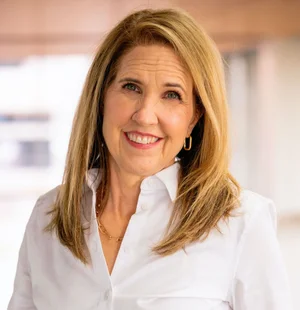
Episode 148: Knowing Your Needs: Why It Matters for Your Marriage

From Hypervigilance to Connection: Building Self Trust in Marriage
When Being Highly Capable Becomes a Marriage Problem
What if the very qualities that make you successful in life are also making it harder to feel connected at home?
You may be the person everyone depends on. You remember appointments, solve problems, manage schedules, anticipate what needs to happen next, and somehow keep everything moving. At work, those qualities may make you an excellent leader. At home, however, they can leave you exhausted, controlling, or unable to relax.
Psychologist Dr. Brittany McGeehan calls this the “powerhouse paradox.” She describes a pattern in which people can be incredibly successful externally while struggling behind closed doors with intimacy, marriage, relaxation, and emotional connection.
When survival skills become success skills
According to McGeehan, some highly capable people developed their ability to stay alert and anticipate problems much earlier in life. For someone who grew up constantly monitoring the emotional environment around them, hypervigilance may have been necessary.
As an adult, that same vigilance can look like excellent planning, organization, project management, and leadership.
The problem is that the nervous system may not know when the danger-or the need to stay in control—is gone.
You can become very good at managing life without becoming very good at simply being present in it.
That can create problems in marriage. You may find yourself frustrated when your spouse doesn't do something your way, doesn't anticipate what you need, or doesn't take initiative in the way you expect.
Suddenly, the dishwasher becomes an argument about respect. A missed date night feels like evidence that your spouse doesn't care. Parenting decisions become battles over whose way is right.
The surface issue may be small. The emotional reaction may be much bigger.
Learning to trust yourself
One of McGeehan's central ideas is self-trust-learning to recognize and trust the signals your own body and mind are giving you.
Instead of immediately acting on an emotional impulse, pause and ask: What is actually happening inside me right now?
Maybe your heart is racing. Your jaw is tight. Your shoulders are tense. Your thoughts are moving quickly.
Those signals don't necessarily mean your spouse has done something terrible. They may simply be telling you that your nervous system is activated.
That pause creates an opportunity to ask a deeper question: Is this actually a marriage problem, or is something from my own history being triggered?
This distinction can change everything.
McGeehan emphasizes that our partners should not have to carry the responsibility for wounds they didn't create. Past attachment wounds can influence how we experience our marriages, but recognizing those wounds gives us an opportunity to work on them rather than continually placing them on our spouse.
Stop expecting your spouse to do everything your way
One common source of conflict is initiative.
Perhaps one spouse wants the other to plan date nights, organize family activities, or take responsibility for certain tasks. But sometimes the deeper issue isn't simply whether something gets done. It's how it gets done-and whether it happens in the way we believe it should.
Successful, highly capable people can struggle particularly with this because they are accustomed to knowing how to make things happen.
But marriage isn't a business project where one person gets to optimize the system.
Sometimes the answer is negotiation.
McGeehan shared how she and her husband divide responsibilities according to their strengths. He may decide what they are going to do for a date, while she handles the scheduling and logistics. Instead of demanding that both people perform the task identically, they created a system that works for both of them.
That's an important marriage lesson: fairness doesn't always mean doing things the same way. Sometimes it means using each person's strengths.
Don't take the pressure of the day into the bedroom
The challenge becomes even more significant when it comes to intimacy.
Someone can spend all day being decisive, responsible, and in control and then expect to instantly become relaxed, vulnerable, and emotionally open when they walk into the bedroom.
That transition doesn't always happen automatically.
McGeehan describes intimacy as requiring regulation, safety, vulnerability, and the ability to let down the armor we wear throughout the day. Creating a simple ritual can help signal to the nervous system that it is time to transition.
That ritual might be a massage, sitting together and talking, tender touch, or another consistent form of connection.
The goal isn't to create another obligation. It's to create a familiar pathway from doing to being.
Build a transition between work and home
One practical idea from the conversation is developing a ritual for leaving the day's stress behind.
For Scott Hastings, that means taking a mindful walk after work. Rather than immediately moving from caring for patients to being a husband, he takes time to notice his surroundings and reconnect with the present moment.
The walk isn't an act of ignoring his wife. In fact, it helps him come home more emotionally available.
For other people, the transition might be a quiet drive, a shower, exercise, or simply a few minutes of intentional breathing.
The important thing is recognizing that you may need a bridge between the different roles you carry.
Self-care should help you show up better
Self-care is often presented as doing something enjoyable for yourself. But McGeehan offers a useful distinction between wants and basic needs.
Sleep, nutritious food, movement, and physical wellbeing may not feel glamorous, but they form the foundation that helps us function well.
Taking care of yourself isn't necessarily taking something away from your marriage or family. Sometimes investing in yourself allows you to return to those relationships as a healthier, more grounded person.
At the same time, self-care shouldn't become an excuse to disconnect from the people who matter. Relationships provide feedback. If your choices consistently create distance, that feedback deserves attention.
Talk before resentment takes over
Perhaps the most practical takeaway is simple: talk to your partner.
McGeehan recommends regular conversations about the state of the relationship. In her home, these are called “State of the Unions,” and they happen every Sunday.
The Hastingses have a similar practice, along with regular marriage retreats where they step away from everyday life to talk about finances, parenting, goals, relationships, and areas that need attention.
Healthy marriages don't necessarily avoid problems. They create systems for addressing them before they become overwhelming.
And when something goes wrong, repair matters.
A missed date night doesn't have to become a week-long conflict. A disagreement doesn't have to become a permanent scorecard. Couples can acknowledge what happened, take responsibility for their part, talk about what they need, and reconnect.
Your worth is bigger than what you accomplish
Perhaps the deepest question underneath all of this is: Who are you when you're not fixing, managing, achieving, or carrying everything?
If your identity and self-worth have become completely tied to what you accomplish, slowing down can feel surprisingly uncomfortable.
But that discomfort may also be an invitation.
As McGeehan explains, separating what you contribute from your fundamental worth can open the door to a deeper version of yourself.
The goal isn't to become less capable.
It's to become capable of turning the intensity off.
Because the deeper your relationship with yourself becomes, the deeper your relationships with the people around you can become too. And sometimes, becoming a healthier spouse doesn't require doing more.
It requires learning when to stop, breathe, listen, trust yourself, and simply be present.

-
0:00
Unpacking the Powerhouse Paradox: External Success, Internal Struggle
Before we get started today I want to share something we've been working on behind the scenes for the last few months, and we're really excited to finally get to tell you about it.
We've teamed up with 14 other marriage and intimacy experts to create something brand new for married couples.
0:15
It's called the 2026 Intimacy Vault.
And if you've ever wished that you had more tools or ideas or expert guidance for creating a deeper intimate relationship with your spouse, you're going to really want to see what's inside this vault.
0:30
We've brought together 15 Exertcreated resources covering everything from desire and assion, play, pleasure and communication, connection, and even more.
And this isn't just a bunch of videos to watch and then just forget about their workbooks, assessments, audio experiences, challenges, a relationship course, a completely planned role play date, and more.
0:57
I can't really spill all the details about it quite yet, but The Vault opens next week, September 15th, so mark your calendar.
I have a feeling that you're really going to love it.
1:08
Speaker 2
Welcome to Marriage IQ, the podcast helping you become an intelligent spouse.
1:14
Speaker 1
I'm Heidi Hastings.
1:15
Speaker 2
And I'm Scott Hastings.
1:18
Speaker 1
Are you someone who knows how to really get things done?
People depend on you.
You remember all the appointments, You solve all the problems.
You're the one who keeps everything moving forward.
But behind closed doors, you're exhausted.
The house feels chaotic.
1:34
Intimacy feels harder and maybe even non existent.
So why is it that some of the most capable people struggle to find peace in their own homes?
Today we're talking with psychologist Dr. Brittany Mcgeehan about the hidden pressure patterns that keep people stuck in over functioning, overwhelm and emotional exhaustion.
1:57
Dr. Brittany Mcgeehan is a licensed psychologist, the High performance coach, and a self trust researcher who works to help people succeed externally while also experiencing relationship success and internal self trust.
2:13
We're really excited to have you here today, Brittany.
Welcome to Marriage IQ.
2:18
Speaker 3
Thank you so much for having me excited to be here.
2:20
Speaker 2
So Brittany, I'm curious, you mainly work with women?
2:24
Speaker 3
And mainly women, Yeah, but it has been a mix as of late.
2:27
Speaker 2
OK.
And you have this powerhouse paradox.
I love paradoxes and I was really interested when I learned about this.
Can you kind of explain what this is?
This powerhouse paradox?
2:42
Speaker 3
Yeah, So the powerhouse paradox, if you can imagine a Venn diagram, it is the theory that explains why we see humans who are incredibly successful in one area of life struggle behind closed doors, whether that is with intimacy, with marriage, with relaxing.
3:01
There really seems to be a disconnect.
And what I have found over the last decade of research is that there's a pattern amongst those who are highly successful as also having histories of childhood trauma.
And those experiences have actually given them traits that translate really well into more successful speeds.
3:22
Speaker 2
Yeah, like what?
What are some like?
What's one example of an adverse childhood experience that translate to success?
3:30
Speaker 3
So one of the first ones that I see when people walk in the door is hyper vigilance, which can also look like excellent long term planning.
It can look like excellent project management and I see all the pieces that need to get done.
3:46
And maybe I am buying kids clothes ahead, right?
A season ahead.
When in reality, when they were growing up, they were constantly monitoring the room for the emotional temperature of the room.
So both are vigilance, but one looks very different in adulthood.
4:01
Speaker 1
So taking those same skills that they had to learn to survive, maybe even and translating them into something that's really beneficial.
That's really interesting.
So as you're looking at executives, people who are really high functioning, a lot of our listeners might be people who are really successful in their community or successful in their kids school or successful in church.
4:30
Responsibilities with the same principles of this paradox relate to them as well.
4:36
Speaker 3
Absolutely.
And I would say the character marker is if you can't turn it off behind closed doors, right.
So this push the same characteristics that are allowing you to move forward or move in excellent leadership capacities in whatever area that is.
4:52
So if that's church or school or home, if you have a hard time turning it off and relaxing at home, to me, that would speak to a history that has really built this school rather than one that you've intentionally fostered in adulthood.
5:04
Identifying Home Patterns and Building Self-Trust
So at home, what are some other patterns that you see?
5:08
Speaker 3
I always say if you have a hard time taking off your CEO hat at home, then there's probably an issue there, meaning you like to stay in control.
Or one of my favorites that I'm a little bit partial to in the season of parenthood that I'm in is I have a perception of how my partner, my husband should parent and his way of doing things is just fine.
5:28
But I sometimes push it like, I want you to do it my way, right?
That's a big pain point for me in my own personal life that we're always working through.
But that's a big one that I see with this trait as well, because there's a natural shift within your nervous system to see things done your way, and you really can't just relax.
5:47
Speaker 2
I have no idea what you're talking about.
I can't fathom that.
5:51
Speaker 1
You can't fathom me trying to take control of the way that you load the dishwasher way that you parent.
5:57
Speaker 2
Or vice versa.
Yeah.
Anyway, I guess my point there is that this is, I think universal is ubiquitous, right?
It's we all think our way is the right way.
We butt heads and we wonder what's going.
6:07
Speaker 1
On And actually that really is an interesting thought Brittany What do you do when you have two pretty successful driven people I.
6:17
Speaker 3
Would say you go to a lot of therapy, you end up with a very expensive marriage.
Not really, but might be speaking from personal experience there.
6:25
Speaker 1
You learn how to meditate and breathe right.
6:27
Speaker 3
That's right.
Well, and you really developed this skill of self trust, which I see as being really underdeveloped in adulthood for people who come out of these histories.
Because if you can do that, you can practice the pause that meditation encourages us to practice, which is there actually something here that needs to be shifted?
6:47
Or is my nervous system consistently lit up and maybe I just need to take a few deep breaths instead?
6:52
Speaker 2
So what do you mean by self trust?
6:54
Speaker 1
Yeah, that's what I was wondering too.
You said that you're a self trust researcher, so please tell us a little more.
7:00
Speaker 3
Oh my God, I am so fascinated by this concept of self trust.
So self trust is the ability to genuinely trust the signals that your body is giving you, whether that is in your mind or in your Physiology, and to develop a relational experience with yourself versus just with the people or the stimulus around you.
7:22
And it really provides a map knowing, hey, in this moment I'm elevated because the dishwasher is not being loaded in the way that I know is correct.
And I'm going to go take a walk versus actually act on this impulse.
7:38
And it develops the ability, I always say, to develop like a limitless mindset.
Because really, when you can use your body and your Physiology as an ally in this modality of self trust, I think you really get a very expansive experience of life.
7:53
Speaker 2
So it sounds a lot like internal insight.
7:56
Speaker 1
Mixed with some identity.
7:58
Speaker 2
Which we learned from, yeah, from Tasha Urich, who wrote that book Insight.
Which is really good.
I think what you said, they're just getting to know your own impulses, not necessarily what other people do, but yourself, and interpreting that in a way that you can understand what your body's telling you.
8:20
I think that's really great because I think a lot of times we don't figure out, OK, what are these signals I'm producing here?
What is the story here that I'm telling myself so?
8:33
Speaker 1
Loading the dishwasher is pretty benign, right?
What does this look like on a little deeper level where it's actually causing some problems in the marriage?
8:45
Speaker 3
Big one that I see time and time again and that I've experienced in my own marriage is initiative.
So my husband won't play on a date night.
I've asked him a million times and he's not getting on the calendar, getting the babysitter.
So initiative right is really what this one is.
9:03
I hear this coming from a lot of my clients and I'm using husbands as an example.
But really, truly, it could go either way.
So not experiencing pursuit and care in the way that we would like to feel it and being so caught up in your own experience of that that you can't really sit down and think through why, right?
9:26
What is going on underneath the surface.
And usually it's twofold.
Usually there's two different skill sets of deciding to get a date on the calendar or showing love in a way that the other person wants to receive versus the way that we would like to receive it.
9:43
And then utilizing your set of skills.
Usually one person is better at the calendar and they don't really care because but I want him to do this and that one tends to cause a really big rift with the clients that I work with.
9:56
Speaker 2
I want to go back just a little bit to what she said about those initial feelings that we've talked about quite a bit in the past under different perspectives.
But really just finding out that what what is happening to me right now before we meander to the why because that can be kind of explosive, but we try to think through like what is happening.
10:17
My heart's speeding up, I'm breathing faster, my brain is going haywire.
And I explained that to myself.
And then once I have time to explain what's happening, I can go to the, OK, why is this happening?
And usually it's because a value of mine has been violated, you know, something that's very important to me.
10:39
And our lists are different.
I mean, there's some that match up.
10:43
Speaker 1
Sometimes those core values are different for each of us.
10:45
Speaker 2
And if one of my core values is planning and yours isn't, it's going to be hard to change that core value unless there are some very significant discussions and open communication, right?
Like, how do you in your practice, traverse that gap of somebody who like your husband clearly planning isn't one of his core values, right?
11:11
Like what do you do with that?
11:13
Speaker 3
One, I think there's two elements to it, right?
Because the 1st and the way I do this in my practice, the way I've done it in my marriage is kind of coming back to this powerhouse paradox.
We look at sifting apart.
Does this have to do with my partner or does this have to do with my history?
11:29
Has my my attachment wounding?
Has all of that come to the table and do I see my husband or am I seeing a father that I wish showed up in a way that reflects how we were injured as children?
Because the idea that someone should be perfect or should do things our way is the very young, developmentally speaking, mindset.
11:53
Realistically, we can't expect that of adults.
I think we try to find good enough.
So there's that element of it, of is there a regression?
Is this a trigger?
And that has its own separate box that has to be tended to.
Something I tell my clients a lot is it's not fair to take your attachment landing out on your partner.
12:10
There isn't really anything they can do about that.
There's amazing opportunities for collective experience, but it's not their fault that mom and dad are human.
And then the other kind of coming into actually addressing the marriage, I think it's a lot of negotiation and that could be my bias to to business, but it's where can we bend here?
12:31
And in my own marriage, we are very boring about our date life.
Everything sits on a system because we really like monotony in that way.
And so my husband plans the what are we going to go do?
We just went to go see the Odyssey.
It was excellent.
12:46
But the when the system of it, that's all me because I really enjoy those things.
12:51
Speaker 2
So it sounds like you've solved the problem right, more or less.
12:57
Speaker 3
More or less, yeah.
12:58
Speaker 2
For us came up with a system that works.
13:00
Speaker 1
We found each other's strengths and divvy it out that way.
13:04
Speaker 3
Yeah, we enjoy systems for sure.
13:06
Speaker 2
So let me ask you then, are there times when date night comes up, When it's a pain point even now?
13:12
Speaker 3
100%.
13:13
Speaker 2
Oh, there's a.
13:14
Speaker 3
That's a quick answer, sorry.
13:16
Speaker 2
It's just not as much as last time.
13:19
Speaker 3
Right.
I like to think that in my relationship, we've done a lot of the attachment work underneath the surface, so there's not quite as much for the pain point to latch onto because the emotional bank is full.
Because we get it right maybe like 6070% of the time.
13:38
And that feels really good enough.
Given that we've got a 2 year old and a four year old, we feel pretty solid about that.
A few months ago, date night came up and we didn't go on date night and I was very crabby about that and had to hold my own accountability of have I also put the steps on my end, cleaned my side of the street and we just sat down and we talked about it.
13:58
So there was definitely pain there, but I'm working toward the connection I.
14:01
Speaker 1
Love the repair that you repaired quickly.
You sat down and talked through it and we're able to move on.
14:09
Speaker 3
Yeah.
14:10
Creating Rituals to Manage External Pressure at Home
I also love what you said a minute ago about even if we have attachment wounds, there's so many resources now to help couples work through some of those.
It's not a death sentence to the relationship, and I love your personal example of having worked through that as well.
14:27
I hope that gives people hope that if this is the situation in your personal life that's bleeding into your marriage, we encourage you to find someone that can help you work through some of those attachment wounds and help you connect more deeply.
14:46
You talked earlier about bringing pressure home from the other places in our life that we see a lot of success and being able to not let down.
How can people be more aware of what the pressure problems are and what's actually a marriage problem?
15:04
Oh.
15:06
Speaker 3
I love that question.
I think awareness really starts with even recognizing just what is happening in your body in the 1st place and when it's happening.
A lot of people that I talk with don't recognize there's so much tension or that pressure is even coming through the front door.
15:24
And if you can spend a day just taking notice of are my shoulders tight, is my jaw tight?
And where is that happening?
It tends to be pretty easy from there to recognize.
What I've noticed is if you can find the location and what time it's happening, people tend to trace it back pretty well of Oh yeah, my jaw has been clenched since that PTA meeting or since this board room meeting.
15:50
And if you can find that that can be really helpful in terms of transitioning home, it's really that present awareness that is so challenging for people because I think in our society we are so thing to thing appointment to appointment, we're back-to-back.
16:07
So the pause is the hardest part.
The other element that I say if you don't have time to sit and take all of the notes and do a body scan every few minutes is also just to have a really good plan in place for transitioning home.
So if that is that you drive home in silence so that you can then notice what's happening in your body, or for some people, it's taking a shower as soon as they got home, but some sort of regulatory anchor, they can help you connect with your body in the sensations.
16:37
I think it's pretty helpful.
Sometimes our mind isn't always the best thing to trust when we're trying to sift out what is a work problem or what is a relationship problem.
16:46
Speaker 1
That's really great and could actually be considered a ritual.
Maybe this is what I'm going to do every day, to be more present when I come home and let some of the stresses go.
16:59
Speaker 2
You know, one thing I determined some months ago was that when I get home from work, I need to take a little mindful walk before I jump in my relationship with Heidi.
Because transitioning from seeing a bunch of patients and figuring out a bunch of complex medical problems all day long and then transitioning to husband when I get home, sometimes it's really jarring.
17:27
And I have just on my own figured this out.
Like, OK, let's go on a walk when I get home.
Heidi knows about it.
She knows I'm not ignoring her.
She knows, oh, yeah, he's going on his walk and go on my mindful walk.
And I look at everything around me, the trees and the sky, the clouds.
17:46
I focus on what I can see and hear and smell and taste and it is really grounding.
Then I can come home and show up as a better husband.
17:57
Speaker 1
And when he forgets to take the walk and I can tell he's carrying a heavy load, I remind him to take the walk.
You have an extra element in your family because you've got little kids and you work from home too.
So how do you make those transitions?
18:12
Or are you able to do that?
18:14
Speaker 3
I am a very big believer that as parents we really chose to bring these children into this world, and that's a privilege, but it was a very intentional decision.
I work very, very hard to ask myself what I need to regulate before coming into that second shift, as we call it.
18:30
Sometimes.
Scott, to your point, it is a walk.
A lot of times it's being mindful of how much energy I need to be exerting throughout the week or throughout the day in order to have my baseline.
Sometimes we don't get to watch as much TV or we don't get to have as much social time with friends.
18:48
I'm working with a personal trainer right now and those have been sacrifices, but it's also really what helps hold a stronger baseline so that we can transition a little bit easier.
Because we don't get quite as much time to have an elaborate rituals our baseline, we think about setting it a little bit higher.
19:05
Speaker 1
So yourself trust that you were talking about can include exercise.
It can include having a personal trainer doing things to help you feel solid and stable in moving forward in whatever successes you desire.
19:25
When your family and your marriage and your work.
Is that right?
Is that part of self trust?
19:29
Speaker 3
100% I think that can be really hard, especially if you're not used to investing in yourself, right?
When we were talking about a personal trainer and a nutritionist, it was, it's a lot of money and we really had to sit.
We think about making family focused decisions.
And so if we put this on the table, which has been so good for myself and for my husband, what comes off the table and are we OK with that in this current season of life?
19:54
And it's been a tremendous gift to recognize that I needed more cognitive support to actually get my workouts done.
I needed someone to hold that so I could just show up.
But it has strengthened the trust that I have with my own relationship and then it's been overwhelmingly good for our family.
20:12
Speaker 1
So sometimes what might seem like it's taking away from the family by investing in ourselves actually is better for the family, better for the marriage, because we can show up more as a whole person.
20:25
Speaker 3
Yeah.
One thing that also kind of comes to mind as I'm listening to Y'all is need versus want.
And those get really conflated with each other.
They get kind of confused.
So when I think of self-care, I'm thinking of exercise, food, really like those basic biological needs.
20:43
Sleep is a big one that people don't invest in because it's very boring to go to bed at 9:00 versus going to Starbucks or buying a new purse or getting a new car because you really want that and then labeling it self-care.
20:56
Speaker 1
You talk about how this powerhouse paradox and self trust impact intimacy.
Can you lean into that a little bit and tell us what you know about that?
21:09
Enhancing Intimacy Through Identity and Communication Strategies
Yeah, So I always, this is a little bit unpopular.
I always say when clients come in, there's probably more people in your bed than you realize.
Because if you have these just attachment history or wounds that are really fueling an important part of your life, such as your career or where you are spending your time, that also means that mom and dad are in the room.
21:34
And if they are in the room over here, they are also in your intimate relationships.
And so as I'm working with anyone, I think about it in my mind, if I'm trying to grab a map, right, like who exactly is in the bedroom?
And people usually like at the idea that mom and dad are also present in the bedroom.
21:54
But that is the reality.
If there hasn't been attachment work that it's been done, then it is very hard to move into being in a state of mind where all of a sudden that element of your nervous system is not now impacting your sex life in any part of intimacy, right.
22:11
But that is definitely an area that I see it coming up in because that requires such a or it can require a more regulated nervous system.
22:21
Speaker 1
So besides doing the attachment, we're doing the regulation of the nervous system kinds of tools that we've talked about a little bit.
Is there anything else?
22:31
Speaker 3
Yeah.
I mean, also getting curious about what it is that you were looking for in an intimate relationship.
But it's so interesting because we think about these things when we're dating, but we don't think about them in seasons of life.
And I'm a really big advocate for this because you may be in a season of life where we're looking to build wealth, and that is our goal right now.
22:54
Our children are a little bit older and we're really delving into our relationships, in which case you might see some of these traits start to show up a little bit more.
And so as a relationship, as a partnership, let's talk about what that looks like versus we might be in a season where, hey, we're going to really focus on developing deeper relationships and getting curious about what does marriage look like in this specific season instead.
23:20
In which case we need to really make sure that the young, the little inside of us is the vernacular that I use, has been tended to and isn't necessarily making a mess at the table when we're trying to talk about an advocate for what we want in marriage.
23:35
Speaker 2
I like that about different seasons of life because we've talked about shifts in our identity through a lifespan and that things are going to be different.
That's why you got to come back to the table and talk about things again and again because we do become different people over time.
23:51
I now Brittany, I want to discuss maybe more gender based differences in how you can work in a corporate the world as a female and then shock all that off and become intimate somebody who just wants to be doted on by your husband.
24:17
Like that exists where women want to be a feminine partner to their husband.
24:26
Speaker 3
I mean, I would say that it's true.
So in some way, shape or form.
24:30
Speaker 2
I think we just need to be honest because we need to talk about what happens when you go home at night, right?
And you can be a real tiger during the day, but at night, and I'm just a guy trying to find perspective out there that they want to come home.
They want to be treasured and doted on and.
24:50
Speaker 3
Yeah.
I mean, so this is in my work, I talk a lot about really sifting out like what is actually going on because as I'm listening to you, right, let's say that this is the case for a couple.
I'm like, this is an issue of regulation and identity integration versus and understanding the situation that you are in and really making sure that you're playing to strengths here versus making it about your partner, which is what I tend to see, right?
25:17
I tend to see that we really love to point the finger at the person who is safest for whatever reason and say, well, you don't do XY and Z or it goes the other way, right?
You're always in control.
You don't know how to let me lead and in reality, to your point, it takes a lot of work if you are a woman who is in this C-Suite executive, whatever business world, to then come home and allow yourself to surrender is the word that I would use.
25:43
Speaker 2
Surrender.
Yes, that's the word I was wanting to say.
Yes, that's a very, very pointed word, but it's true.
Is it not true?
25:53
Speaker 3
Yeah, right.
I mean, at its core, in order to surrender, you have to be in your body.
You have to also open yourself up.
That's vulnerable for anyone.
I don't care about your history or who you are.
And that is very, very challenging to do no matter what, especially if you are coming in and having to set down this armor, right?
26:14
But all of that to me is more, and I do, I lean very hard on ritual.
So I will ask people, what is your ritual in the bedroom to help you set down the rest of the day?
For some people it's massage.
For some people it's just sitting and talking and connecting.
26:31
For other people it is.
We're going to, I've heard people say like we're going to make out every single night.
And that is just our little like box and container.
That way there's like some physical connection there, but it gives the nervous system something that I can expect and that it can associate with regulation and a little bit of surrender, which is going to help to blend these two elements of your identity into one.
26:56
Speaker 1
That's really beautiful.
26:58
Speaker 2
I like that.
26:59
Speaker 1
Touch really does when it's tender touch help you feel safe and to surrender you have to feel safe emotionally too.
And that.
27:08
Speaker 2
I mean, that really does go back to identity like what you're saying there when we're hitting on identity insight really strong.
27:14
Speaker 1
Intentionality.
27:16
Speaker 2
Is basically all four today.
But I mean, just knowing that, hey, I can be this tiger out in the real world, but I am consciously, intentionally choosing to be, to surrender with using my feminine traits as a woman to my husband so that we can have this dynamic, this kind of polar, right.
27:42
Speaker 1
Polarity.
27:43
Speaker 2
Yeah, because that mean that's what makes it exciting, right?
Anyway, is So what I hear you saying just being intentional about that.
And I guess sometimes it's really hard to make that shift.
But you mentioned a few things about what some people do right.
Some of you said some rituals to help transition.
28:02
I like the one where they made out every day.
I like that.
Maybe we should try this honey.
28:08
Speaker 1
OK.
We'll start it today.
So if somebody who's listening, maybe from the things that you've talked about in their relationship, if they're feeling like they're the only one doing anything, is that an indication of over functioning?
And if they see, yeah, maybe I'm over functioning, Where besides the nervous system do you point them to Lookout?
28:31
What can they do?
28:32
Speaker 3
I always point them to their partner kind of coming back to some of what we were talking about earlier and just having a conversation.
One of my favorite questions is what did your partner say when you shared this or when you talked about it?
Because most people don't build in and protect the intentionality behind having conversations.
28:52
At our house we call them State of the Unions and they happen every Sunday.
28:56
Speaker 2
Yeah.
28:57
Speaker 3
And that is our like we and we've got an agenda and it's not very sexy, but it leads to great and to.
29:03
Speaker 2
Yeah.
29:04
Speaker 3
Fantastic.
And it is you.
There are elements of a relationship that you have to keep running in the same way that we run our businesses.
And so my first line of defense is always go have a conversation with your partner and if it doesn't feel like you can do that TLS point earlier.
29:20
We really believe in at least quarterly couples sessions just as like at minimum checking the oil.
29:26
Speaker 1
Yeah, we do quarterly marriage retreats, we call it.
We're three days away.
We're in.
It's.
29:33
Speaker 2
It has to be out of the house.
29:34
Speaker 1
Yeah, our kids are gone right now, but just going through goals and through the things that we're working on to be more intentional about our marriage, prioritizing our marriage, going through finances, going through parenting relationships and all of the things that we maybe feel could use a tune up.
29:56
Like you said, you know, this was working for us before, it's not working so well now.
Just making changes.
And from that we take our action items, OK, what are the action items?
And we put those on our couples council that we have every Sunday afternoon.
30:11
So we're talking about them every single week.
And that's where we start making some real change.
30:17
Speaker 3
I love that I'm going to tell Nick we need to add in the full retreat.
It's.
30:20
Speaker 2
Got to be outside your house too.
For some reason you just think differently.
30:25
Speaker 1
We didn't do it when we had littles, but we did do it when we had teenagers and I've definitely done it since they're all gone from the house and I think we've been working this system for maybe 15 years now.
30:40
Speaker 2
Yeah.
30:42
Speaker 1
I think it really is helpful to not let things go unsaid and talked about.
If we're having a struggle with things, this is where we talk about them.
That's where we make it happen.
So cool that you're doing it too.
I guess in part it comes from John Gottman, especially if you're calling it State of the Union.
31:00
Yeah.
Yes, very, very helpful.
31:03
Speaker 2
I wanted to go back just quickly and ask.
You said you can read the room when you're wanting to figure out if you're doing something too much self-care, let's say.
Do you find that it's easier to read your children's emotions than it is your husband's or not?
31:20
Speaker 3
Oh, that is a great question.
So we have a practice in our relationship to not read each other's emotions.
We try really hard to practice my reality versus your reality.
So I do a lot more verbal check insurance with my husband than what I do with my toddler, who is wild.
31:40
And so I think with the kids, there's a little bit more interpretation in reading the room with them with some safety Nets.
But I am recognizing, as you asked, that I was like, oh, with Nick, I might notice things, but it can sometimes be my own hyper vigilance.
And so I will come in and I will say, hey, I'm feeling a little bit anxious.
31:58
I feel like we haven't connected a whole lot.
Are you tired or am I reading into that correctly?
Slash, can we have some extra time on the books this weekend?
And that works a little bit better for us.
32:09
Speaker 2
I think mothers and children have a special connection.
I love my children too.
I think that there's something about birthing them that there's a difference.
32:19
Speaker 1
Yeah, he misses some of the emotional cues.
32:23
Speaker 2
That could be interpreted that that dad doesn't care, but I'm here to say that's not true.
It's just I'm clueless.
I had not been clued in on this secret pathway.
So, children, I love you just as much as Mom does.
32:38
Speaker 1
So, Brittany, I think one of the issues that we're talking about here is that a lot of us determine our worth by the things we accomplish, by the things we fix, by what we manage, by what we carry.
32:56
Embracing Existential Crisis to Redefine Your Self-Worth
What happens when we stop all of that?
Are we going to fall apart?
Are we going to lose our identity?
Our worth?
33:04
Speaker 3
A piece of me says, I hope so if that's what it's been tied to.
To be honest, my most direct answer is I hope so.
If that is what it has been tied to.
You might have a little bit of an existential crisis.
And that those are some of my favorite parts of being alive.
33:20
So I might not be the best person to ask because to me it's a sign of integrating and becoming a more deeper version of who you are.
And I think it has merit to value what you do and what you contribute to society.
33:37
And I think there's a lot of merit to pull that apart from self worth.
You get to see what the other side of thriving and abundance and grace can be and what a beautiful thing to have an existential crisis over.
So you might.
It probably is going to make you a little messy for a little bit, but I think it's worth it.
33:54
Speaker 2
Love that.
33:56
Speaker 1
This has been really wonderful.
I I would love to have you share your final parting wisdom with us.
34:04
Speaker 2
It's like a high level take away, yeah.
34:08
Speaker 3
OK.
High level is, I believe the deeper you move in relationship to yourself and the cues that you are receiving, the deeper you're going to move into relationship with everyone around you.
And it makes things messy for sure, but I think it's a gift.
34:25
Speaker 1
That's quotable.
34:27
Speaker 2
That's great.
34:27
Speaker 1
That's really great, Brittany.
You've got so many amazing things you do.
If people want to find out more about you, tell us where people can find more about what you're doing.
34:38
Speaker 3
You can find me over on LinkedIn.
And then, yes, my podcast, the Aligned Powerhouse podcast, we talk about a whole bunch of this stuff.
That's where you can find me.
34:47
Speaker 2
The Aligned Powerhouse Podcast.
34:50
Speaker 3
Yes.
34:51
Speaker 1
Awesome.
Thank you Brittany for the wisdom that you've shared.
It makes me think about some places that I'm a little lacking or I might be trying to over function or trying to fix too much and I need to spend some time pondering some of the things that you've said.
35:05
Speaker 2
Yeah, great conversation today.
And if you like this episode, share it with a friend or two.
35:12
Speaker 1
Thanks so much, Brittany.
35:14
Speaker 2
We'll see you on another exciting episode of Marriage IQ.